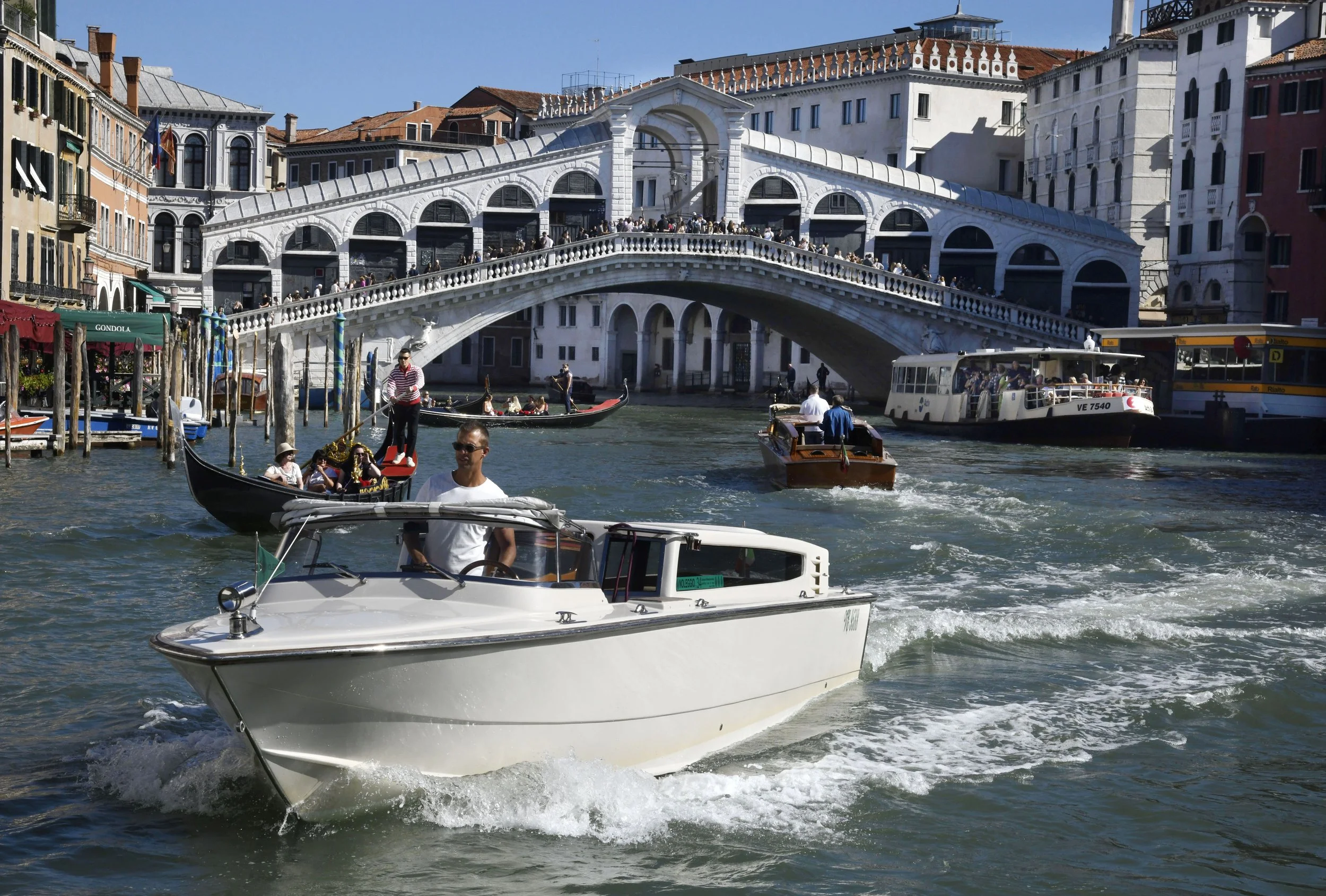
Venice's Grand Canal is a busy waterway, especially where it narrows at famed Rialto Bridge.
Story and photos by
MATTHEW THAYER
Returning home from Italy this October, the subject was on both our minds. Was the love affair over? Where was the intimacy? Where were the solitary moments that once made us tingle with joy?
My wife, Kelly, and I first traveled to Europe 37 years ago. Hopping half-empty trains with our Eurail passes in mid-spring, we didn't need to book accommodations until we pulled into town. Things were a little busier when we introduced our children to Italy a decade later, but quiet as can be when we stayed in a private Umbrian castle as guests of the Marquis.
Italy became our favorite place to visit. No other destination could top its combination of rich cultural heritage and artistry, natural beauty and temperate weather. Stir in amazing food, wines, gelato and the Italian people's overall zest for life, and you have a recipe for a memorable stay.
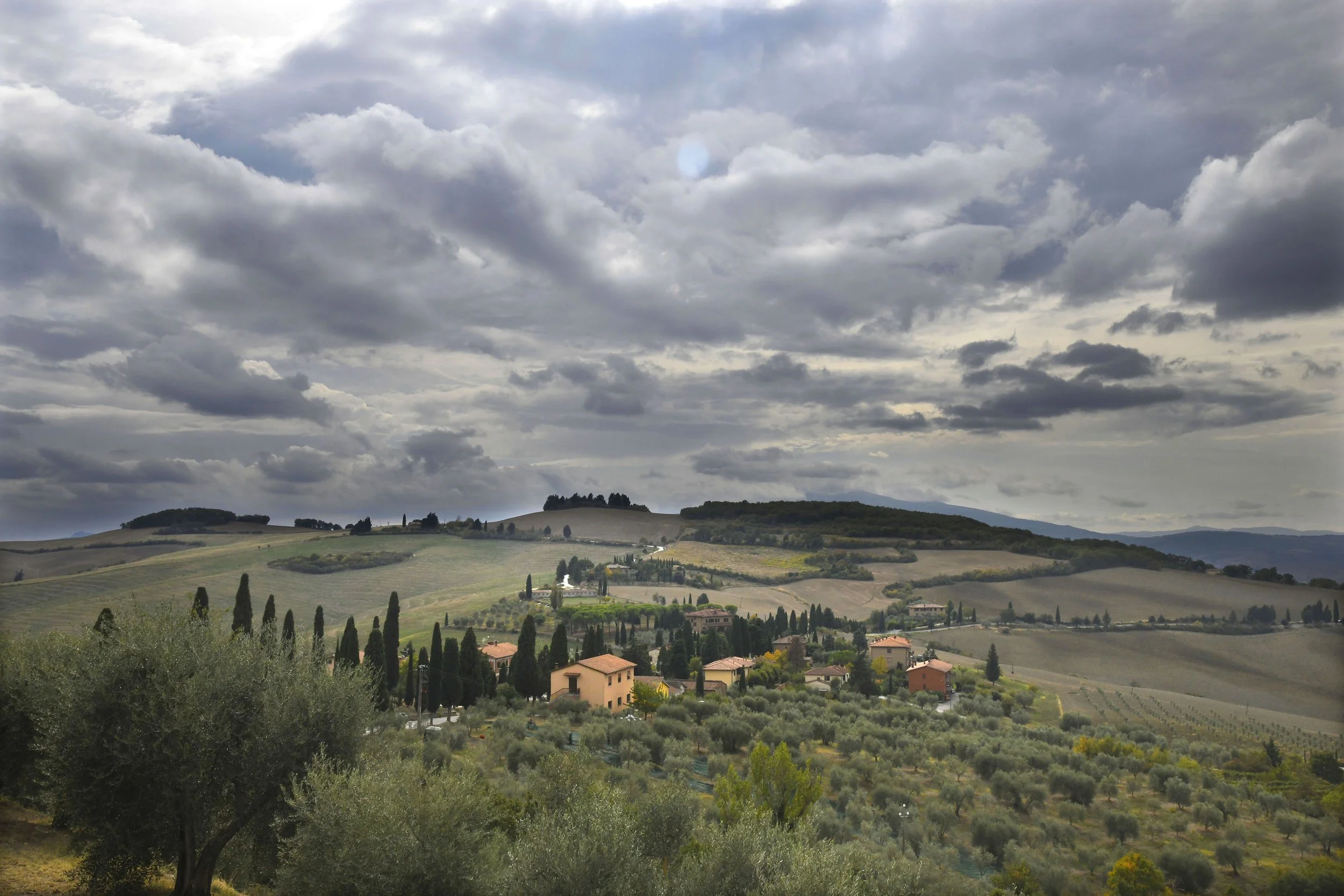
Dramatic Tuscan skies provide the backdrop for an olive harvest at a farm below the walls of hilltop Monticchielo. Down in the silvery trees at the bottom of the photo, workers are spreading nets and using handheld machines to knock the olives off their limbs.
There were "wow moments" on our recent three-week trip as well. Hiking above the clouds in the Dolomites certainly comes to mind, as does a food tour on a small boat that had us sampling tasty fare all the way from the backside of Venice to the farming island of Sant'Erasmo. The colorful buildings in Burano were a photographer's dream.
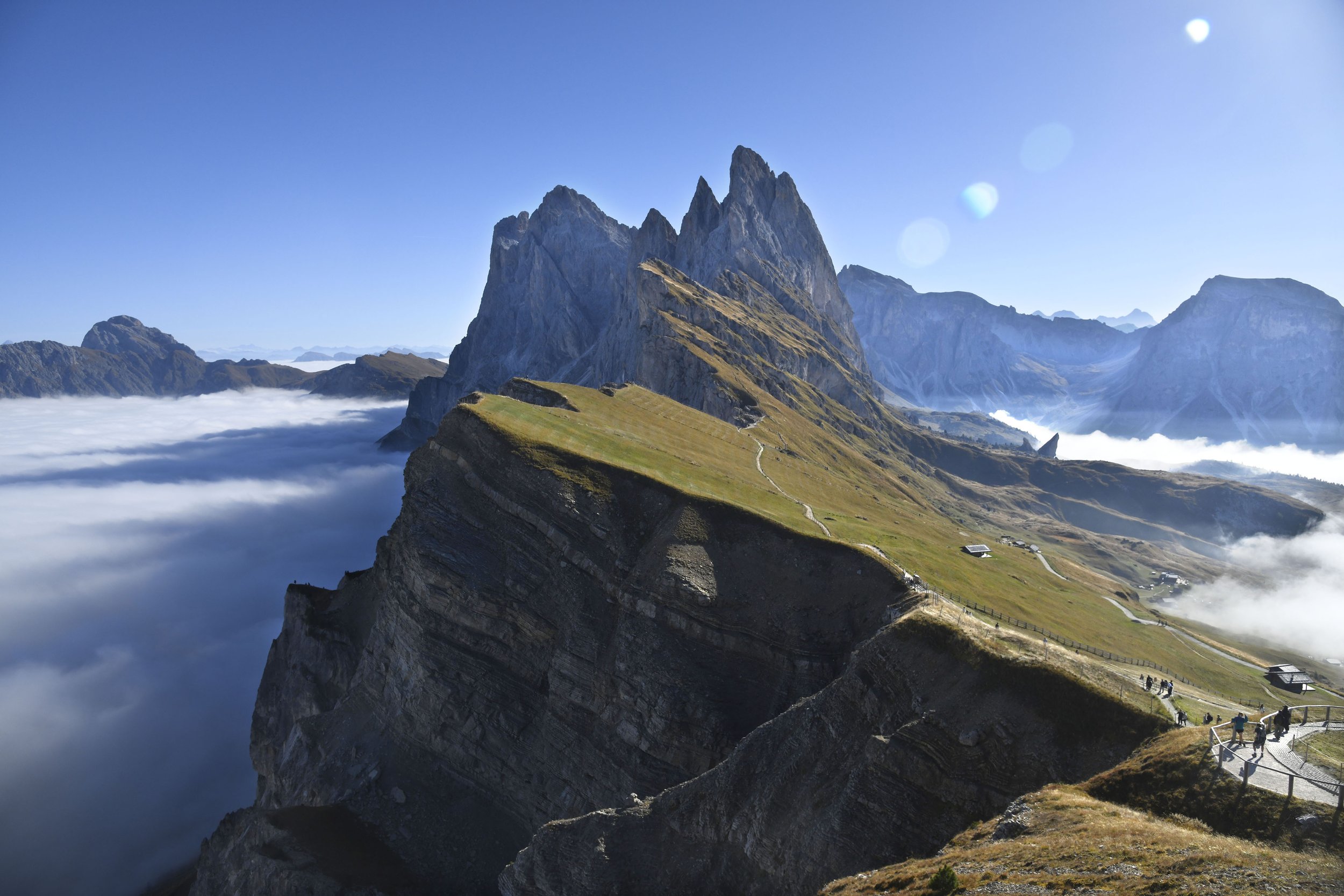
The jagged, 8,254-foot-high peak of Seceda is part of the Oodles Group, one of nine components that make up the Dolomites UNESCO World Heritage Site in South Tyrol Italy.
Italy has a way of grabbing you by the ears and saying, "You think that's cool? Look at this!"
The crowds are what had us mulling the affair. Our Italian secret was out. Not that it was much of a secret. Anybody who visits Venice and Florence in early fall should expect the medieval attractions to be busy. This was next level for us. Even small, out-of-the-way towns were often jammed with tourists anxious to see the highlights or at least take selfies in front of them. Just as we were excited to explore Italy when we first visited, an influx of new travelers from emerging markets like China, India and Indonesia wants to do the same. Add them to the millions of Americans, Germans, French, Italians and other worldwide travelers booking stays, and the country feels pushed to a tipping point.
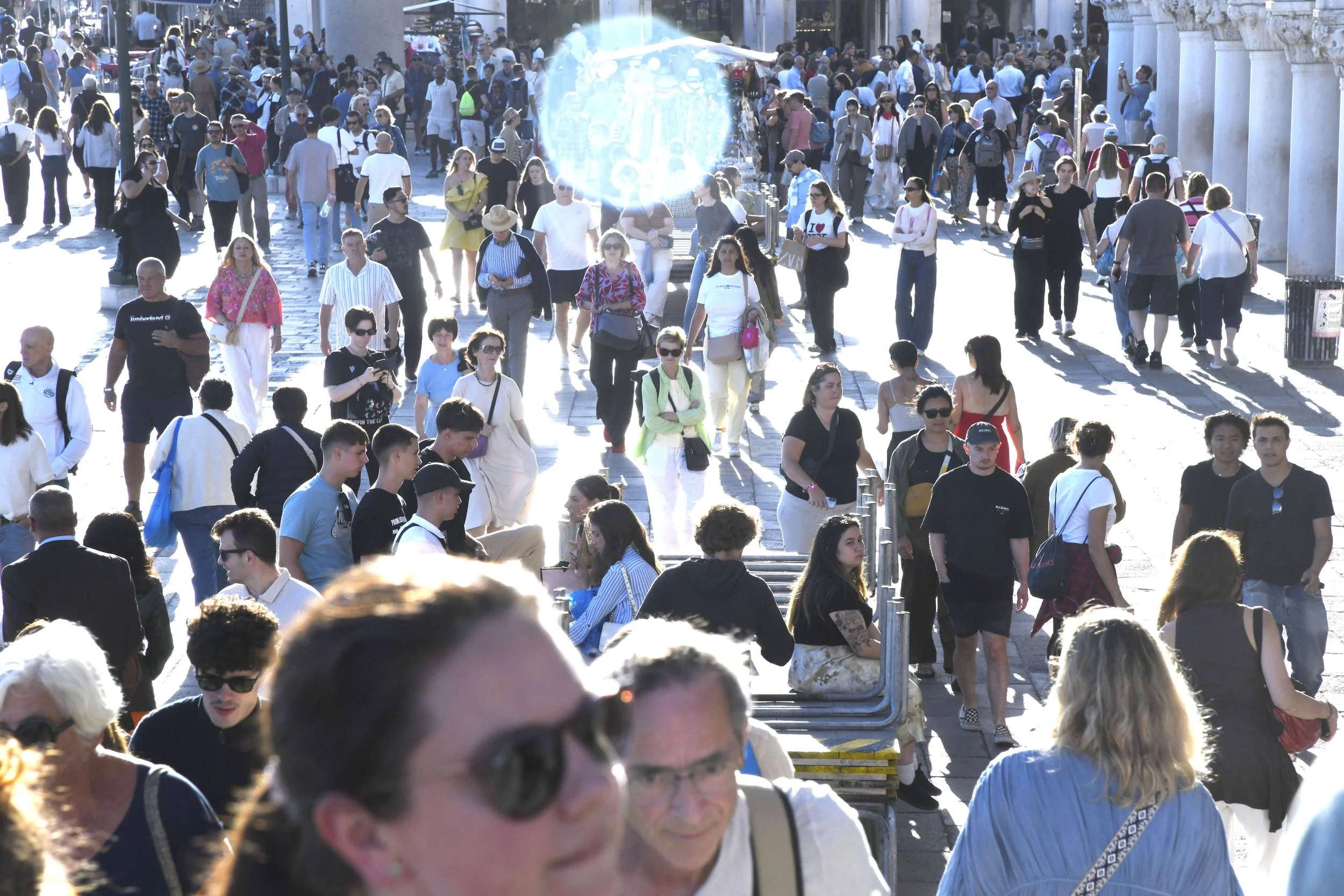
Late afternoon crowds throng the cobbles between Venice's Grand Canal and the Doge's Palace.
Italy reportedly hosted 104.7 million international visitors in 2025. Counting day-trippers, Florence welcomed roughly 16 million guests in 2025 and Venice 22 million. Some estimates are much higher, but 22 million would mean Venice, population 50,000, averaged 60,273 visitors a day. For perspective, the island of Maui feels like it's bursting at the seams when it hits three million arrivals a year, or 8,219 a day. Maui is approximately 236 times bigger than Venice proper and has roughly three times the population. This density of tourism boggles the mind.
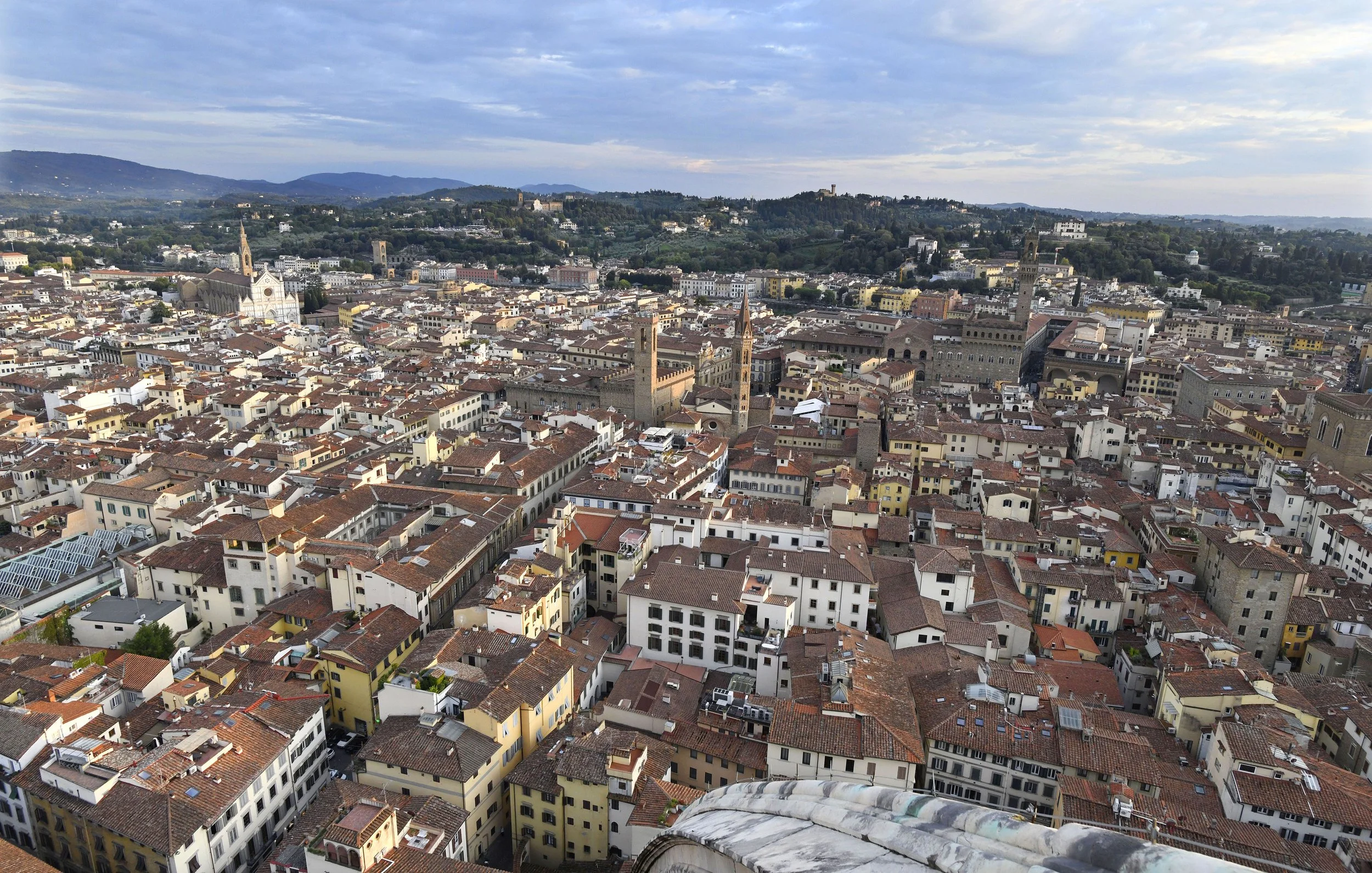
The views from atop the dome of Florence's famed Cathedral of Santa Maria del Fiore include the Uffizi Gallery, Boboli Gardens, Basilica of Santa Croce and a warren of historic streets and buildings.
Thankfully, we arrived with a good plan and a folder full of reservations for everything from cable car rides to a restaurant in Florence that specializes in setting fire to large wheels of Grana Padano cheese and preparing noodle dishes in the warm, silky goo. Nearly every eatery we booked had a line of envious people out front pining to get in as we were seated. Same for our tickets to enter the Uffizi Gallery and to climb the stairs to the top of Brunelleschi’s dome.
Unlike in 1989, when we could walk into a train station's tourist information office and ask a staffer to call around town to find us a room, it no longer pays to play it by ear. Just ask the four Italian women sitting next to us at a restaurant in Pienza. With nowhere to stay, they waited expectantly as the waiter made calls on their behalf.
"Don't worry," he told them. "I will not let you sleep in your car tonight."
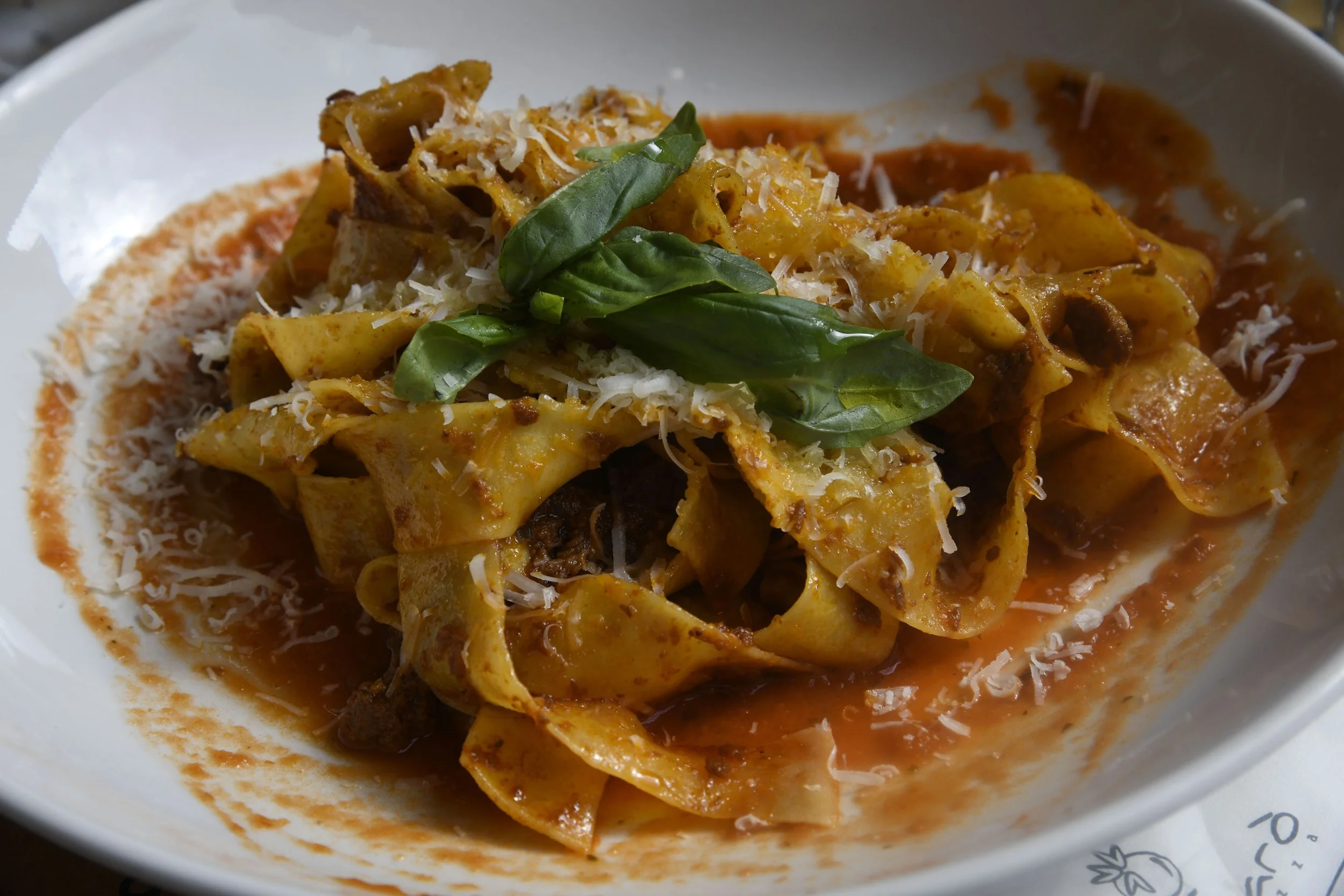
Pappardelle al Cinghiale, wild boar ragu with pasta, is served at Pizzeria Pummaro in Pienza.
It took a while, but he finally found a place 45 minutes away. They were relieved to take it.
This story is not an indictment of Italy nor a call to avoid visiting the country. We had a wonderful trip. If Italy is on your bucket list, I absolutely recommend going there.
Traveling in the deep shoulder seasons used to be a solid hack to seeing the quieter side of places, but the locals we spoke with said the biggies like Venice, Florence and Rome no longer have much of an off-season. Maybe a few weeks in December and January to catch their breath, they said.
Beyond pre-booking tours and tickets, doing a little research ahead of time, enjoying the "biggies" these days means reassessing your idea of personal space. The only way to get close to Botticelli’s "Birth of Venus" in Florence this past month was to join the mob fronting the Uffizi Gallery's masterpiece. As people left the front, we shuffled forward like penguins. At one point a scrawny little woman was pushing me hard in the back as if I were her offensive lineman. A dose of stink eye stopped that nonsense, but then, there we were, standing side by side looking up at a naked lady standing in a scallop shell.
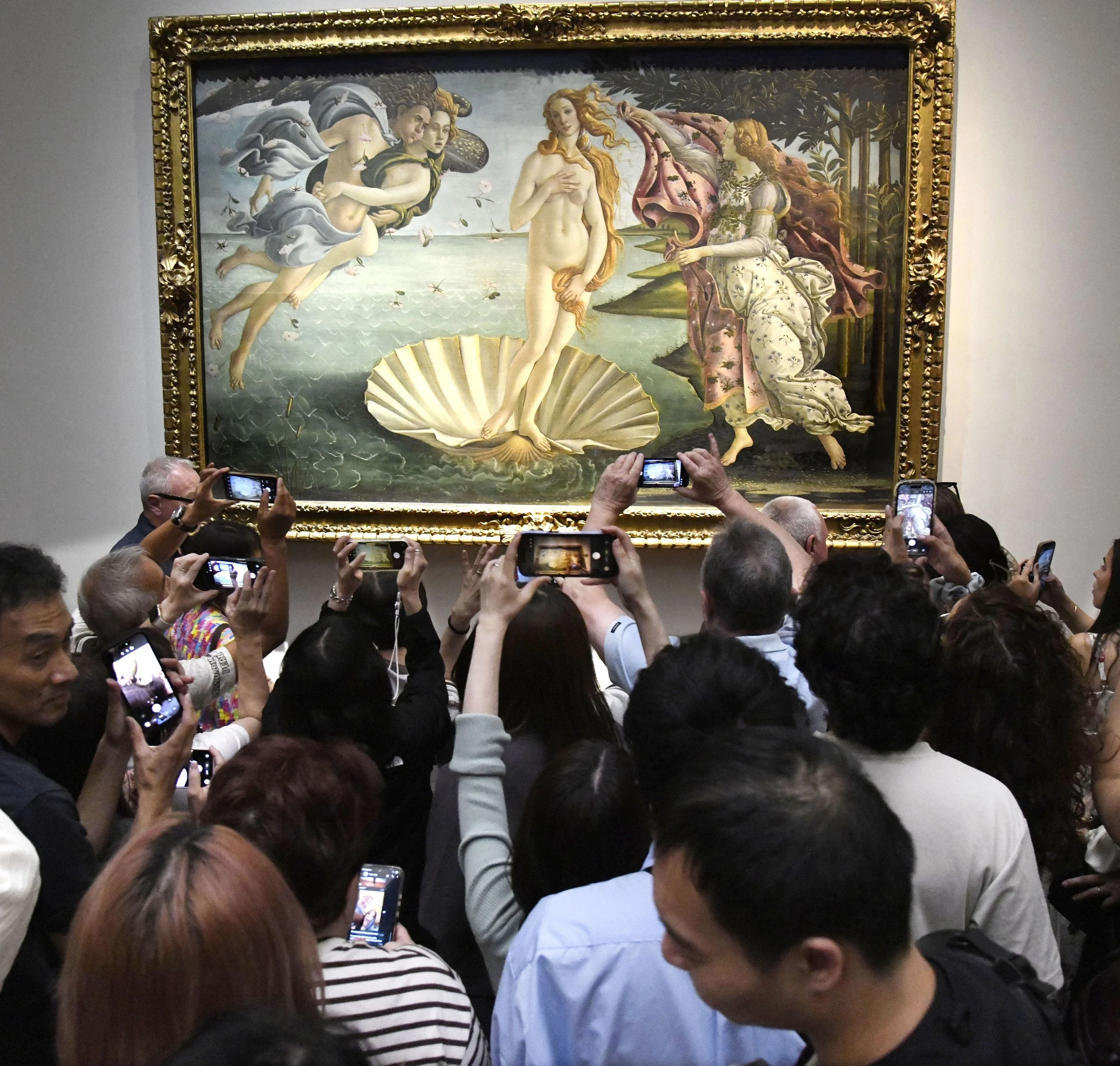
Botticelli’s "Birth of Venus" draws a crowd at the Uffizi Gallery in Florence.
An ominous downside to this crush is pickpockets. It makes it easier for them to get close to do their dirty work. We can all take a lesson from the French couple we met during breakfast at our Venice hotel. They were joyous the first morning and disconsolate the next. He'd had his wallet stolen on a crowded vaporetto and lost not only his credit cards and money, but also his travel documents. The attendant at the front desk said it happens all too often, including once to her.
Kelly and I prefer to leave room for spontaneity in our travel and thankfully that is still possible. On nights we did not have dinner reservations, we always found a restaurant to sit down and eat. Or we retreated to our hotels' common areas to have picnics with local meats, cheeses, veggies, fruit and bread.
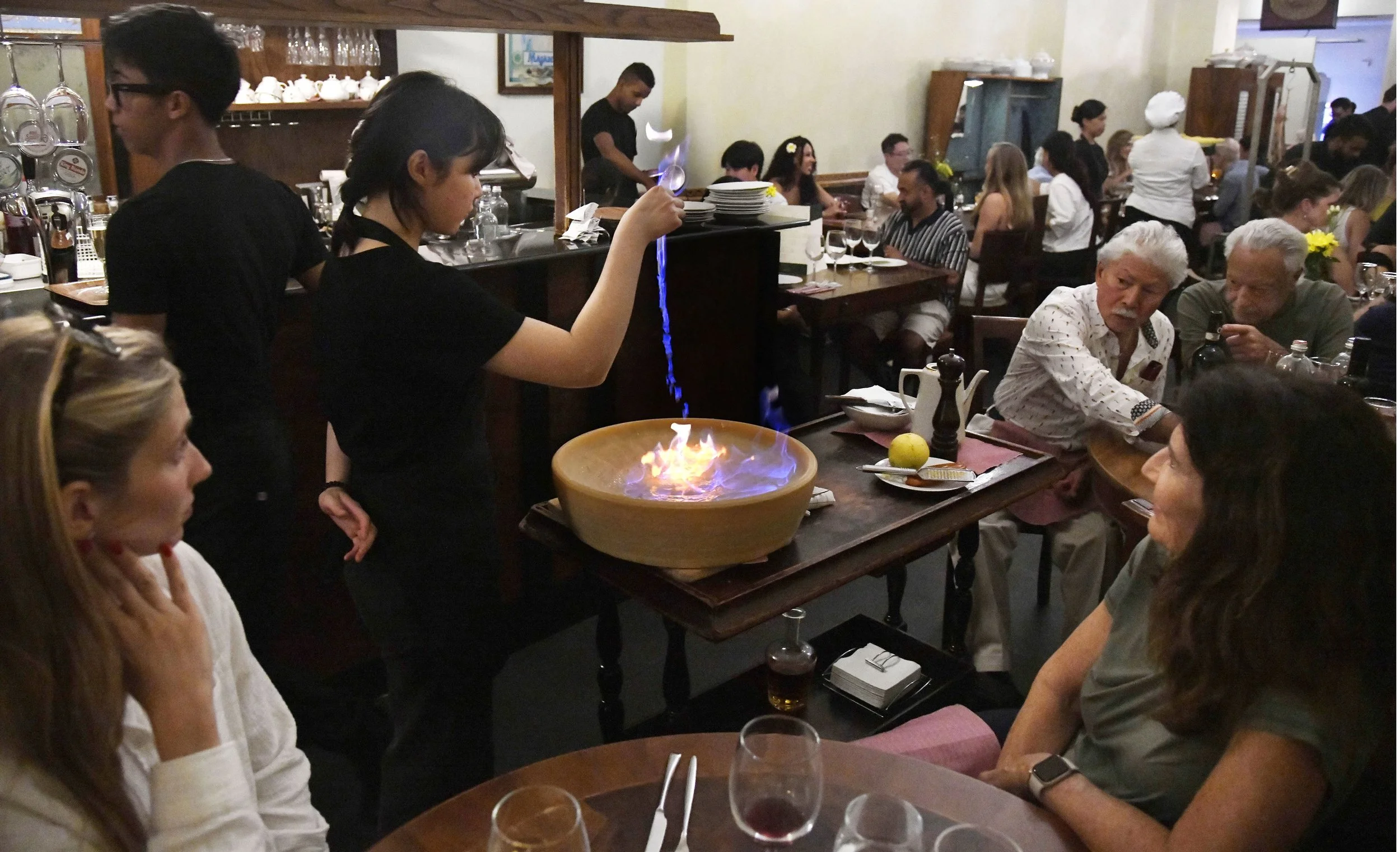
A staffer at Florence's Osteria Pastella tends a brandy fire atop a wheel of Grana Padano cheese while making Tagliatelle flambé al tartufo fresco in crosta di Grana Padano. Once the top surface of the cheese is melted, pasta noodles, truffles and seasonings are stirred into the melted cheese, then plated and served.
To dine in places everybody is talking about, ones that are lighting up the internet, it's best go online and book a month or two in advance. That's how we got a table at Osteria Pastella in Florence, a place where they light brandy atop wheels of cheese to make Tagliatelle flambé al tartufo fresco in crosta di Grana Padano. Kelly and Brooke ordered it and both loved it. Tableside blazes were only part of the show. The restaurant also had a pasta chef crafting fresh tortellini in the front window, and a waiter wheeling hanging haunches of cured meat to tables and sectioning off hunks to order.
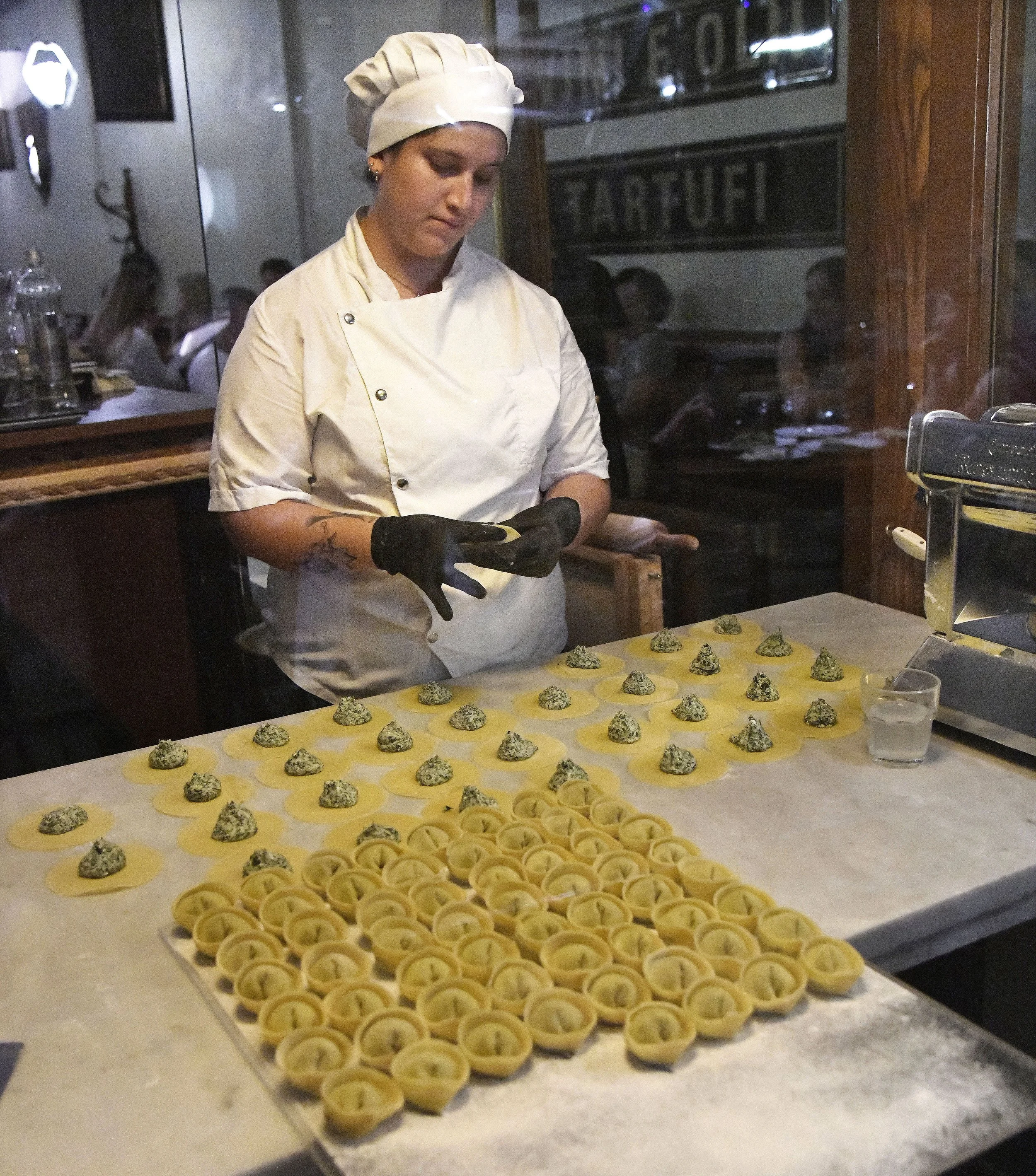
A pasta chef makes cappelletti in the front window of Florence's Osteria Pastella.
When a golfer we met heard we ate there, he said he lived on the same street. He said he didn't know if it was the showy cooking, the pasta maker on display, or good timing, but the place has found success where two previous operations failed in quick succession.
Though Kelly and I love to improvise, we are no longer kids traveling by the seat of our pants. We usually book European accommodations far ahead of time, six months or more. That's how you get to stay in Rick Steves' top recommendations, which generally mix good deals with superb locations.
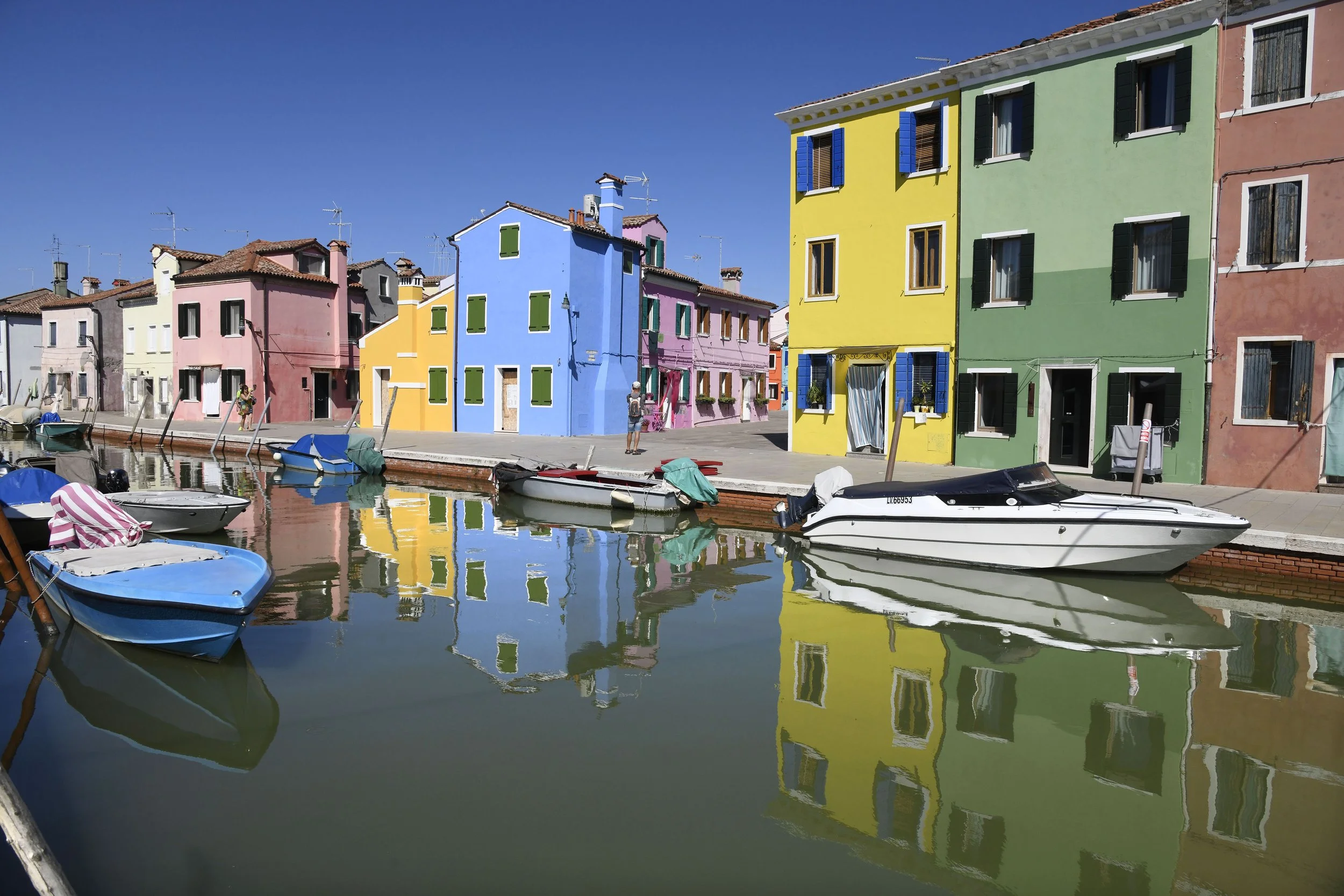
Legend has it Burano's fishermen painted their homes with bright colors so they could find them in the fog. Now the colors are enforced by the local government. A 45-minute vaporetto ride from Venice proper and known for its handmade lace, Burano makes for a fun day trip.
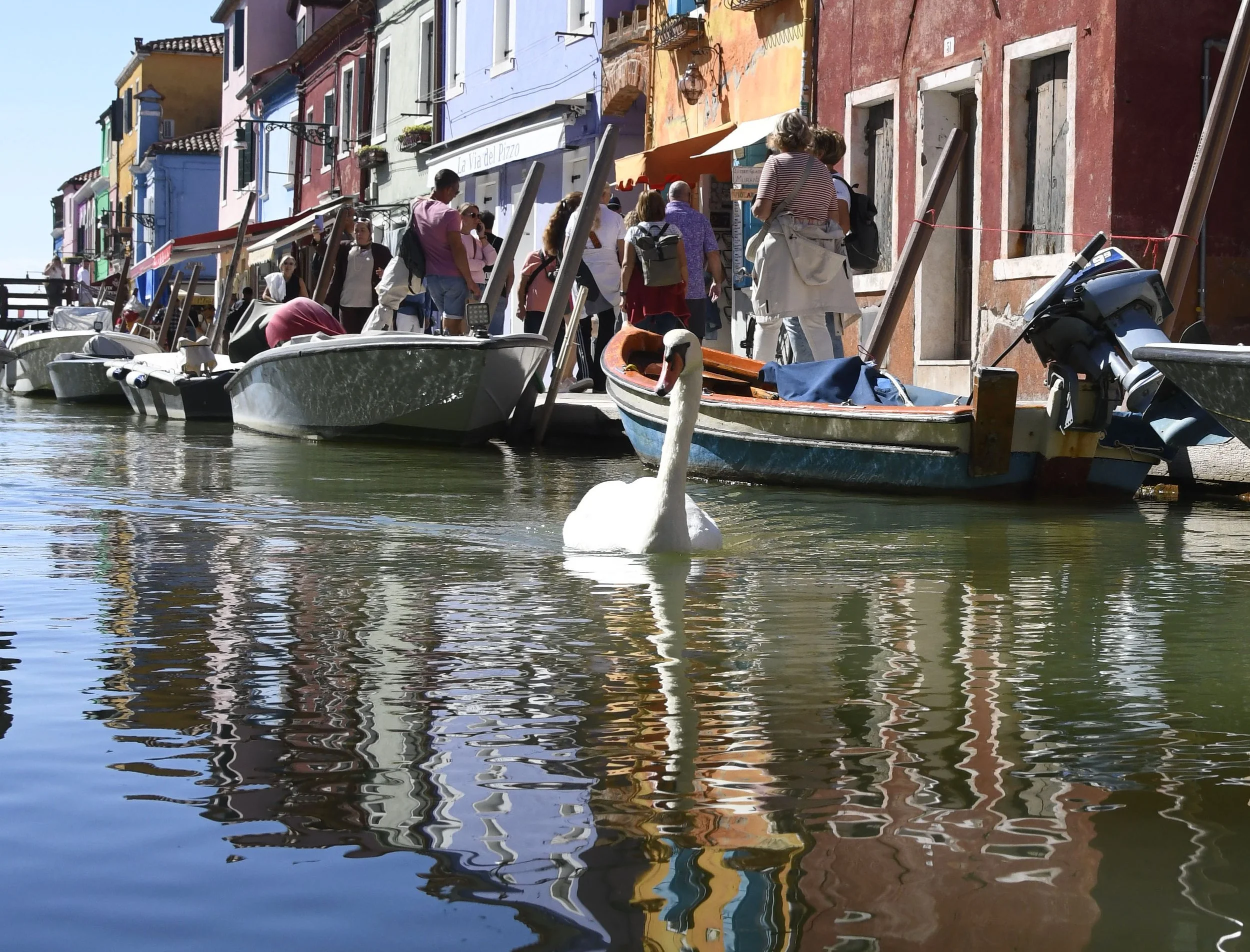
A swan navigates a Burano canal.
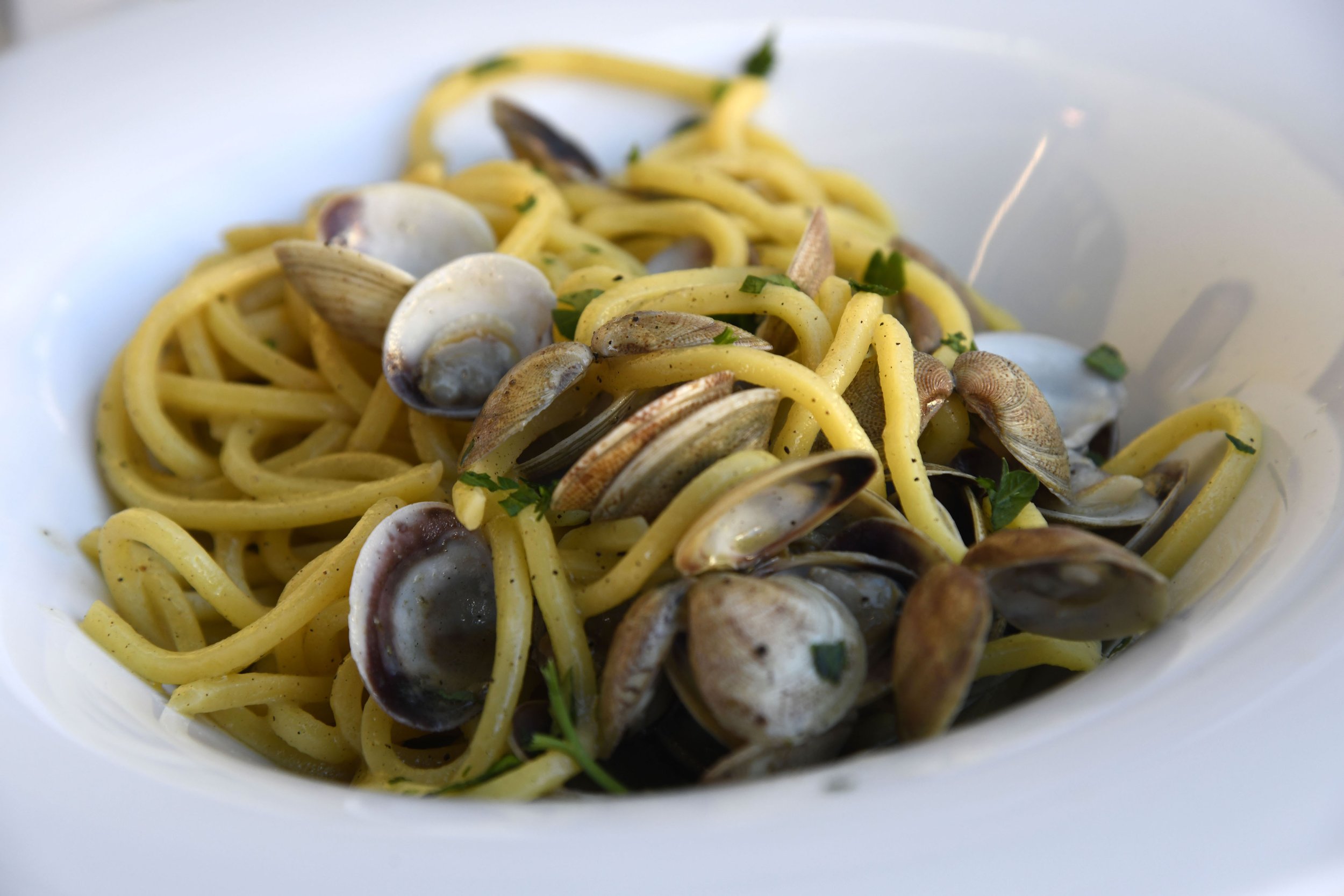
Spaghetti alle Vongole is served at a canal-side restaurant in colorful and quaint Burano.
This trip was assembled on short notice. Selections were limited. With some effort online, we found hotels in the old city centers of Venice, Verona and Florence. They put us close to the action as well as providing safe havens to escape the chaos. All three had rooftop areas overlooking the city.
We struck out in the towns we planned to base our stays in the Dolomites and Tuscany. Everything was booked, so we cast our search a bit farther afield and ended up in the quiet hamlets of Bulla and Petroio respectively. Both were about 15-minute drives from the village hustle and bustle. They proved to be perfect places to unwind. To take in scenic vistas and farm views. To get a little elbow room.
For most of the trip, we traveled with son, Mark Thayer, and daughter in law, Brooke. It was heartwarming to share experiences with them, to see the country we care so much for reflected in their eyes. It started with the splurge of a water taxi ride from Venice's Marco Polo Airport to a corner of Piazza San Marco that left us a short walk to our hotel. What a fun, stress-free way to enter the city.
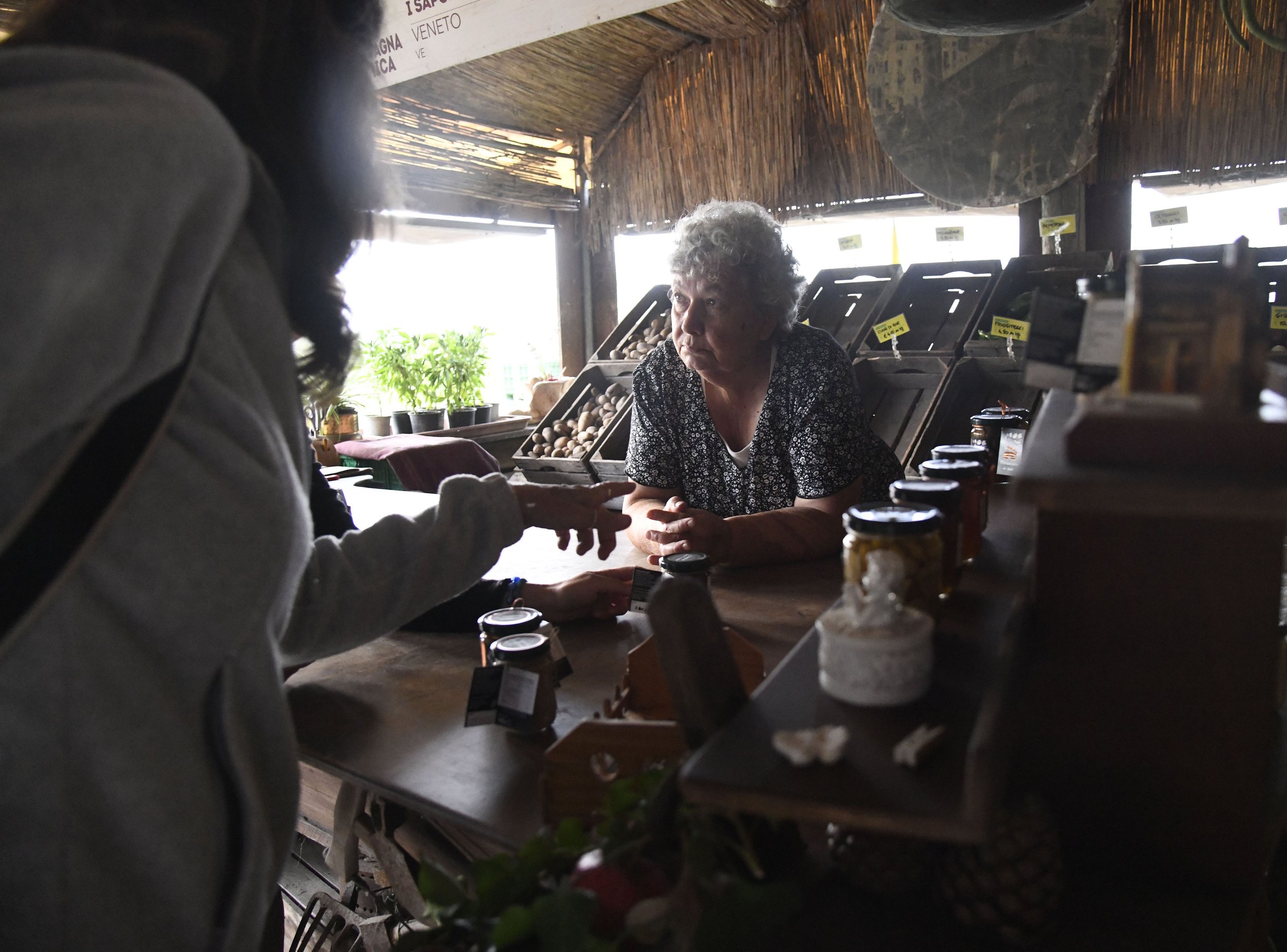
A farmer fields questions and sells homemade goods during a food tour on bucolic Sant'Erasmo island. Sant'Erasmo, known as the "vegetable garden of Venice," is the largest agricultural island in the northern Venetian lagoon. It is home to about 500-700 residents.
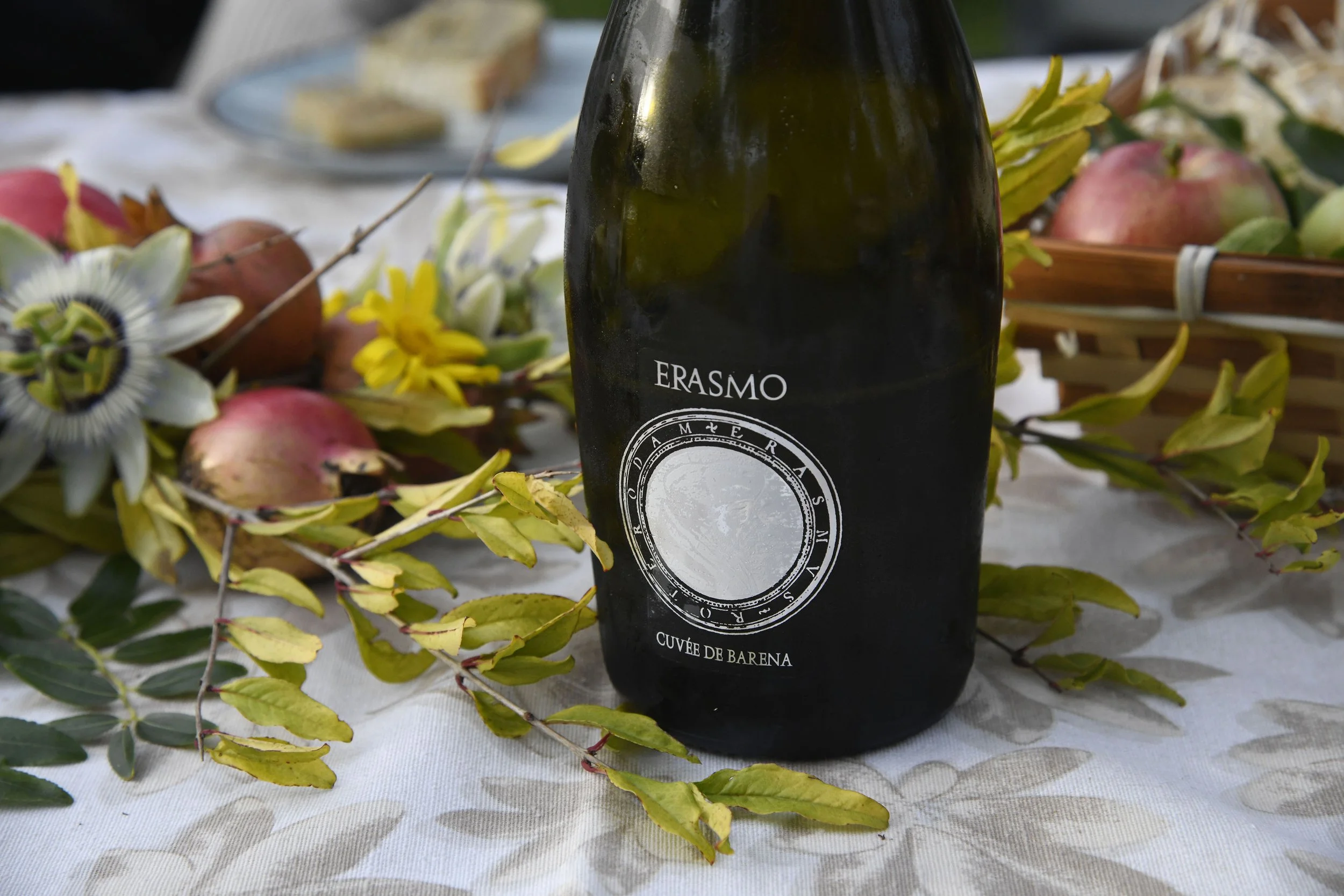
Along with the food boat tour, Venice highlights included a visit to colorful Burano via vaporetto, standing atop San Marco's campanile as its loud bells tolled the noon hour, and early-morning strolls through neighborhoods as residents did their shopping and accompanied their kids to school. We grazed the stalls of Rialto Market and survived aggressive seagulls intent on stealing our paninis.
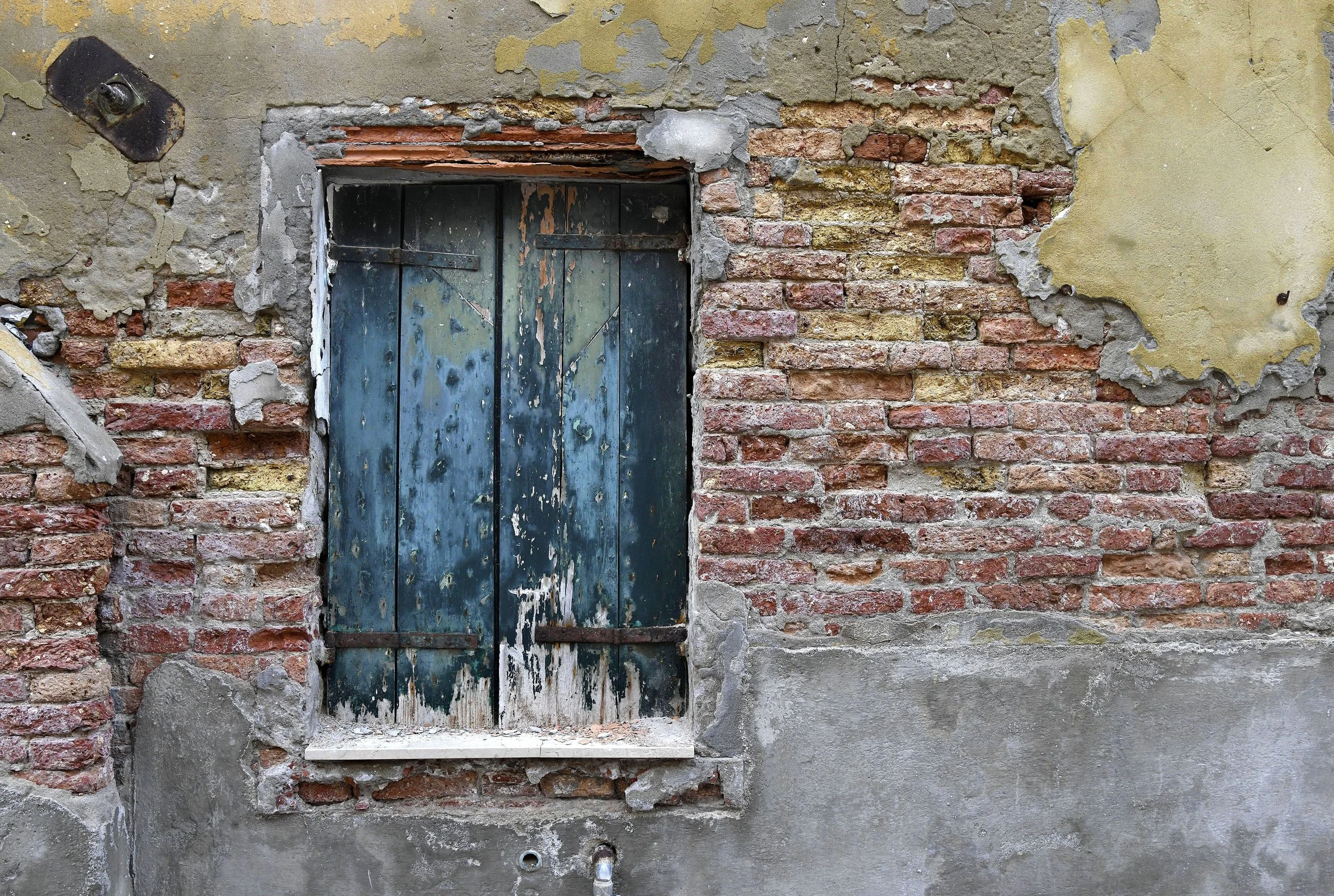
Venice shows its age in many parts of the well-loved city.
Florence is known for its museums. Venice is one. From the dust and cobwebs coating the statues in Basilica di San Marco to the crumbling bricks of many of its buildings, signs of Venice's slow decline are everywhere. The decay says Venice has had its day–that it is a living breathing testament to glories of bygone eras. Perhaps that is its allure. Come see the jewel of a city before rising sea levels and the weight of a billion tourists sinks it to the bottom of the lagoon.
High and dry in the Dolomites, the alpine meadows beneath Monte Seceda could have been crowded with tourists the morning we ascended toward the popular peak in a large cable car, but a thick layer of clouds kept many away. About 100 yards from the top of the line, the car emerged from the cottony mists into a bluebird day. Squeezed in like sardines, the car's surprised inhabitants broke into a multilingual cacophony of "wows" and "amazings!"
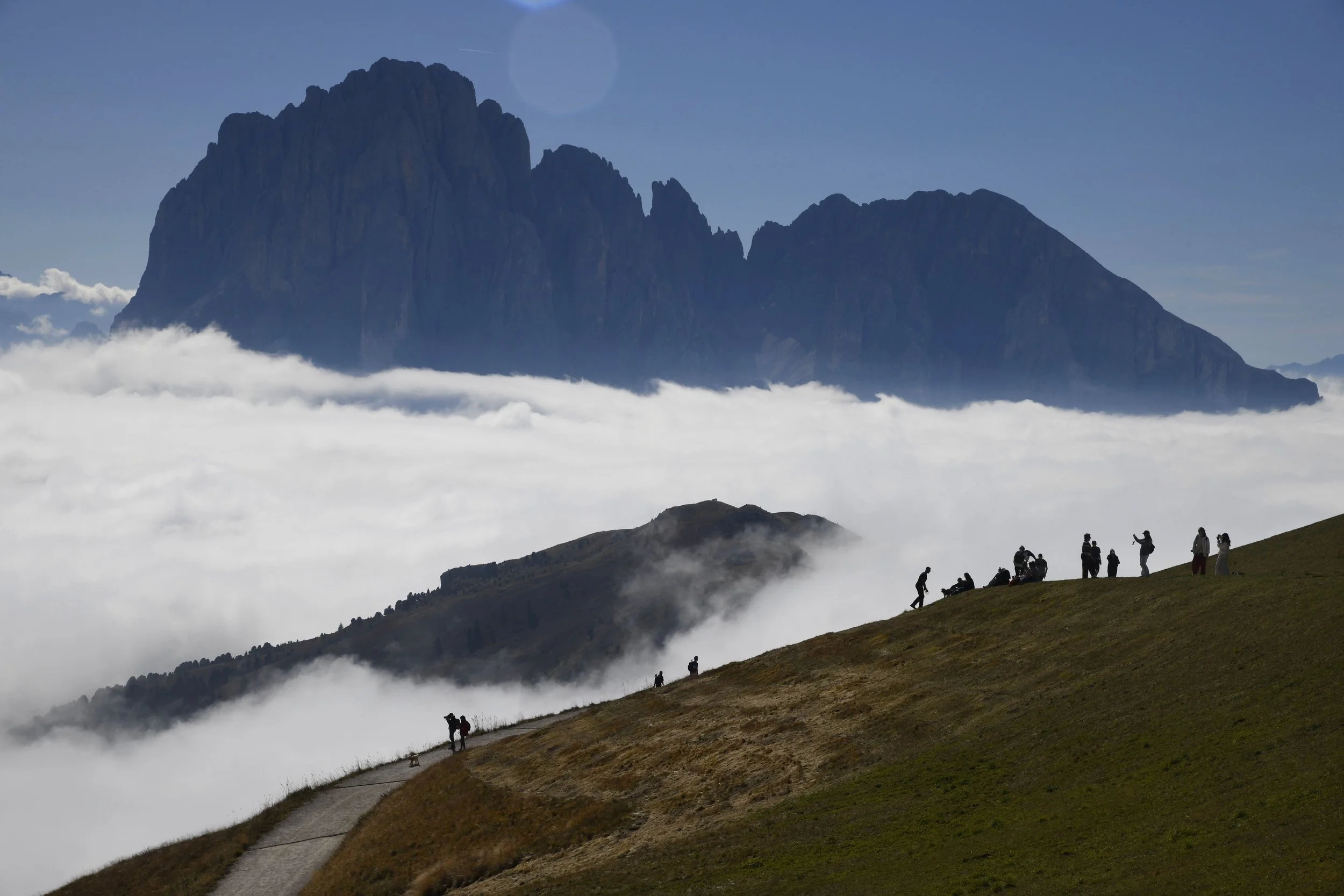
Peaks of the Dolomites in northeastern Italy thrust free of soupy clouds during a visit to Seceda. Obscured beneath the clouds are the valleys connecting the towns of Ortisei, St. Christina and Selva in Val Gardena.
We hiked. We posed for pictures. We relaxed with drinks and salty French fries at a mountain Refugio. You almost had to pinch yourself to believe it was real. It would have been nice to see down into the valleys, but nobody was complaining. Two days later, we rode a cable car up the opposite side of the valley to hike along the flanks of Mont De Sura. This time the clouds were above us. De Sura's jagged peaks, so clear in the distance from Seceda two days prior, were now cloaked in white. Europe's highest meadow, the Alpe di Siusi, was visible in the distance as we hiked.
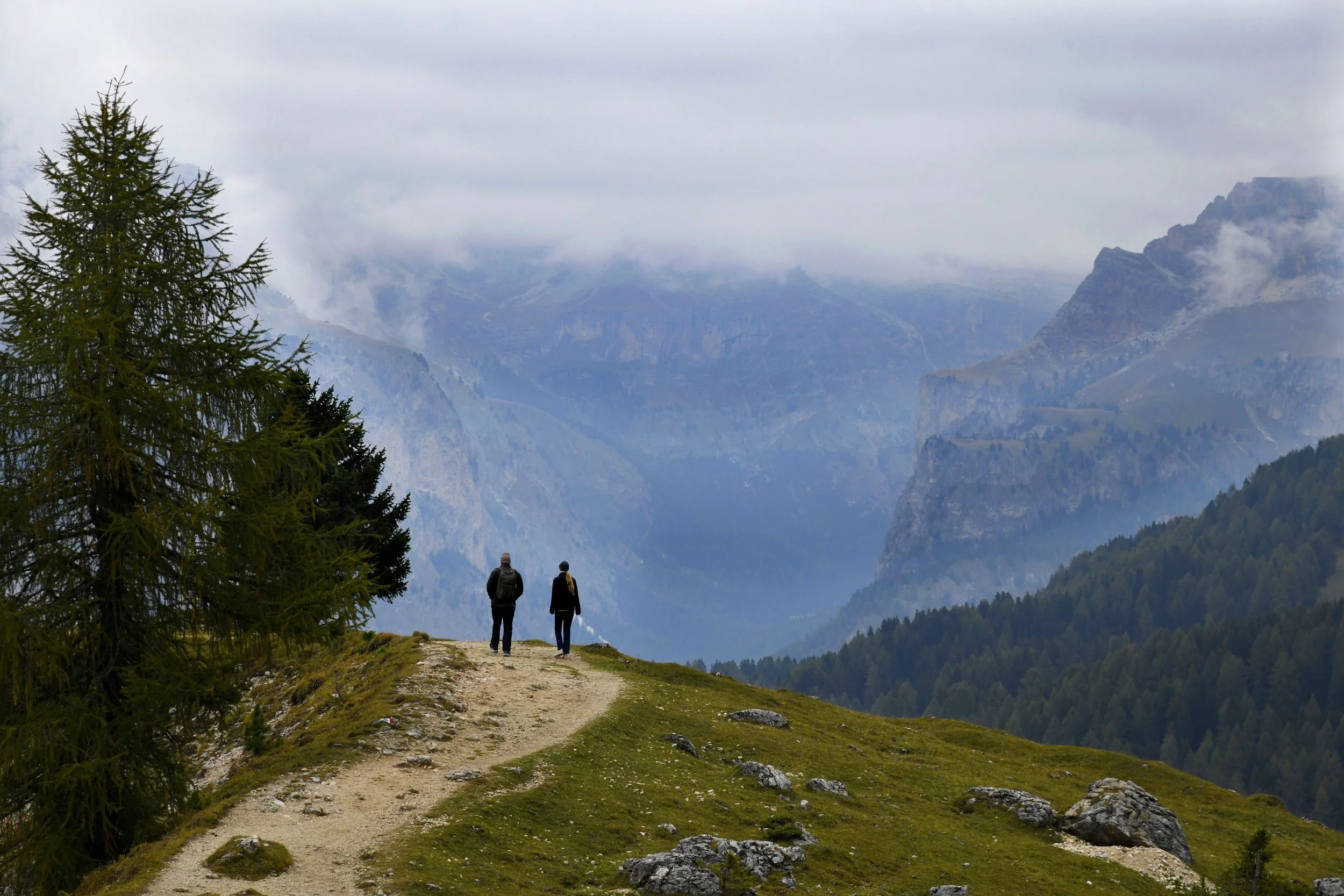
The flanks of Mont De Sura offer Tyrolean views to a pair of hikers..
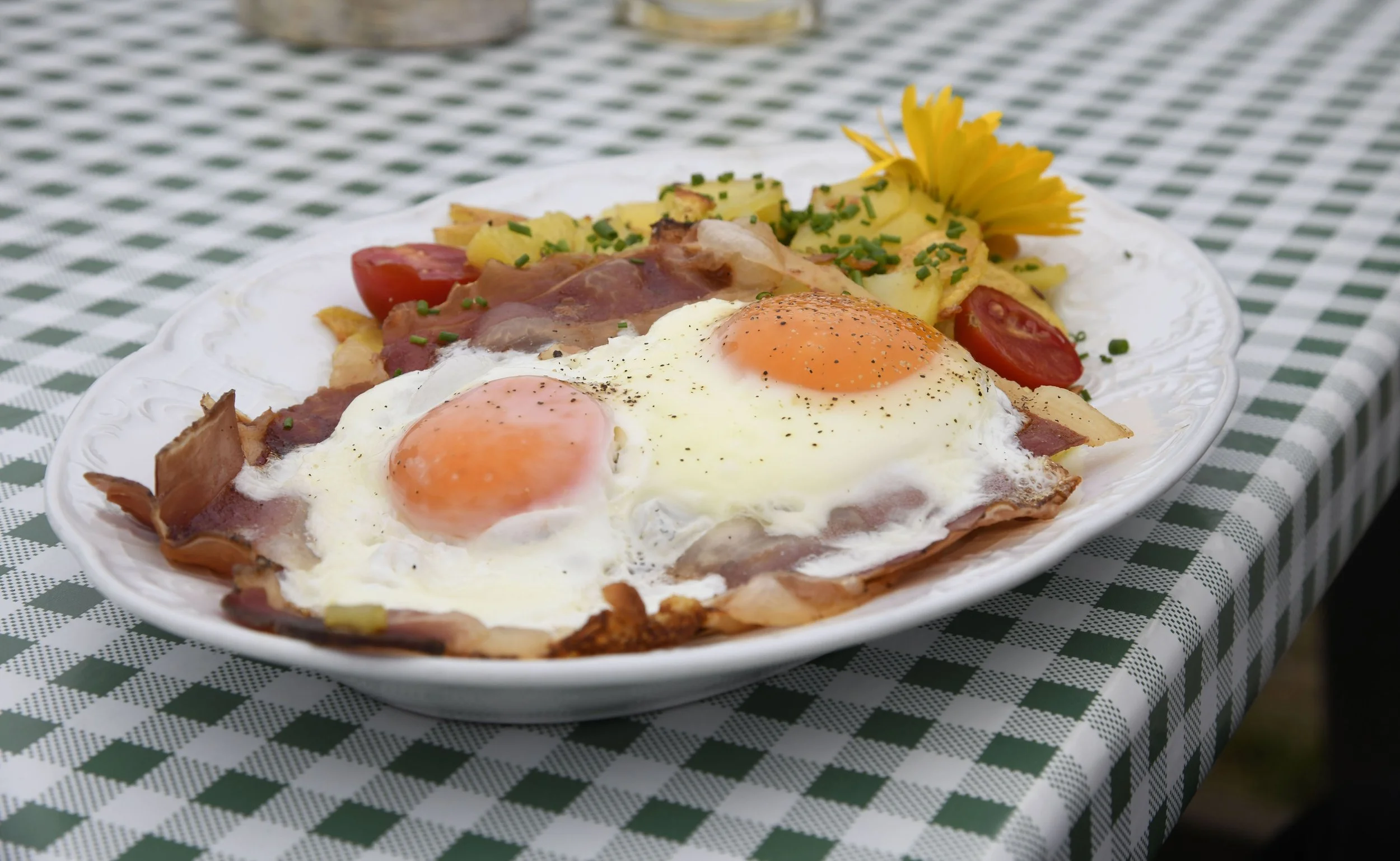
Fried eggs, ham and potatoes make for a hearty lunch at a Mont De Sura Refugio in the Dolomites.
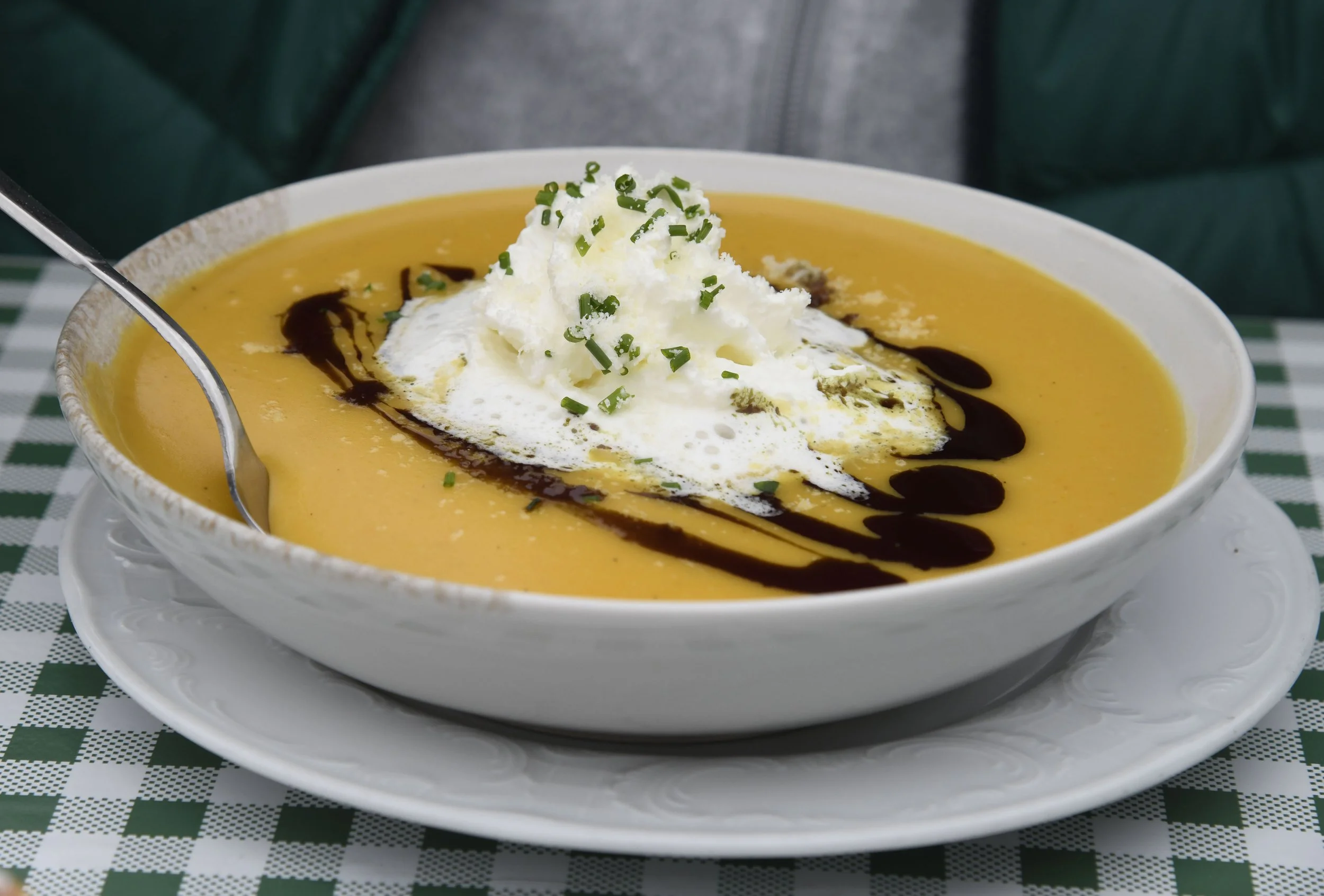
A bowl of steaming pumpkin soup is served at mountain Refugio on Mont De Sura.
Over warm pumpkin soups and cold beers at a quiet mountain Refugio, we watched the staff prepare the wooden hut and its equipment for the close of the season. The only hustle and bustle came from a nearby goat pen where a nanny and her kids had the zoomies. Twenty-four hours later, we were wading through a sea of people on our way to climb the 463 steps to the top of Florence's Cathedral of Santa Maria del Fiore, the Duomo.
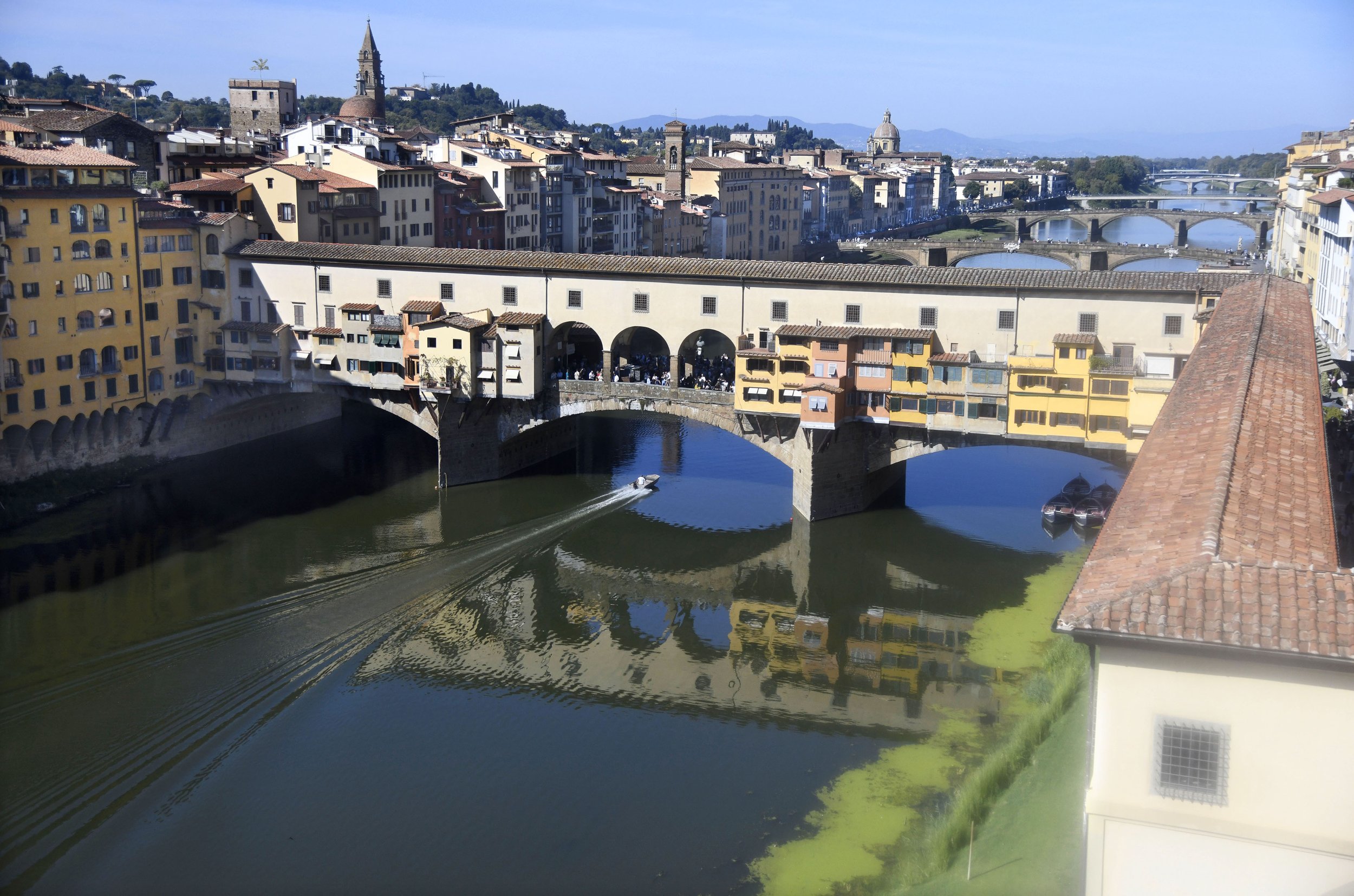
One of the best vantages of Florence's iconic Ponte Vecchio is through the Uffizi Gallery window this photo was taken from.
There's a reason more than 16 million people visit Florence in a year. Heart of the Renaissance, it is home to some of the world's great buildings and works of art. The Uffizi is considered by many to be Italy's finest museum. There's Michelangelo's "David" at Galleria dell'Accademia and the iconic bridge, Ponte Vecchio. The city on the Arno River has been welcoming guests for hundreds of generations. The Florentines are veteran hosts. You can see it in the food they serve and the way armies of them clean the streets and alleyways each morning before most guests awake to see the mess they left.
The Florence highlight I will most treasure had nothing to do with art, food or architecture. It was the Friday afternoon round of golf Mark and I played at Golf Club Parco di Firenze, or Florence Park Golf Club. The nine-hole, par-31 course on the north edge of town features five par 3s and four par 4s. The holes wind around lakes and through groves of trees. Our well-worn rental clubs were no great shakes, but serviceable. So serviceable we ended up playing a quick 18 holes instead of the quick nine we assured our shopaholic wives we would.
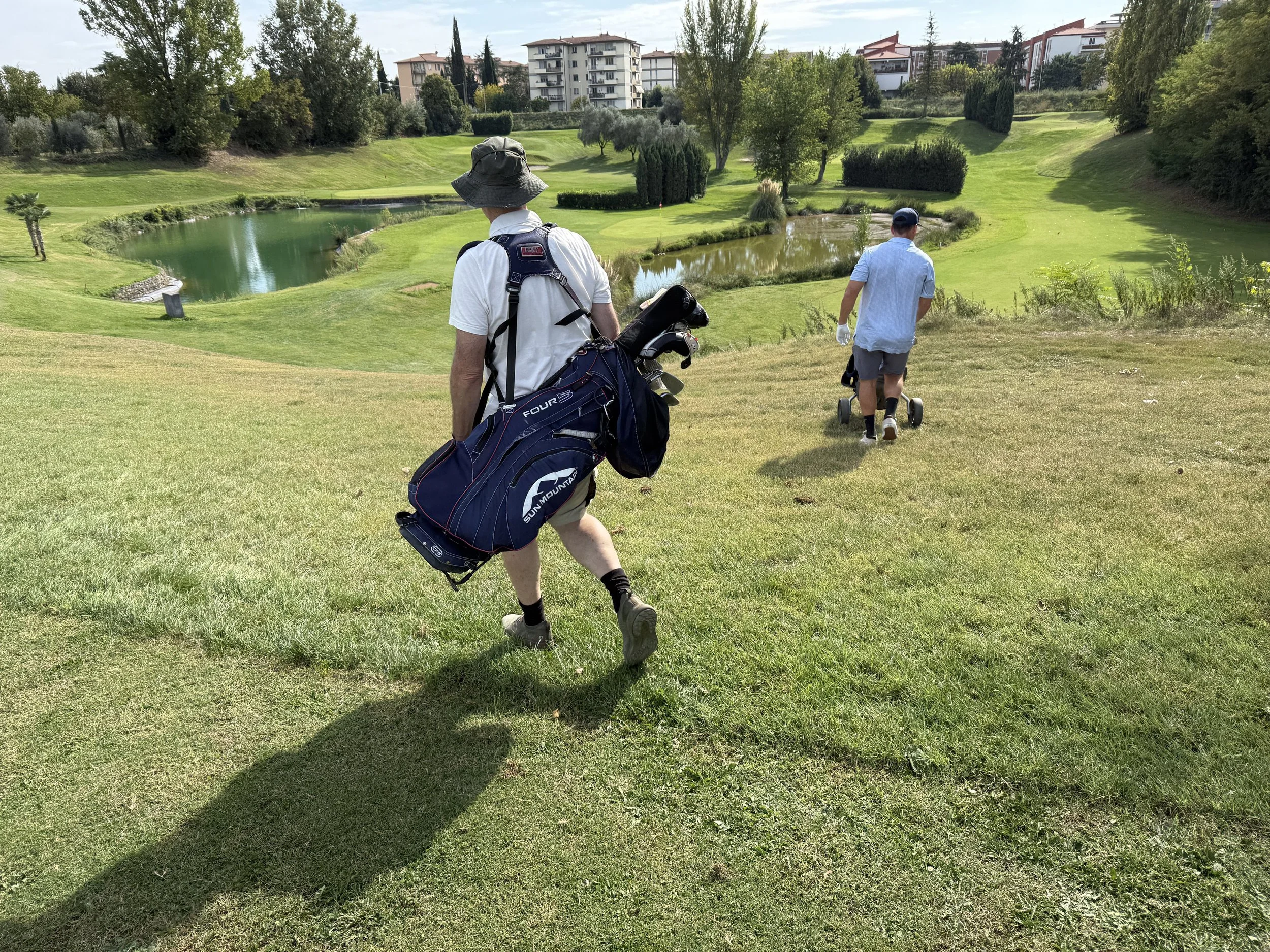
Golf Club Parco di Firenze offers a greener, less crowded side of Florence to explore.
A bonus was being paired with an Australian chiropractor named Steve who has been living in Florence for the past 40 years. He said he played the course all the time and was happy to point us around the layout, to suggest spots to aim for and those to avoid.
Walking the fairways, we got to hear what it is like to live in Florence. We compared notes on overtourism and how our local governments are trying to come to grips with the issue. He said Florence is finally taking steps to halt new transient rental accommodations like Airbnb, but the effort seemed too little, too late.
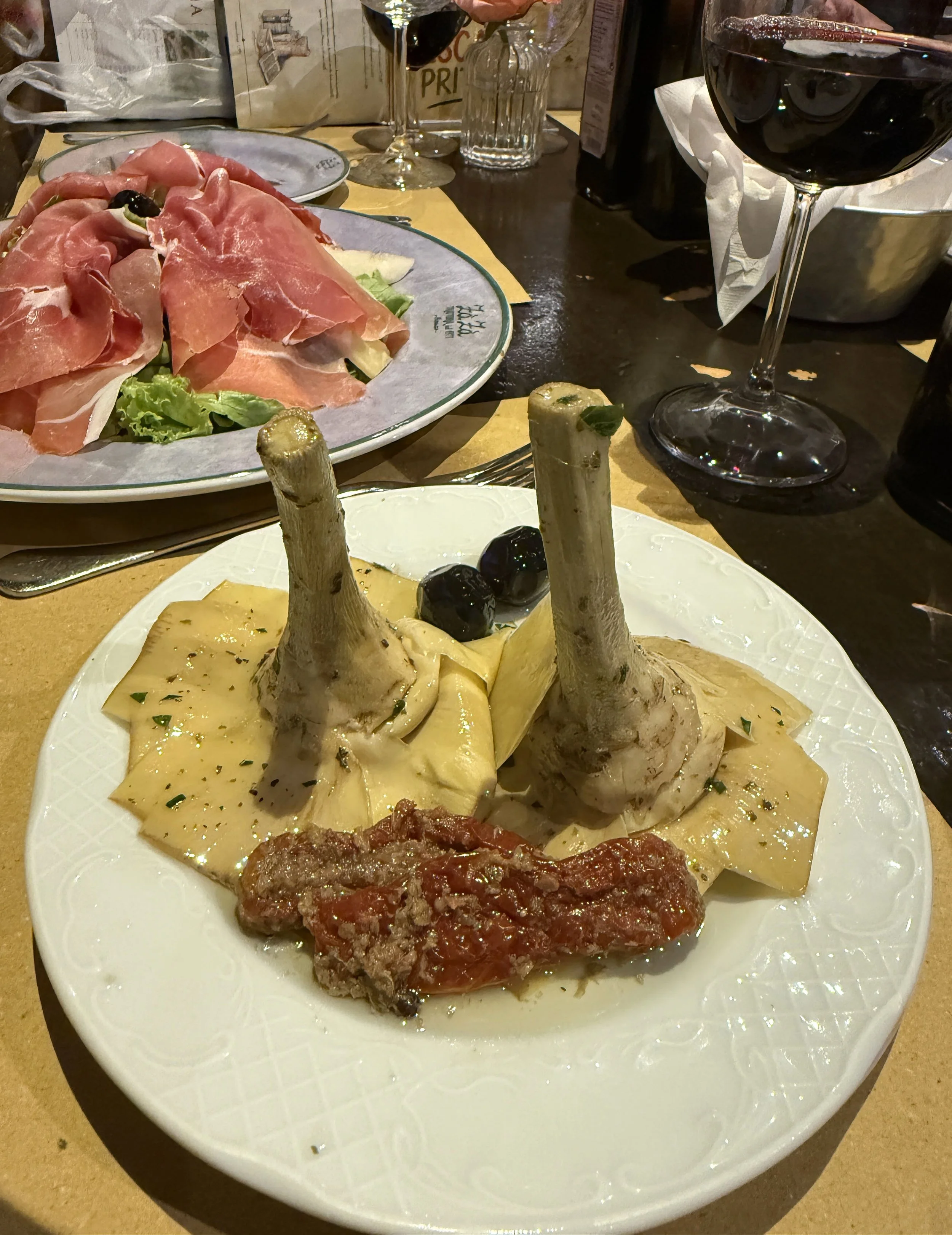
Artichokes, cured meats and cheese are an appetizer course at Trattoria Za-Za in Florence.
Bidding arrivederci to Mark and Brooke in Florence, Kelly and I rented a car and headed down into Tuscany. Little hilltop Petroio was our base as we took day trips to Pienza, Montepulciano, Montalcino, Monticchiello and San Quirico d'Orcia. Motoring up and down the winding country roads connecting the medieval towns, we noticed the vineyards had long been picked clean, and the olive harvest was just getting underway. As is custom on Hana Highway, whenever local speedsters found my tail, I pulled over to let them roar by.
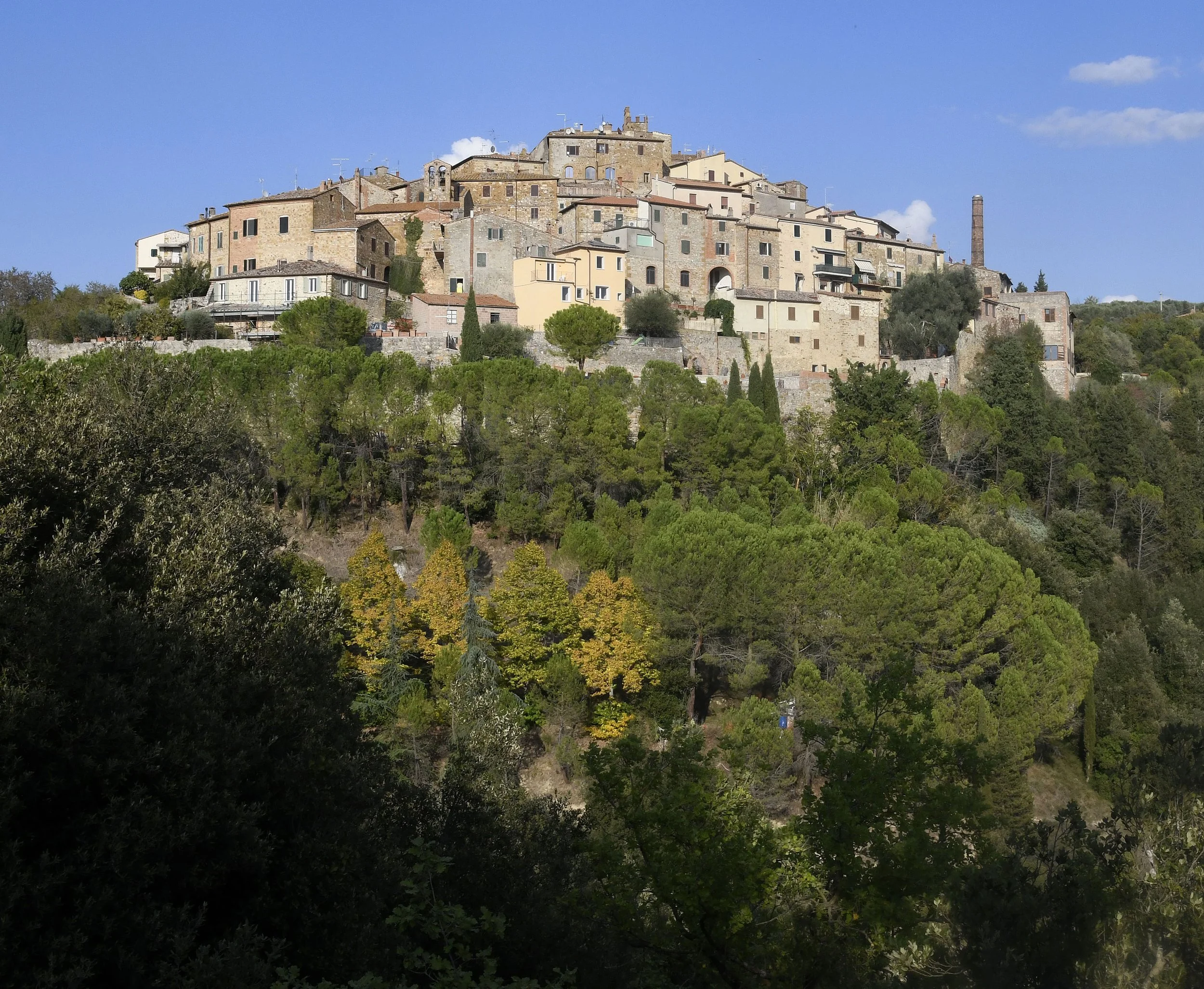
Dating back to the 12th century when it was established as a fortified castle settlement, the hilltop town of Petroio is home to 255 residents–and the Palazzo Brandano hotel. The hotel with wonderful views and simple breakfast, is located in what was once an olive oil factory.
The closest restaurant to Petroio was more than 15 minutes by meandering road away. We ended up eating lunch at restaurants and returning to the Palazzo Brandano hotel to savor picnic dinners and local wines in our suite. "Suite" sounds fancier than it was, but we found it calming to open our windows and listen to the conversations in Italian wafting up from the Medieval town's narrow main street. We had no idea what the locals were saying, but it sounded delightful.
You never know where the beauty of Italy will strike you, but given a chance, it most likely will. Upon reflection, Kelly and I agree the affair is not over; it's just time to take a break. Living up to memories is hard. So is sharing a thing you love.
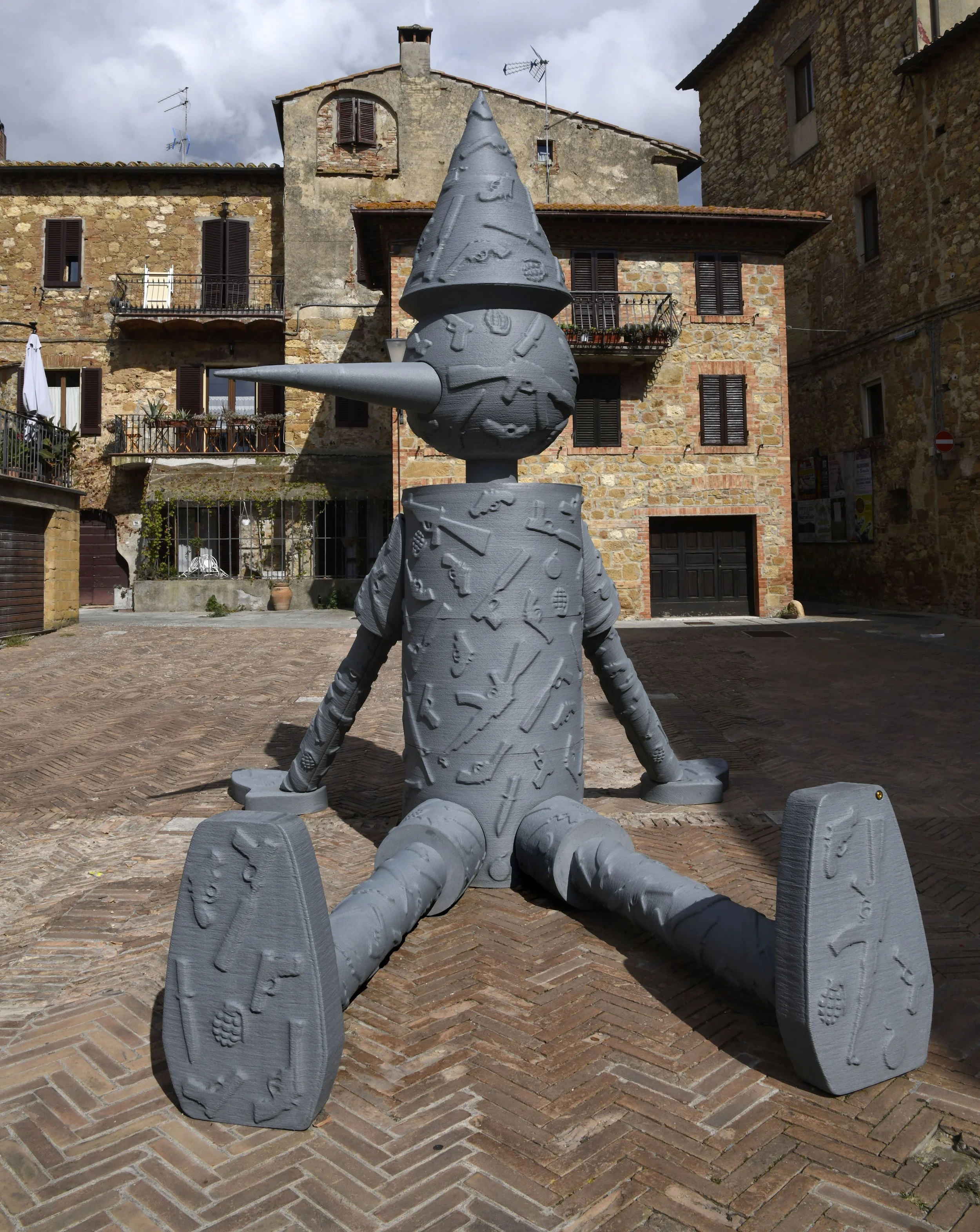
Throwing light upon the lies of warmongers and the global arms trade, "End Game" by Edoardo Malagigi is a 15-foot-tall, 3D-printed sculpture of Pinocchio. The artwork made from recycled plastic and imprinted with images of weapons was on display in Pienza in October.
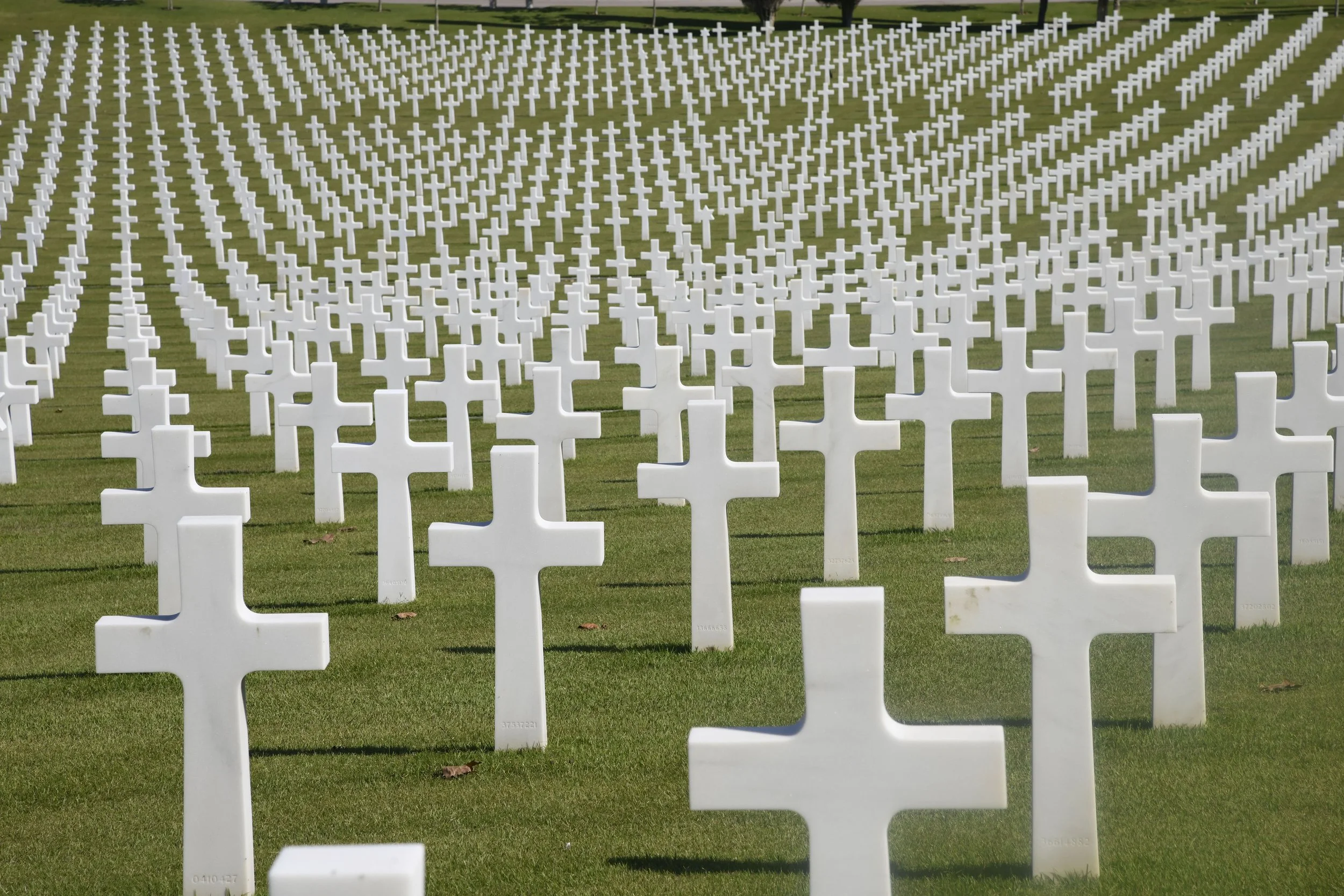
Resting on 70 acres about seven miles outside the city, the Florence American Cemetery and Memorial is a sobering reminder of the realities of war. The cemetery is home to 4,398 graves of U.S. service members, as well as a memorial dedicated to 1,409 missing in action. Most served with the U.S. Fifth Army and died in the bloody year of fighting across Northern Italy after the capture of Rome in June 1944. Hawaii soldiers from the legendary 442nd Regimental Combat Team and 100th Infantry Battalion also distinguished themselves in the area–while taking heavy casualties.
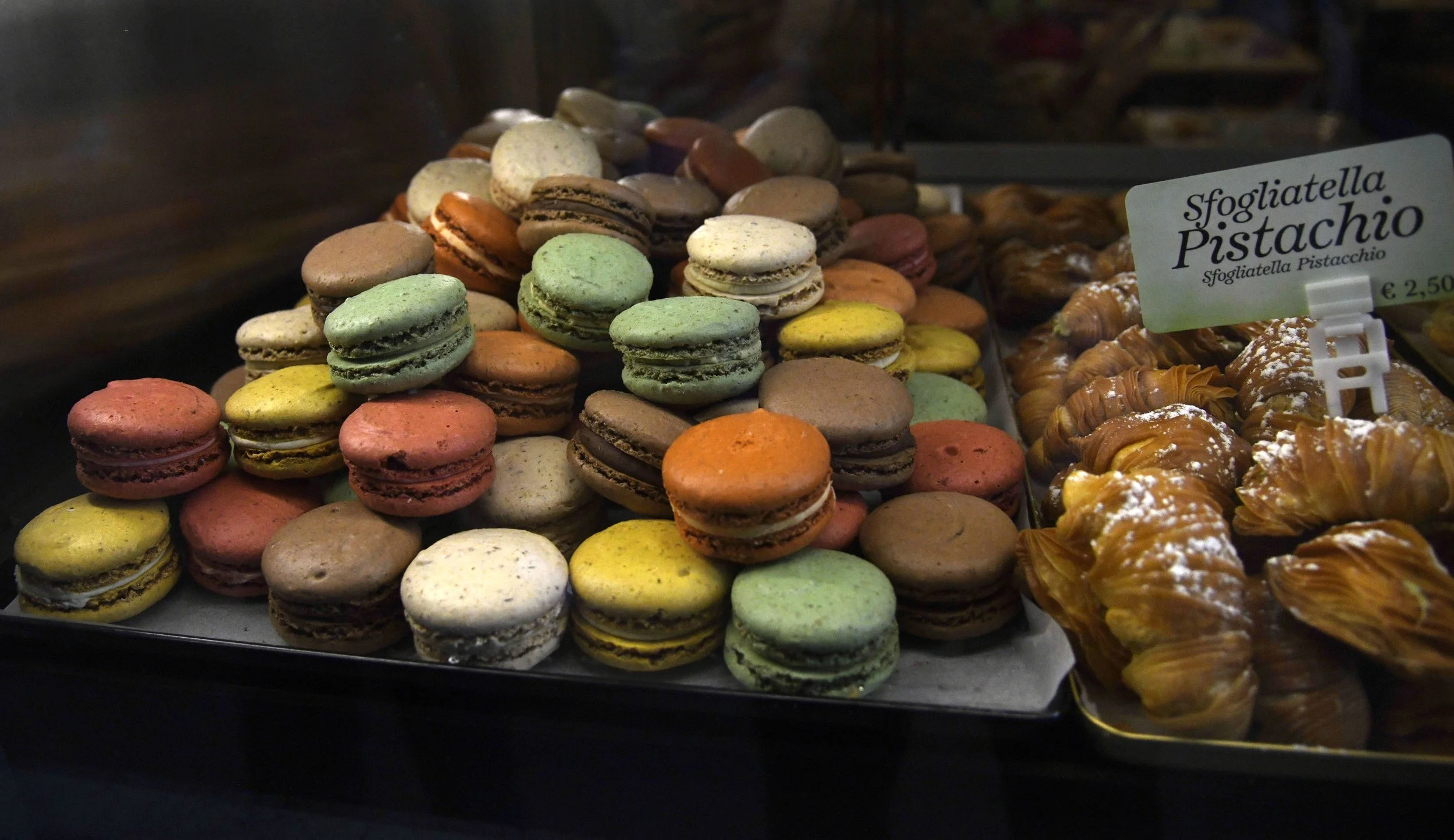
Macarons and pastries are displayed in a Venice shop window.
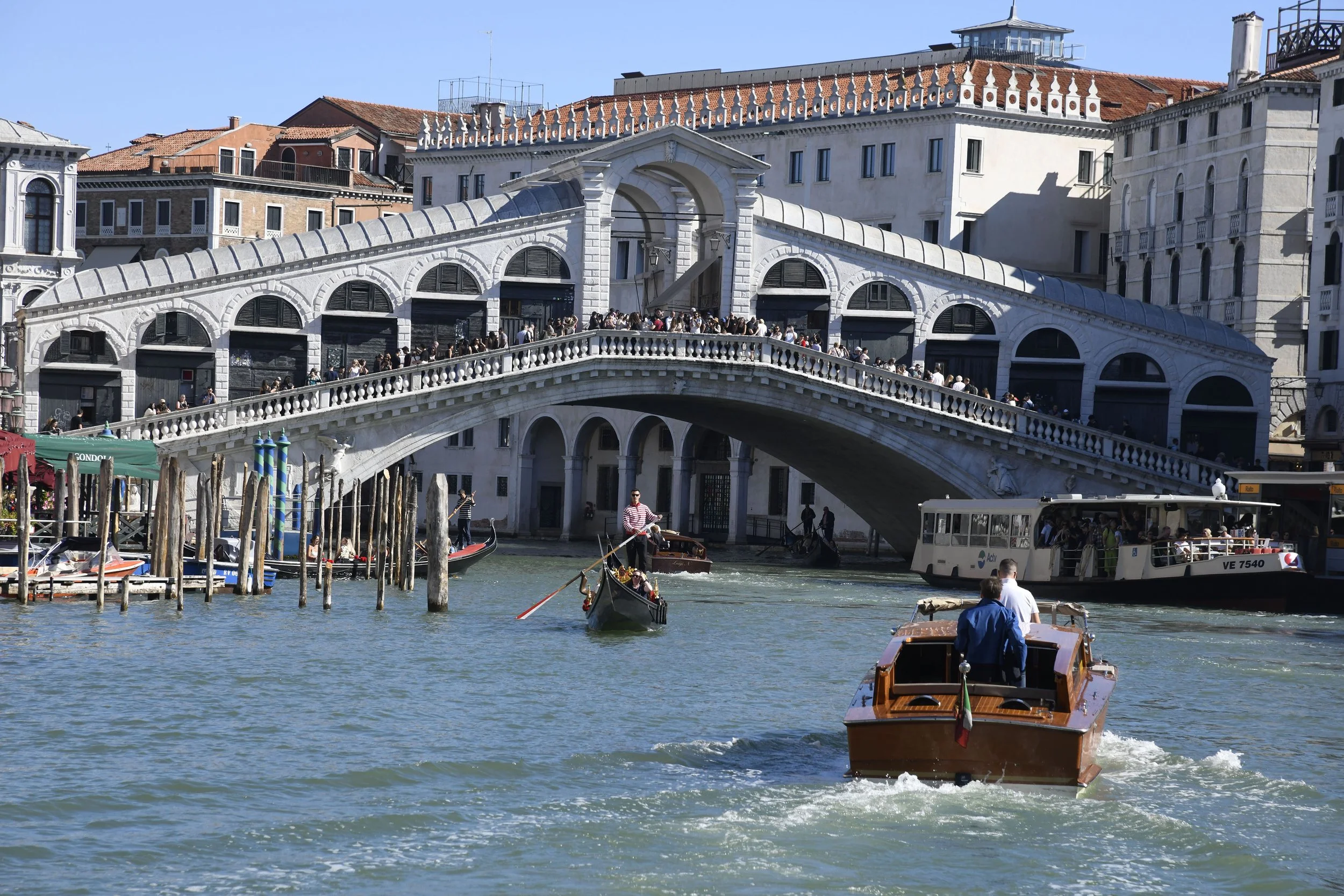
Crowds line the railings on Venice's famous Rialto Bridge spanning the Grand Canal.
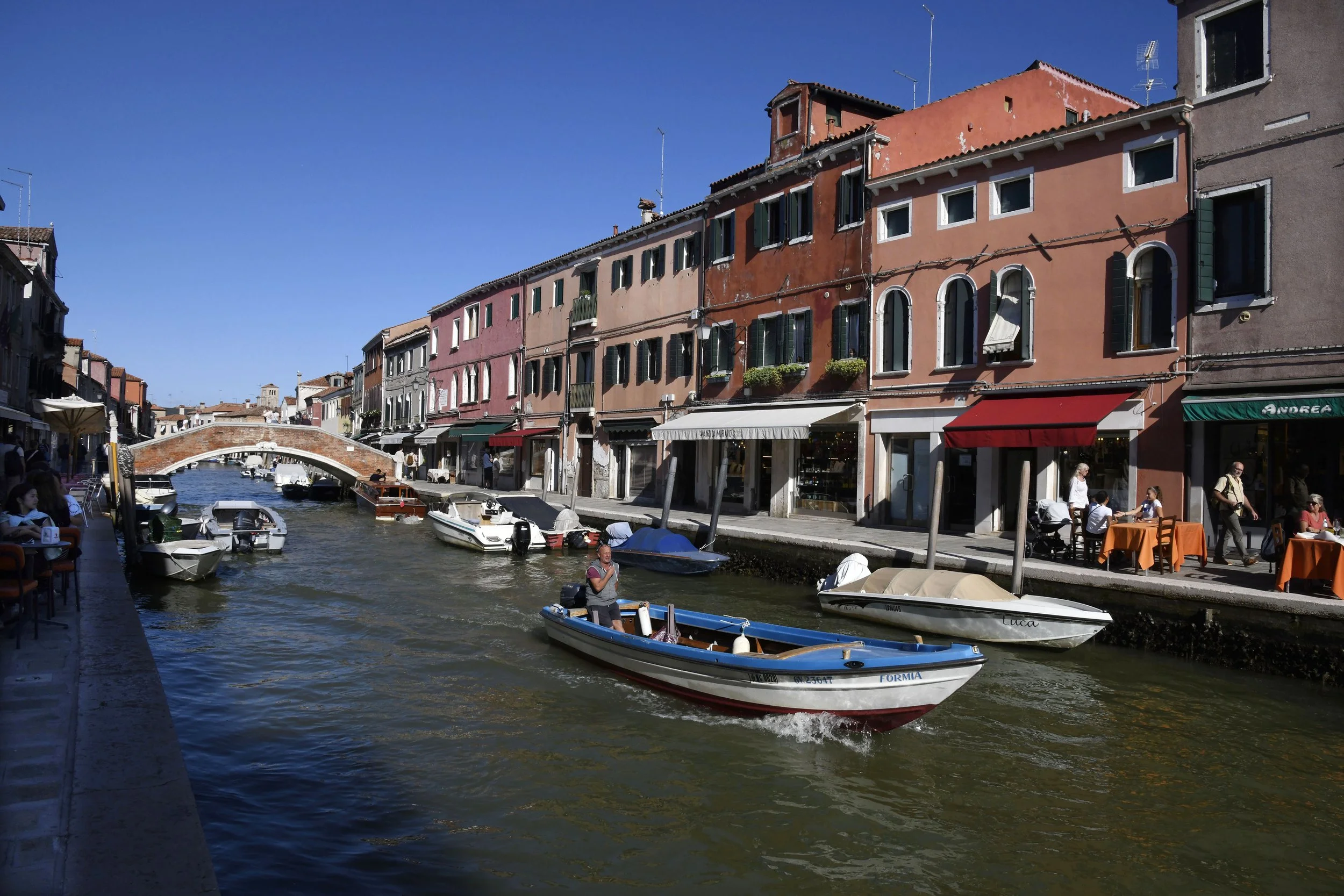
A boatman motors along a Murano canal.
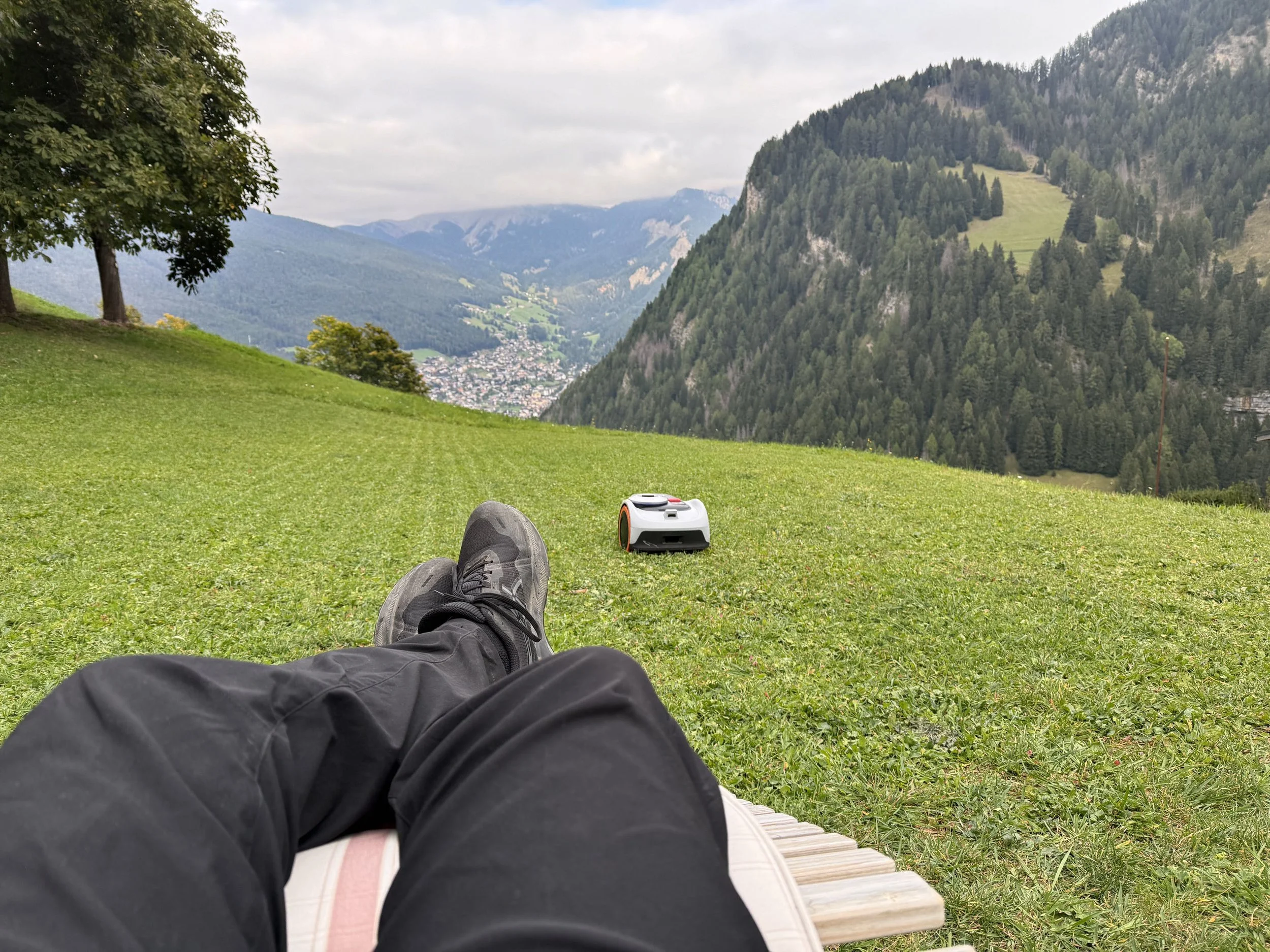
An automated lawn mower quietly trims the grass at Hotel Platz in Bulla while the author reclines in a chaise lounge, reading and taking in the mountain views. The valley town of Ortisei is visible in the distance, as is the cloud-shrouded peak of Seceda.
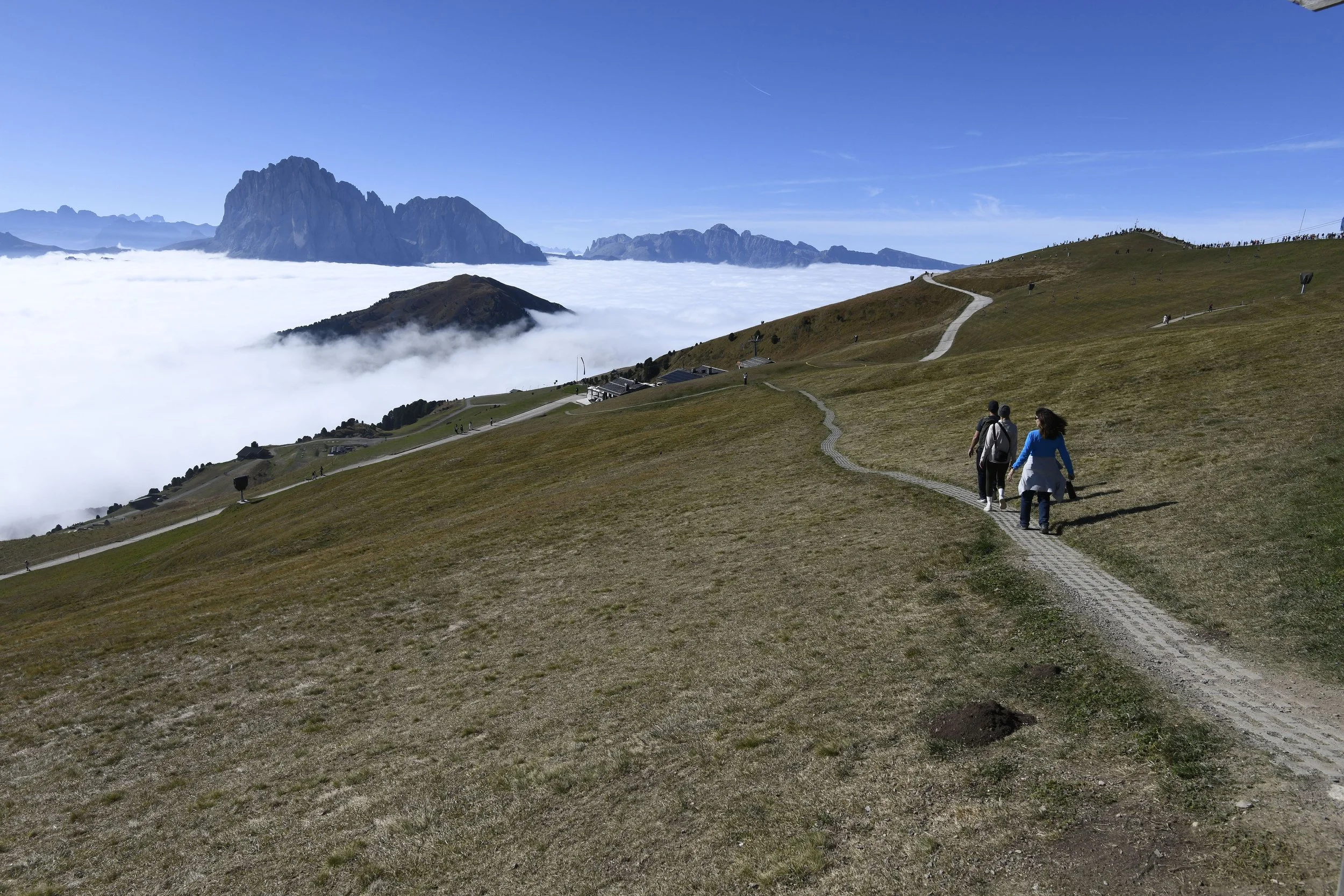
Hiking above the clouds at Seceda in the Dolomites.
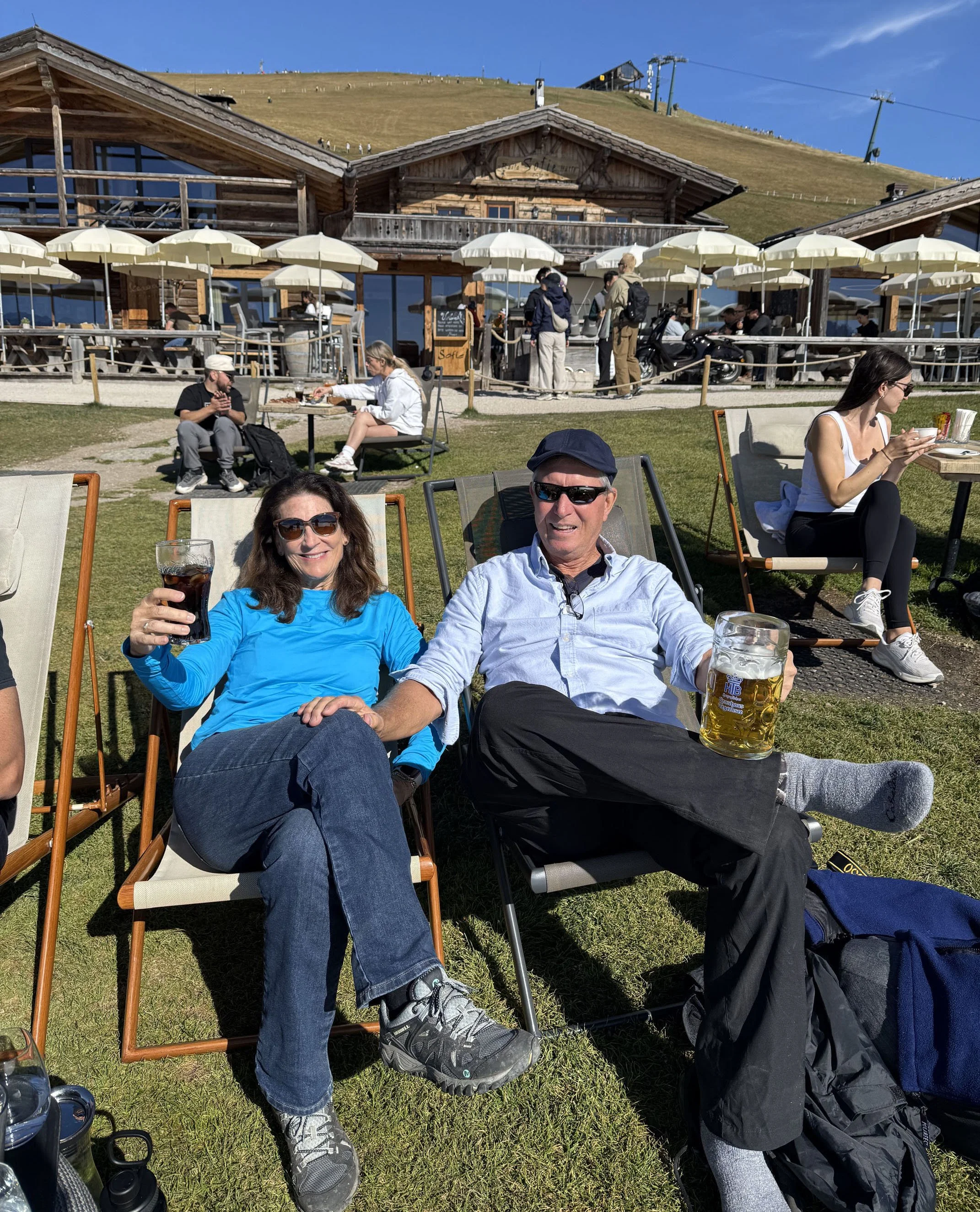
Basking in the Tyrolean sun during a break in hiking at Seceda, the author and wife, Kelly Thayer, enjoy refreshments at a mountain Refugio. (Brooke Thayer photo)