California scheming hits a Heat Dome
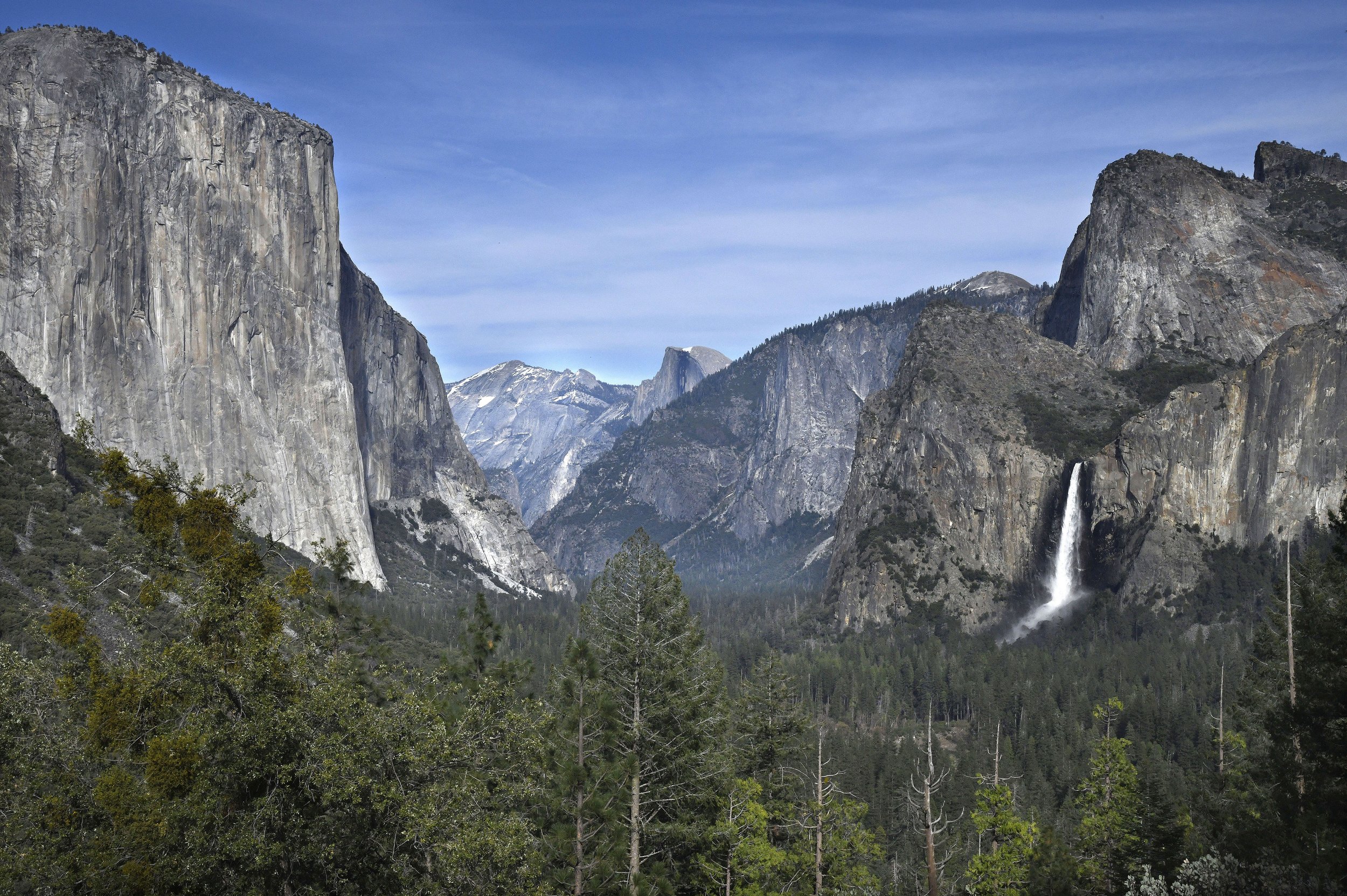
The overall view from near Yosemite National Park's south entrance includes Bridalveil Fall (from right), Half Dome and El Capitan.
Story and Photos
By MATTHEW THAYER
"Reveling in California's Wildflower Bloom." That was the working premise for this story.
Wife Kelly and I researched the best times and places to see the annual explosion of color and booked our airline tickets accordingly. There is no shortage of websites dedicated to helping folks catch the blooms, including several from the State of California. Thanks to winter rains and snow, the general consensus for Spring of 2026 called for a "moderate-to-strong" flower season from March to May. "Superblooms" were probable in some areas.
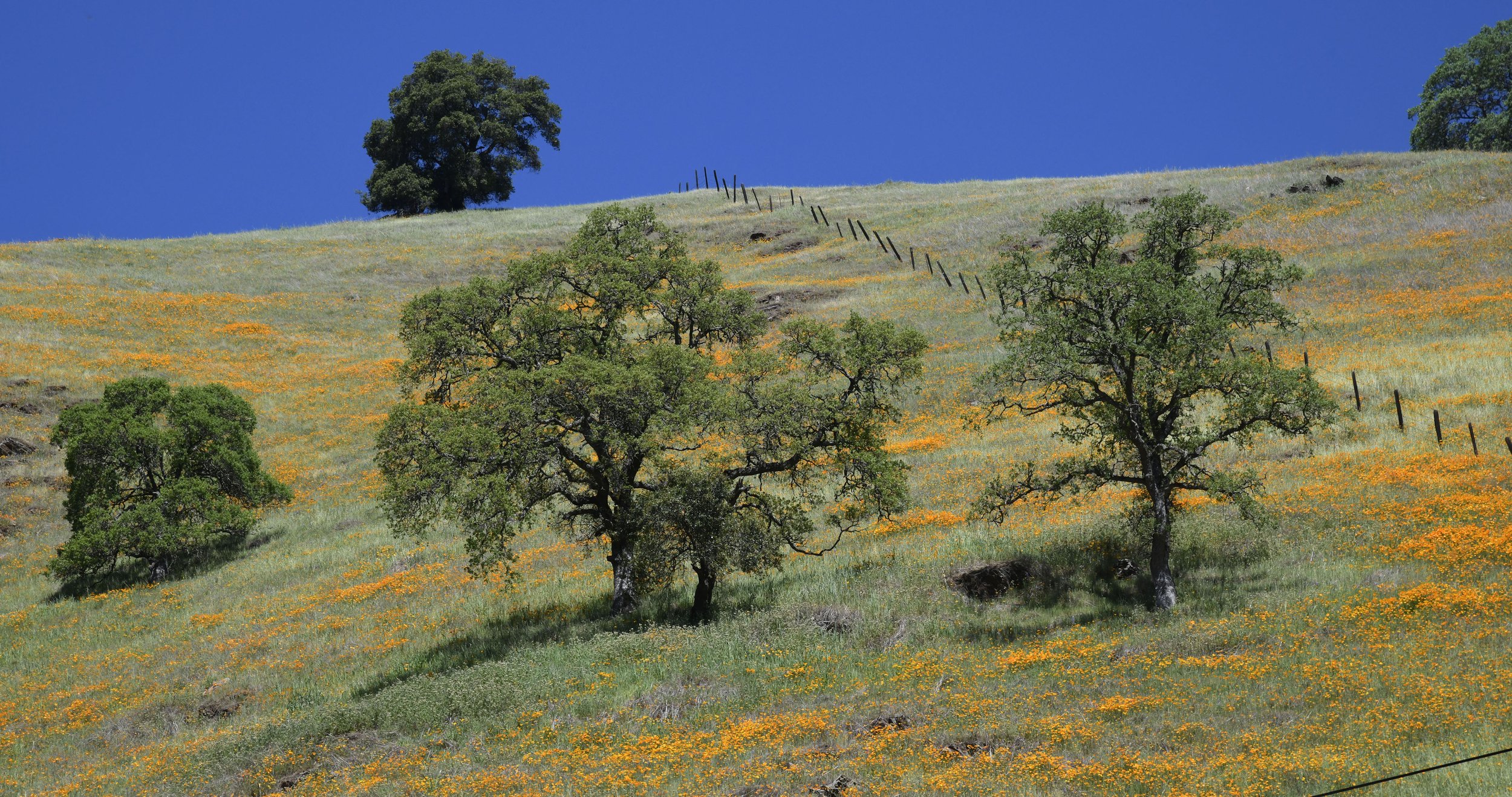
Orange poppies dot a California hillside in March.
Then came the "Heat Dome" that cooked-up the warmest March ever recorded in the contiguous United States. More than 19,800 temperature records were reportedly broken across the country. The National Oceanic and Atmospheric Administration said the average temperature in March was 9.35 degrees above the 20th-century average. Deserts in California and Arizona hit 112 degrees.
That's the long way of saying, though we planned to arrive early to the party, most flowers had already packed it in by the time we touched down in mid-March.
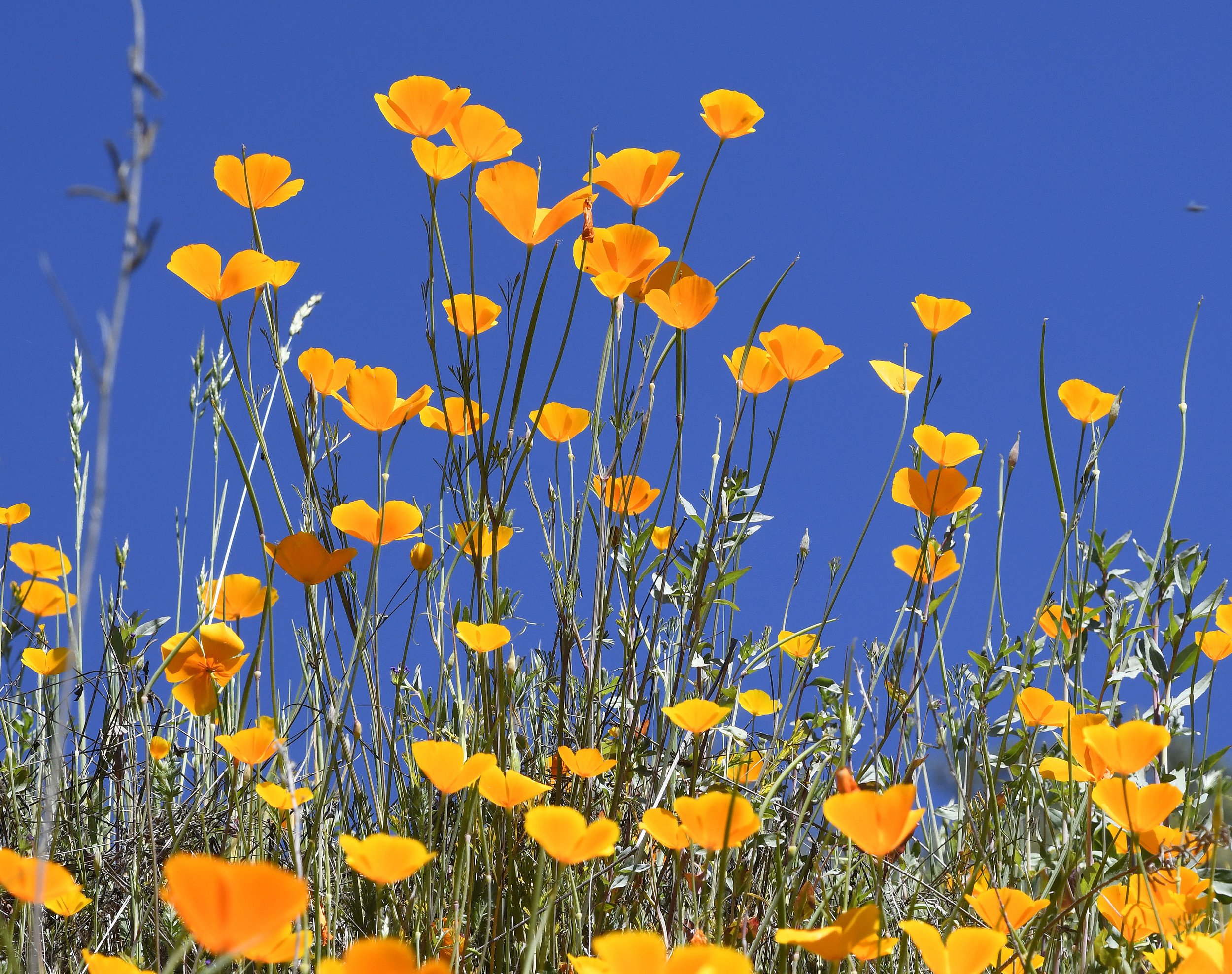
California poppies frame a bluebird sky during a mid-March heat wave.
"I'm pretty sure those are lupines," my friend Frank said as he slowed to view a desiccated brown patch along a winding country road.
Frank and his wife Sabrina live in Folsom, Ca. and were driving us to the quaint foothill towns of Sutter Creek and Jackson. The sunny, bluebird day was perfect for touring and taking photos. Less so for perennial wildflowers that bloom during a narrow timeframe before dying back to let their roots grow in what is often a hot and dry environment.
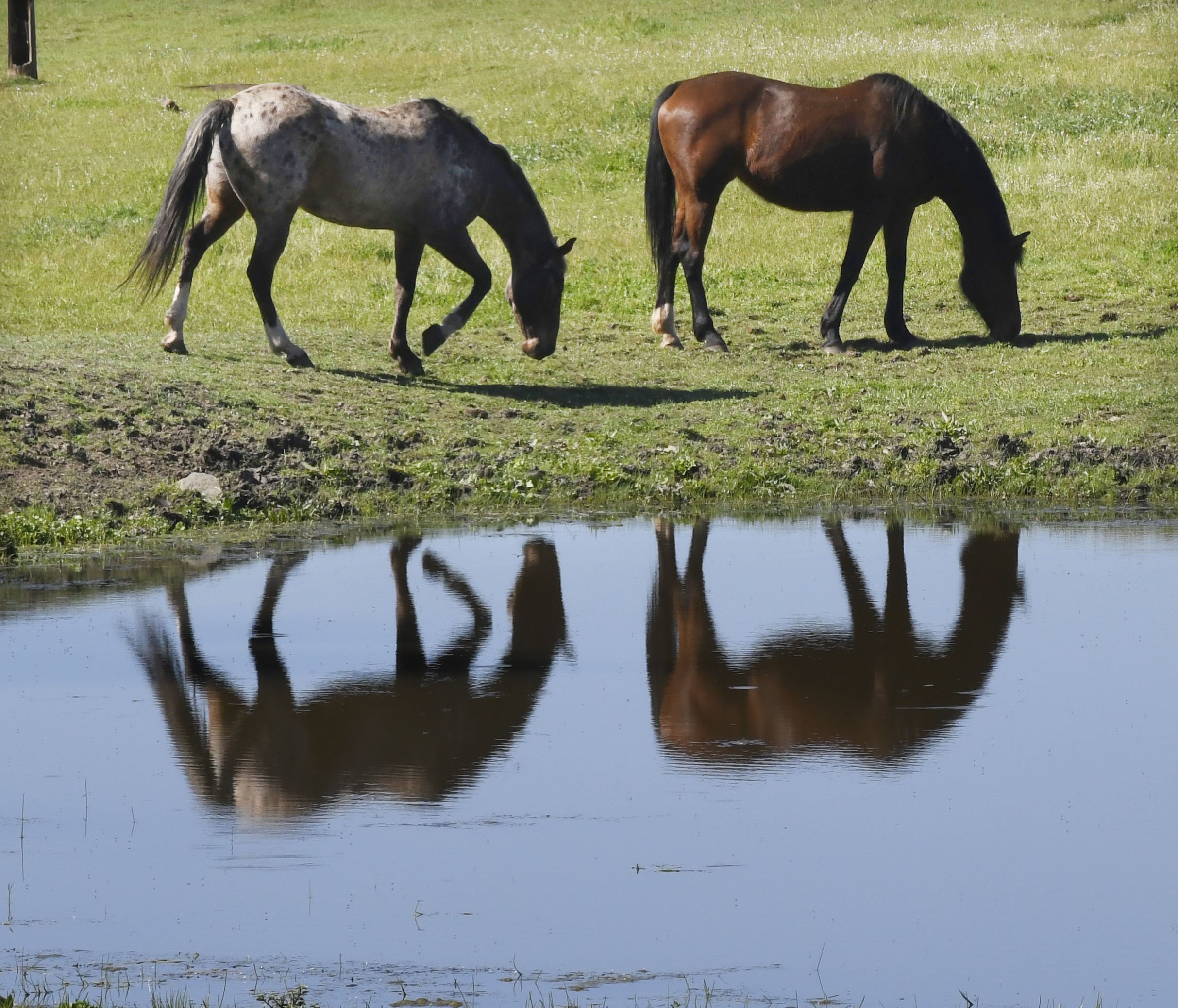
Horses are reflected in a California pond near Folsom.
We did not need to exit the car to determine the lupines' purple flowers had come and gone. Tour guide for a day, Frank, kept at it, even called his sister for advice. Along a creek outside Amador City, we were treated to a hillside dotted with orange poppies and did indeed spy a clump of straggly lupines. That was about it for us and California's wildflowers.
If there is one thing I have learned as a journalist, it is to be ready for a story to pivot. An editor once sent me up to Ulupalakua Ranch to take photos for a story detailing its struggles with an ongoing drought. I planned to capture images of cattle, dust and withered forage, only to find it raining when I got there. Briefly, it felt as if a wrench had been tossed into my plans. Then I realized it was raining during a drought! That was a story.
The same logic applies to vacationing. No matter how much planning, excitement and money go into a trip, there is no controlling the weather, or unforeseen hiccups like power outages and transportation strikes. Smart travelers learn to roll with the challenges, to make the most of the circumstances they are dealt.
Which is pretty easy to say when you just spent two warm and sunny weeks in beautiful Northern California. On a 1,300-mile road journey that took us from Sonoma to Big Sur, Yosemite Valley to Shasta County, Kelly and I were treated to some of the prettiest views California has to offer. Its narrow byways and winding mountain passes also allowed us to get a taste of its vast farms, ranches and untamed wilderness.
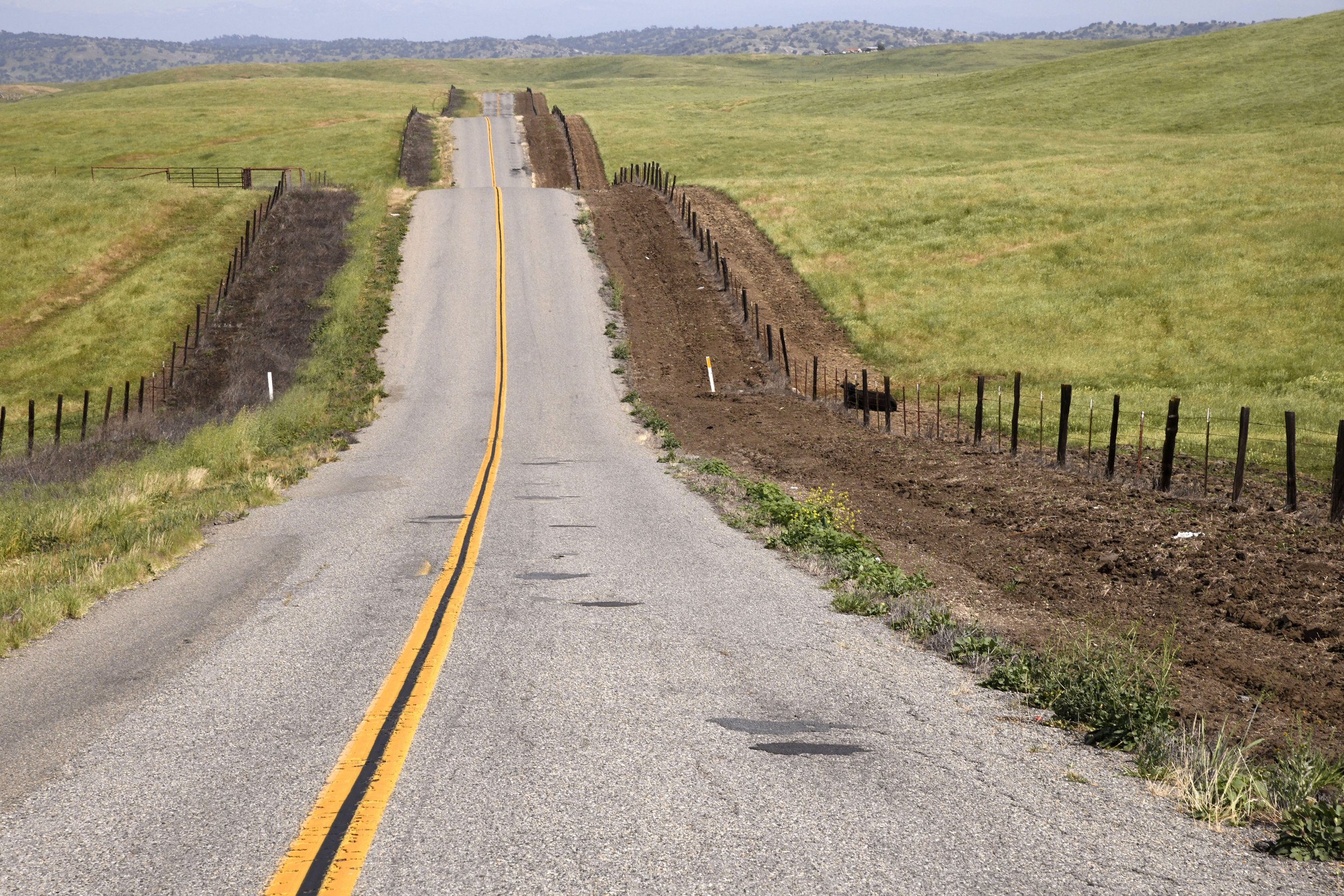
A lonely California backroad traverses rolling hills during a drive from Monterey to Yosemite.
When they were handing out beauty, California must have been at the front of the line. Yosemite may be the most stunning jewel in the Golden State's crown. Home to Half Dome and El Capitan, Yosemite National Park is legendary for its waterfalls and steep canyon walls. Thanks to a heavy snowfall three weeks earlier, which was now melting in the summer-like heat, the waterfalls were pumping while we were there. We certainly didn't have the place to ourselves, but this early in the season, mid-March, the crowds on the hikes and scenic pull-offs were not bad.
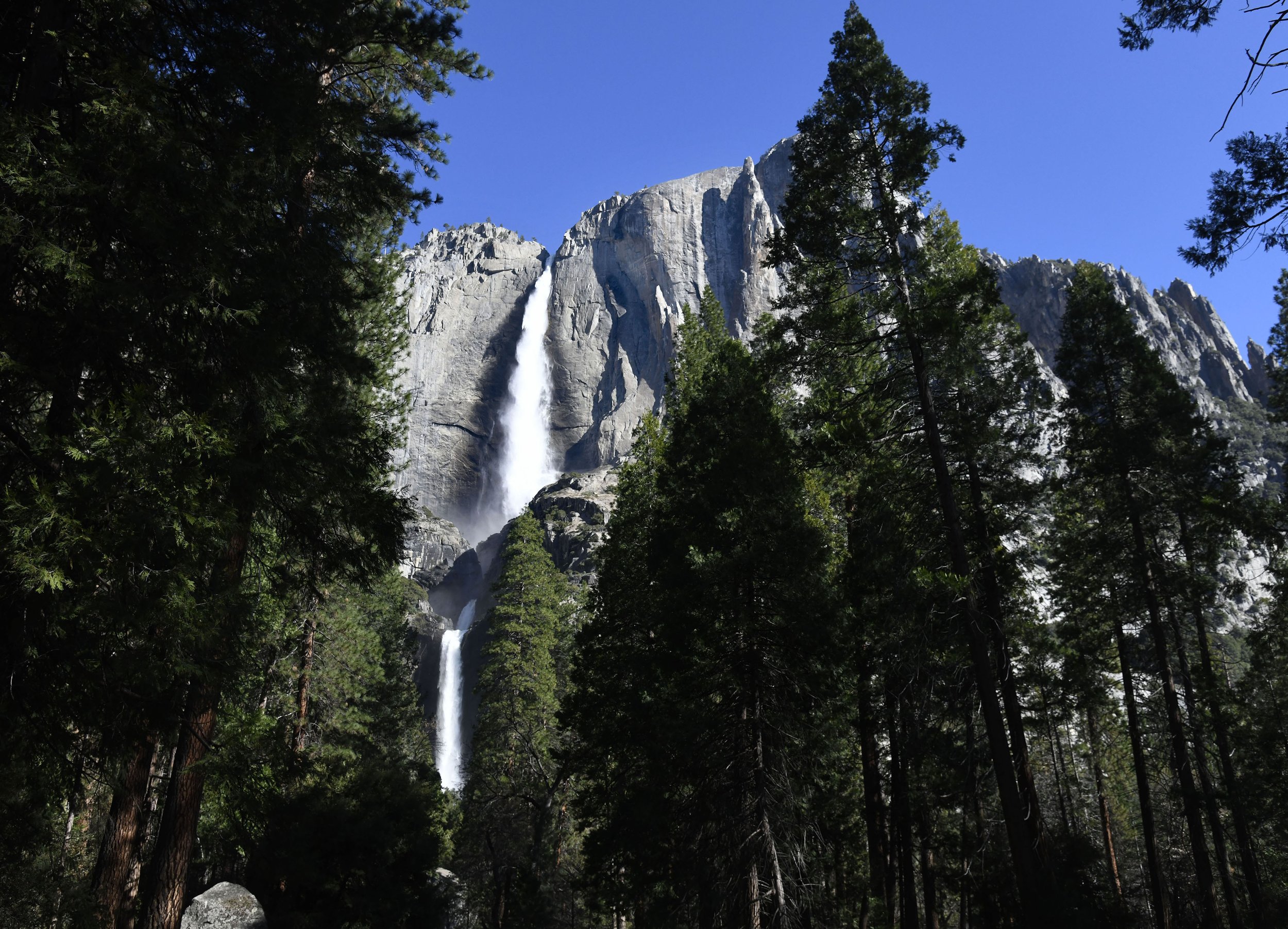
Yosemite Falls puts on a thundering, awe-inspiring show. It is the tallest waterfall in the valley, dropping a total of 2,425 feet from the top of the upper fall to the bottom of the lower fall. Its flow reaches a peak in spring and tapers off through summer.
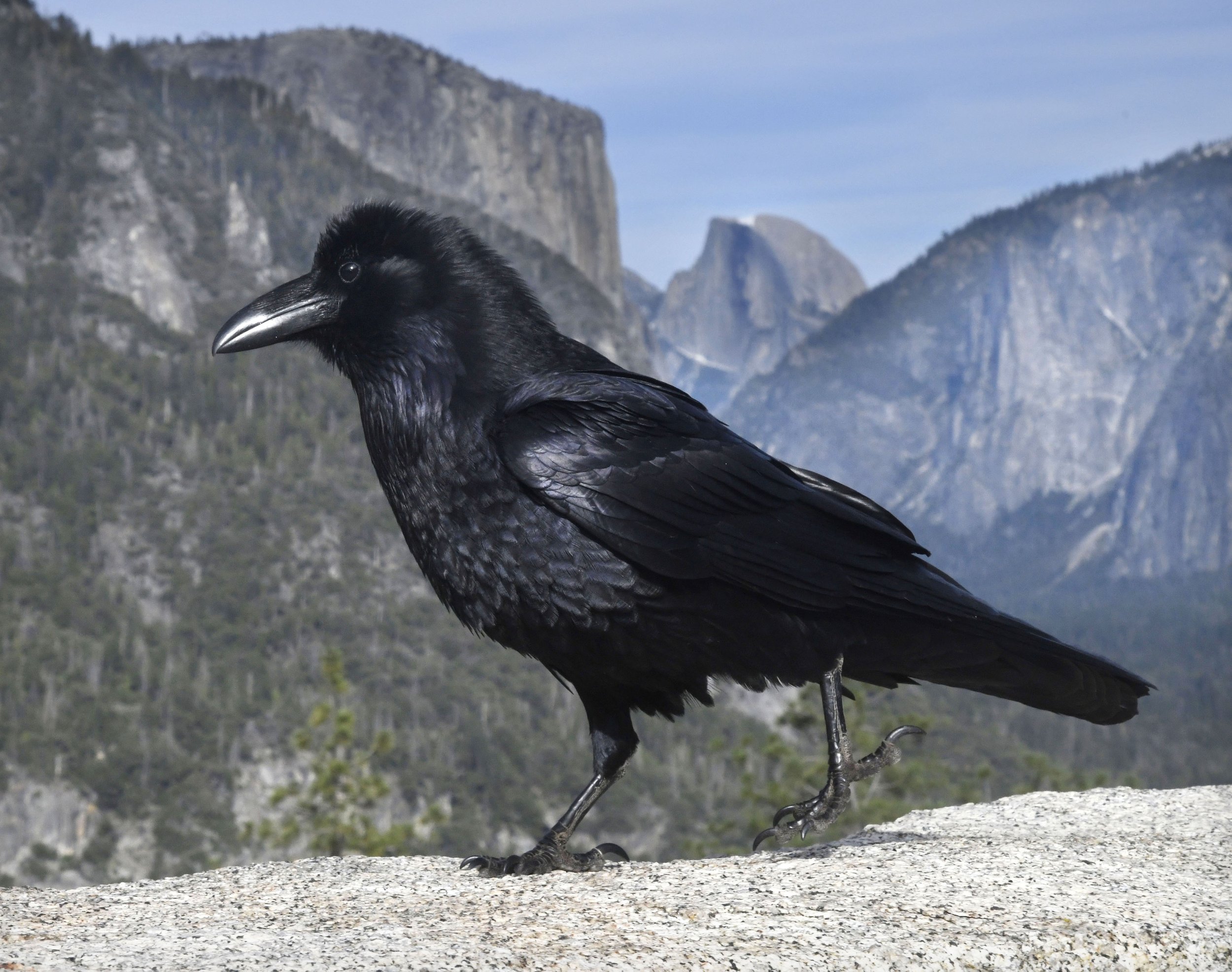
With Half Dome and El Capitan providing a backdrop, a raven struts its stuff at Yosemite.
At one pull-off near the base of El Capitan, a young rock climber gave us the skinny on a team that was in the fifth day of an ascent up one of the sheer face's most difficult challenges. Through binoculars, we could see they'd nearly reached the summit and were dealing with something red and rectangular. The climber on the ground said they were setting up a portable ledge to spend another night. He said it was a highly technical climb, well beyond his capabilities.
"They're pooping in bags and carrying all their own water," he said.
Which isn't a sentence you hear every day.
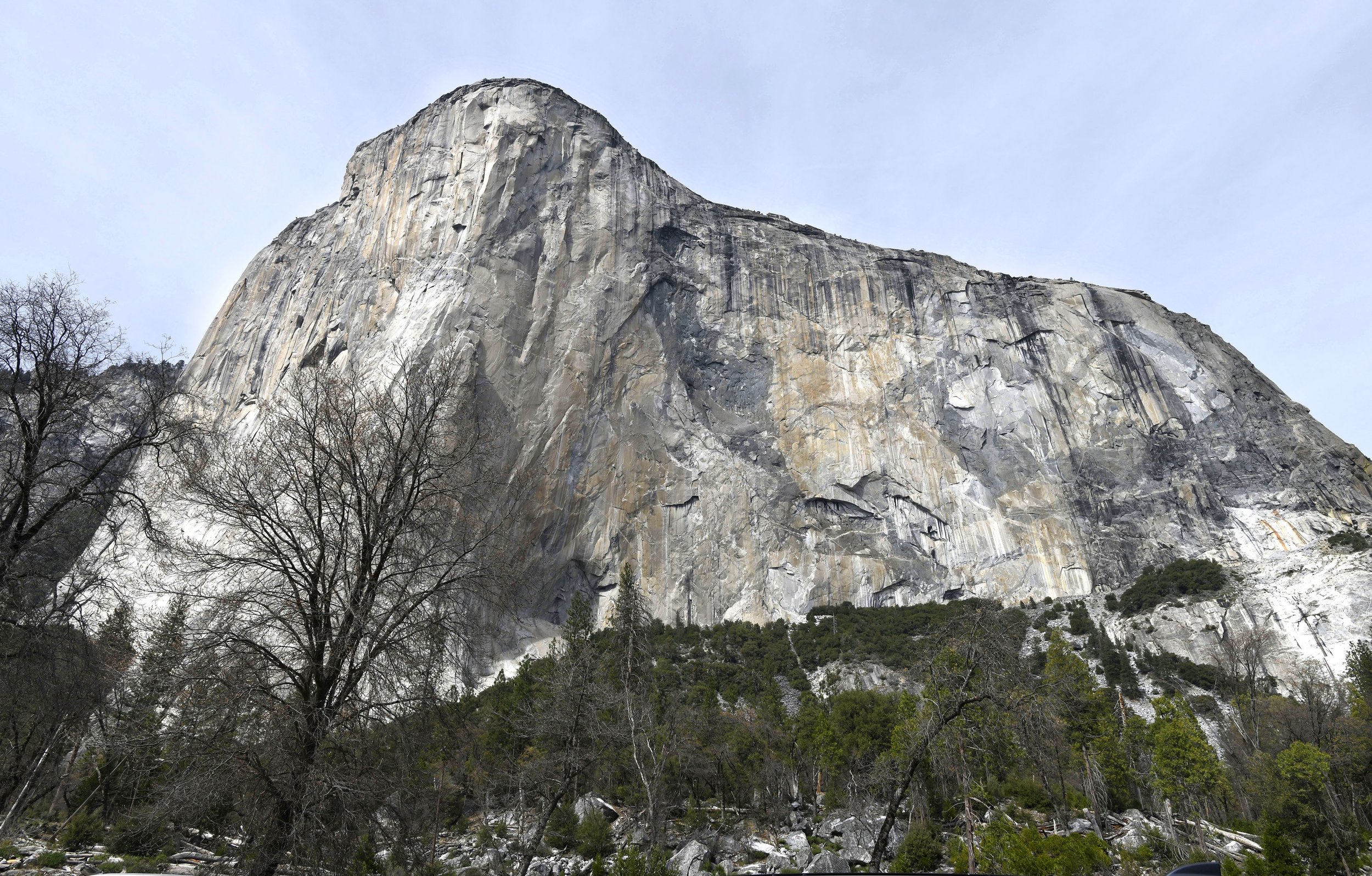
The 3,000-foot granite monolith El Capitan is bathed in sunlight. The name is reportedly a translation by Spanish troops in 1851 of its local Native American name, Tutokanula, or "Big Chief."
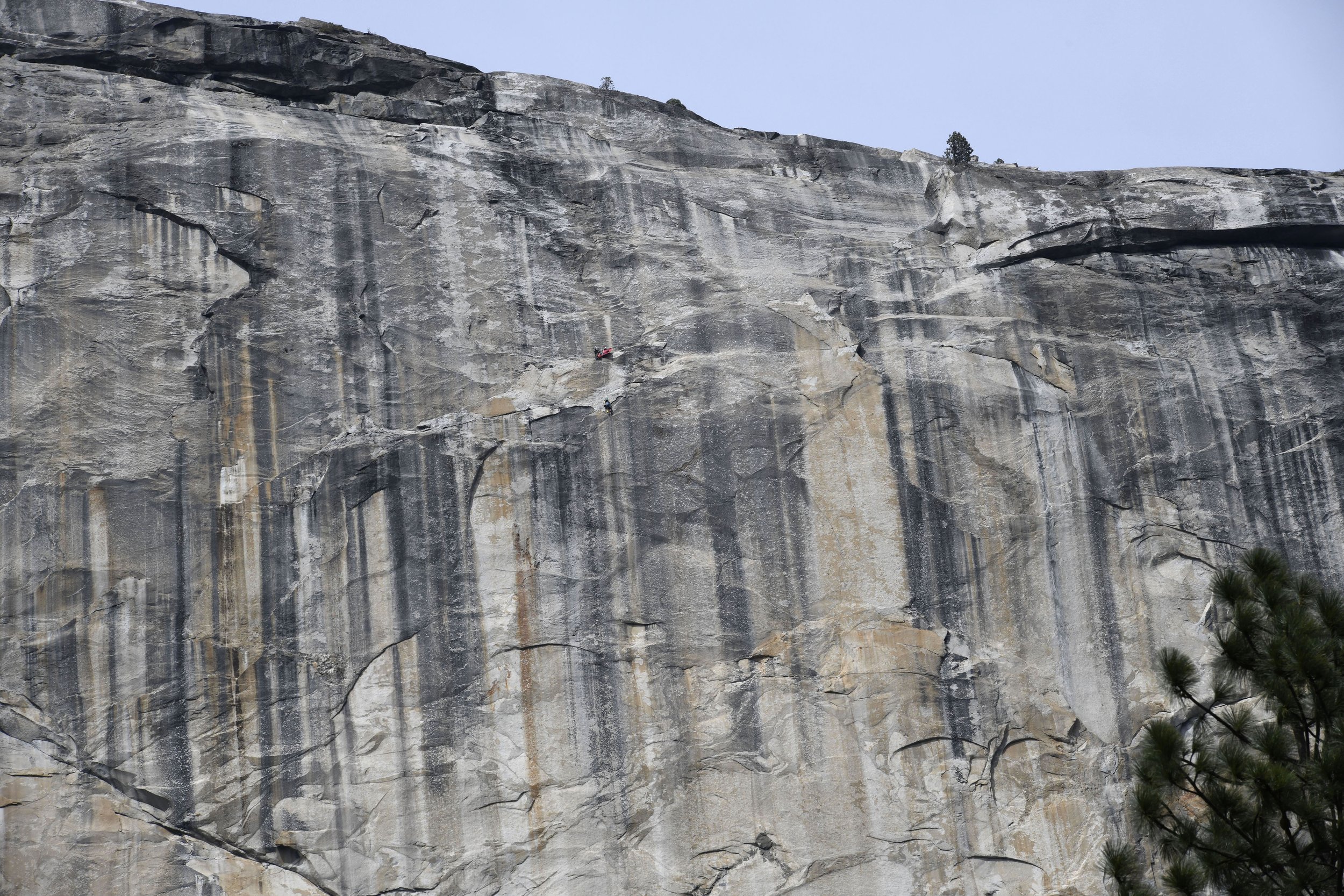
The red speck near the center of this photo is a two-man climbing team setting up a portable ledge on the fifth day of a highly technical ascent of El Capitan. The sheer cliff face draws climbers from around the world and is the location for the documentary Free Solo, which chronicles the first free solo climb to the summit ever, by Alex Honnold in 2017. Honnold took a different route to summit the mountain without ropes in 3 hours and 56 minutes.
Even through binoculars, the climbers were tiny. It wasn't until later that I enlarged a photo taken with a telephoto lens and we could see that what we assumed to be another climber hanging stationary below the ledge was actually a cluster of buckets and packs. The danger and difficulty boggle the mind. I wish I could have asked them why they do it.
Earlier in the trip, after leaving Frank and Sabrina behind, we met up with Kelly's brother and his wife in wine country for a weekend splurge at the Fairmont Sonoma Mission Inn & Spa. Dating back to 1927, the low-key luxury property was a perfect place to return to after wandering Sonoma's large, tree-shaded plaza and taking a drive through wine country from Calistoga to Napa. Having grown up in a grape-farming region, it was fun to see the old, well-trimmed vines sprouting green with new growth. At Chateau Montelena we saw the winery that inspired the movie “Bottle Shock.” The movie details the 1976 "Judgement in Paris," a blind contest victory that put California wines on the map.
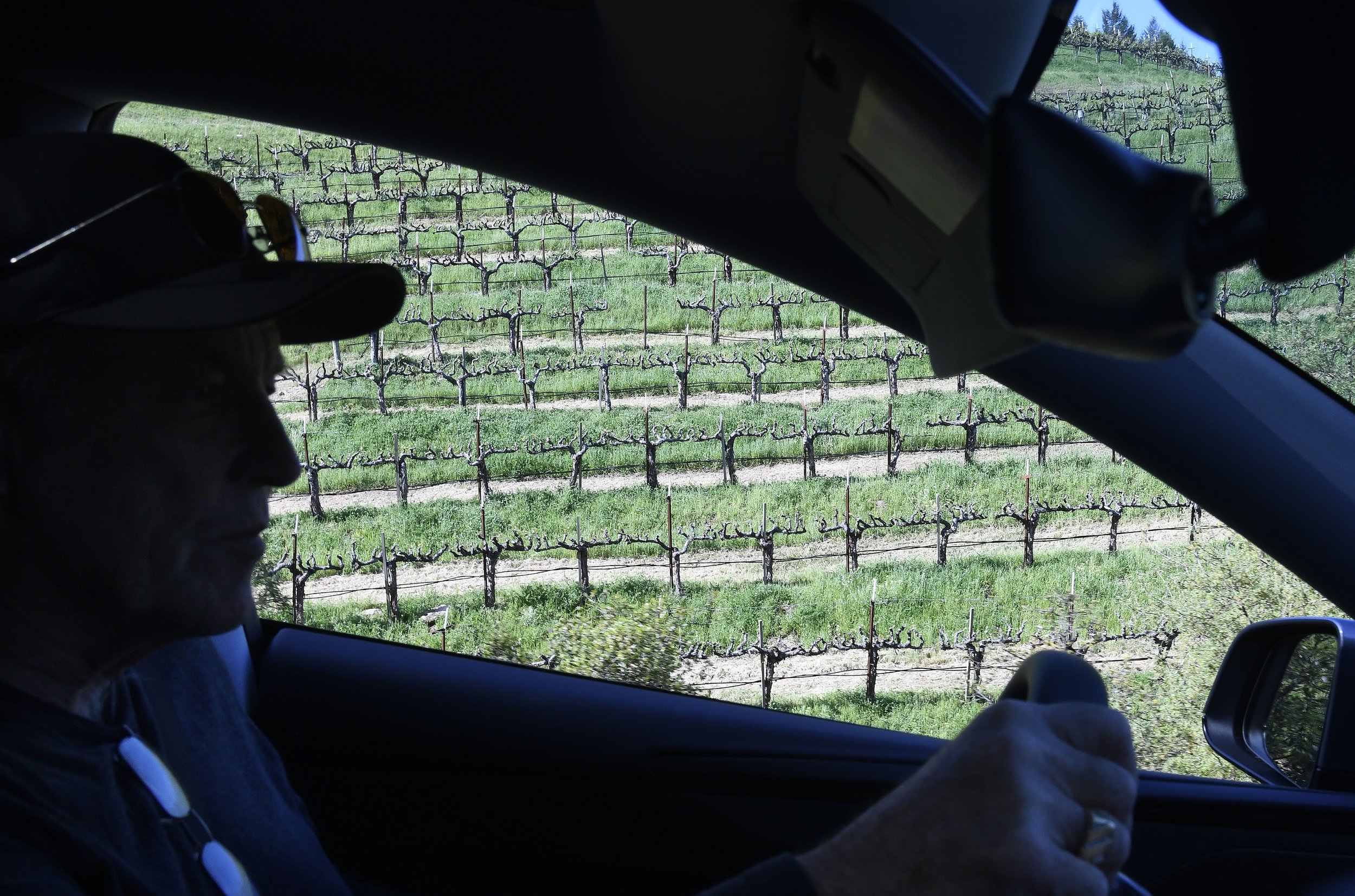
La Habra Heights resident Boyd Coffman drives by a hillside vineyard in Calistoga during a day of exploring California's wine country.
Leaving Sonoma, it was time to savor the real-life experience of traffic jams and high-speed, white-knuckle driving while skirting San Francisco and bisecting Oakland on the way to Carmel and another mission inn. This one was the Mission Ranch Hotel and Restaurant owned by the posh, seaside town's former mayor, Clint Eastwood. The Mission Ranch Hotel is anything but posh, but the restaurant does have a lovely sunset view overlooking a sheep meadow, distant rocky cliffs and a sandy beach. It also has a piano player who had the elder, inebriated patrons singing along with Billy Joel's "Piano Man" at the top of their lungs. They all were putting on quite a show as we headed for the door after a nice meal on the outside patio. The staff said as Clint nears his 96 birthday, they have not seen him around lately.
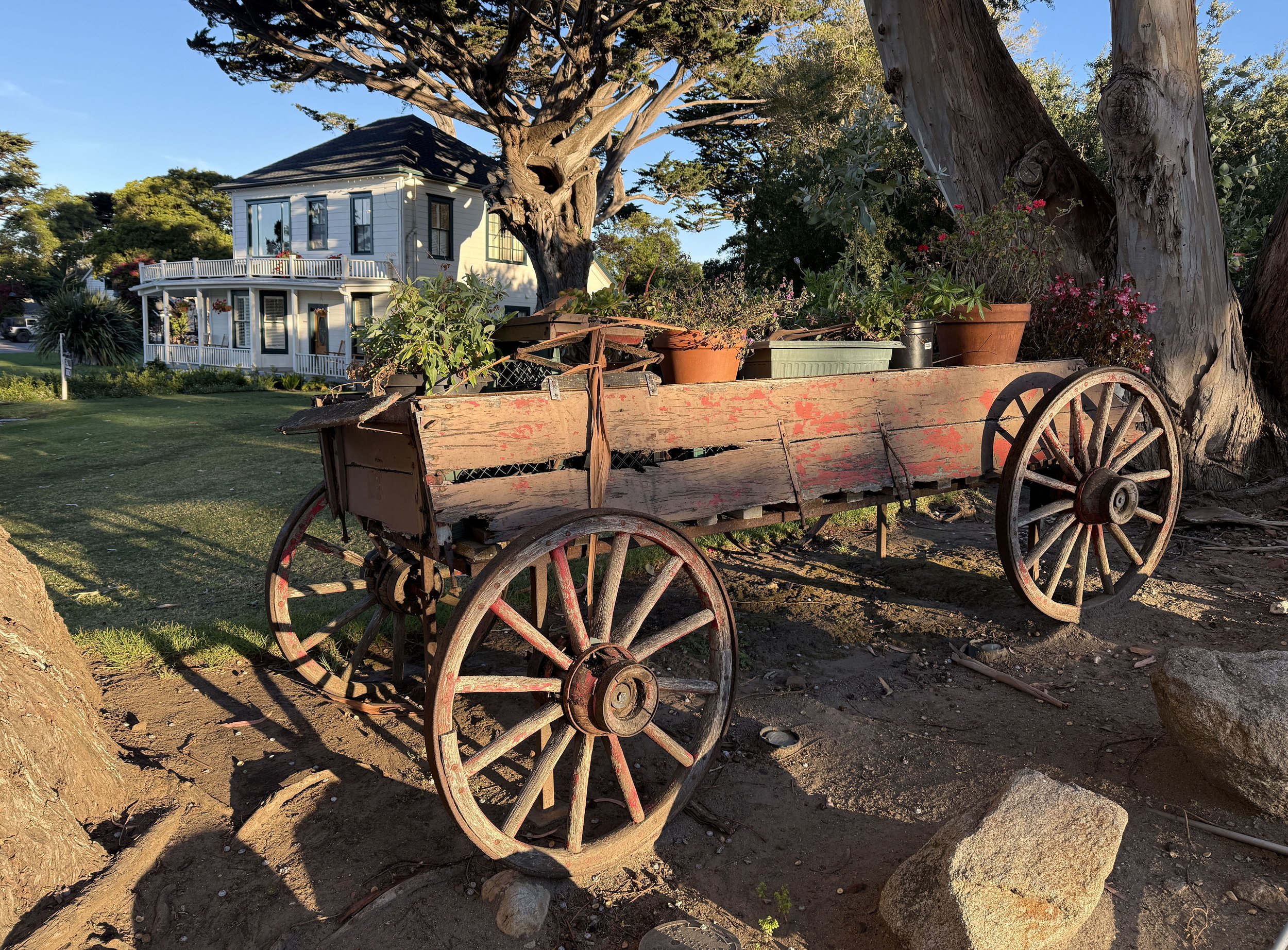
A buckboard wagon stands at the entrance to Carmel's Mission Ranch Hotel and Restaurant owned by Clint Eastwood.
Highlights of the area included driving along the rugged coastline of Big Sur, checking out the homes and views of 17-Mile Drive and walking the pier at Monterey. As a golfer who calls Maui's venerable Waiehu Municipal Golf Course home, it was fun to tee it up at Pacific Grove Golf Links. The municipal course is located on the tip of Monterey Peninsula and may be only miles from other famed courses, including Pebble Beach Golf Links, but is a fraction of the cost to play. The first nine holes wind through neighborhoods, while the back nine traverses a mix of sand dunes, ocean views, historic lighthouse and wild mule deer feeding along greens.
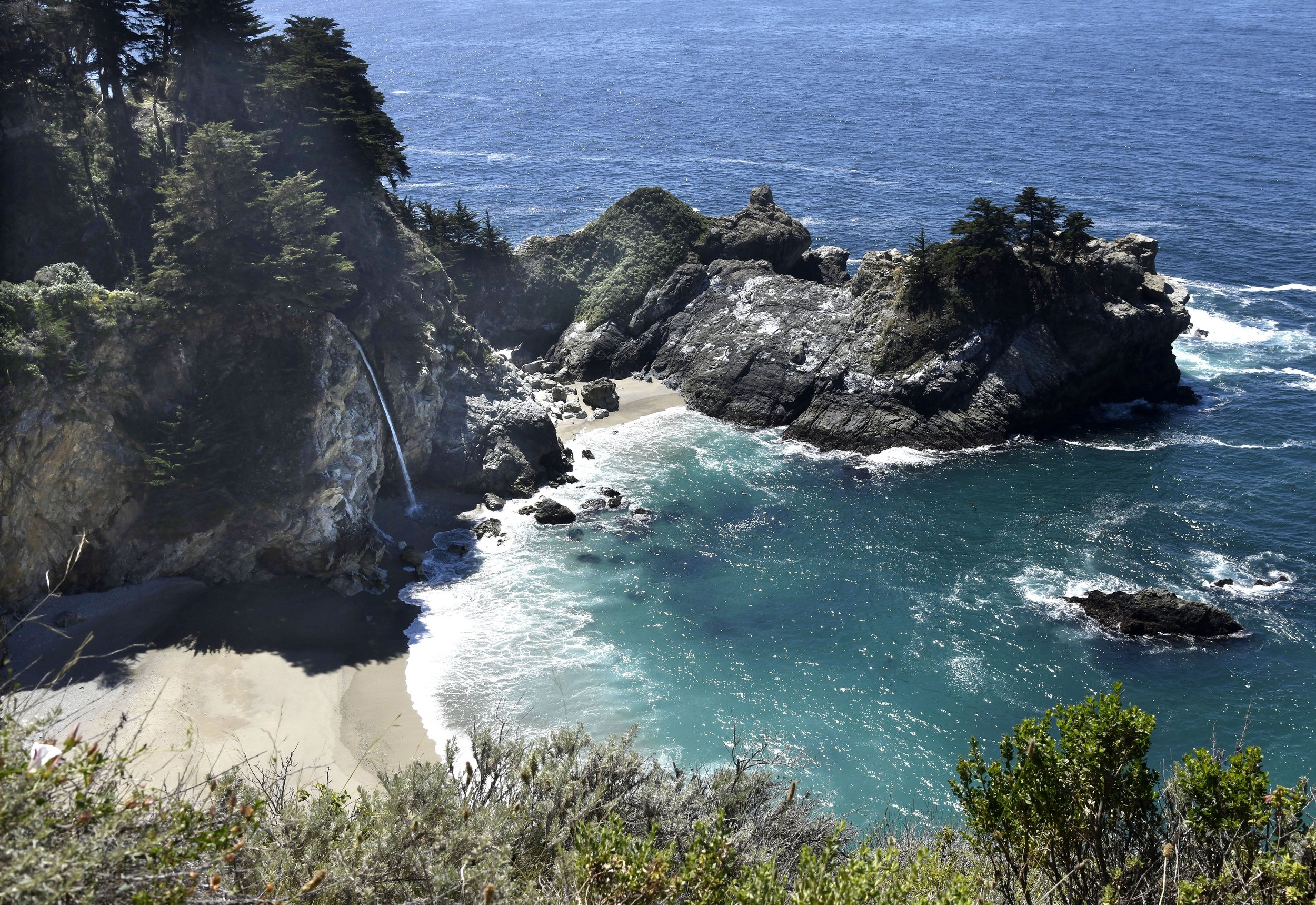
Eighty-foot-tall McWay Falls is one of only two California waterfalls that fall directly into the ocean. Located in Big Sur's Julia Pfeiffer Burns State Park, it is about 37 miles south of Carmel.
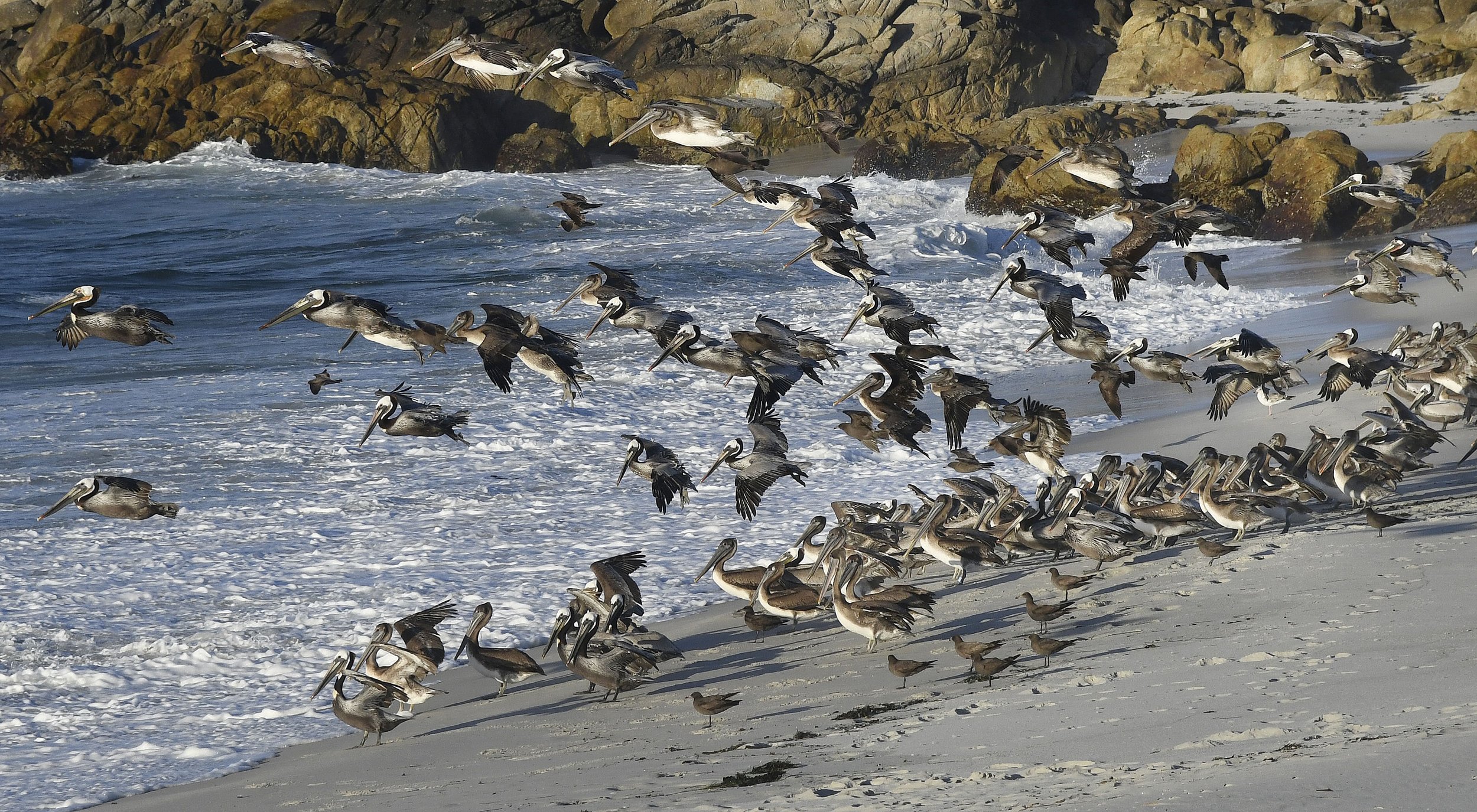
A flock of pelicans takes flight on a cold blustery afternoon at Pebble Beach.
In Yosemite, we treated ourselves to a night at the iconic Ahwahnee Hotel. Constructed in 1927 and blending Art Deco, Native American, Middle Eastern and Arts & Crafts styles, the National Historic Landmark may be showing its age, but it is impossible to sit on its front lanai, listening to the sound of a waterfall, and not ponder all the other guests, from tycoons and movie stars to Queen Elizabeth, who stayed there.
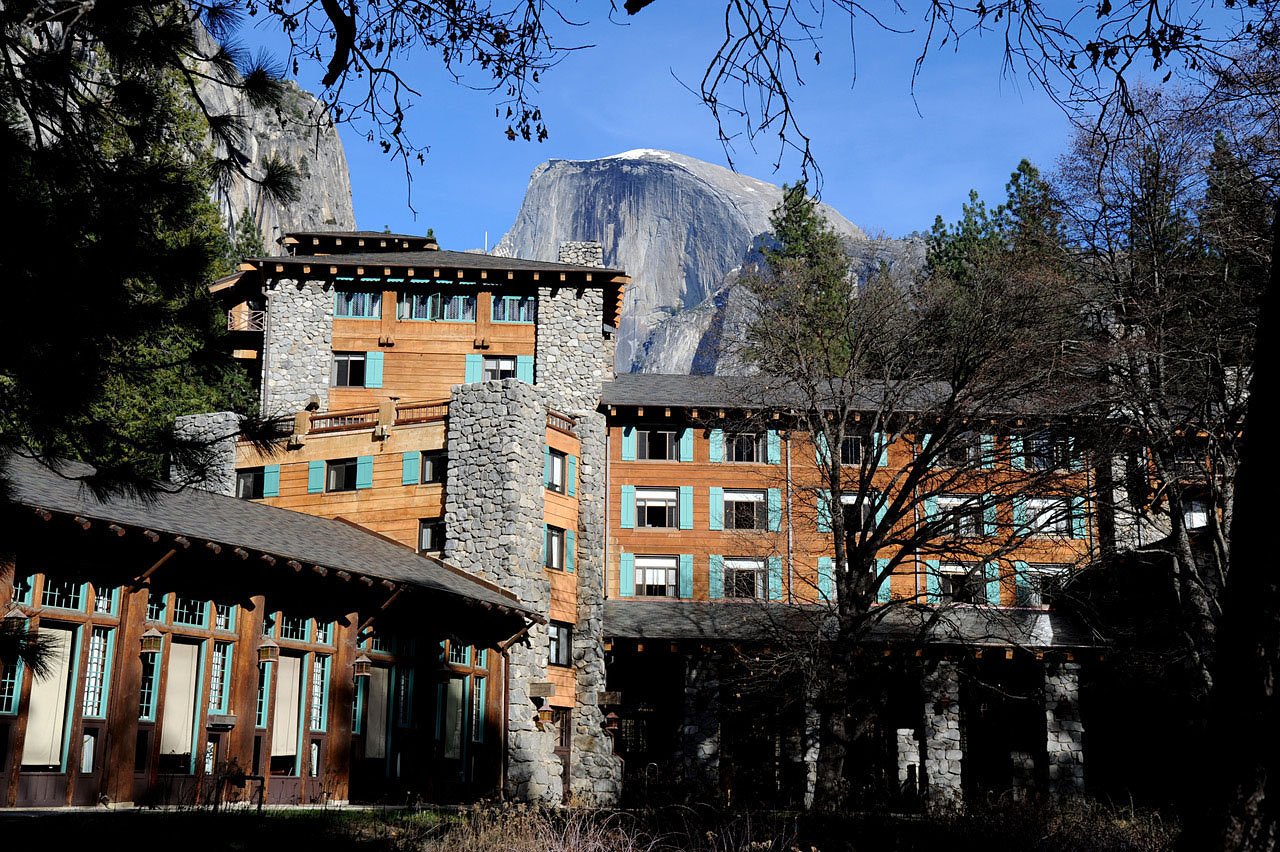
Half Dome towers above the Ahwahnee Hotel.
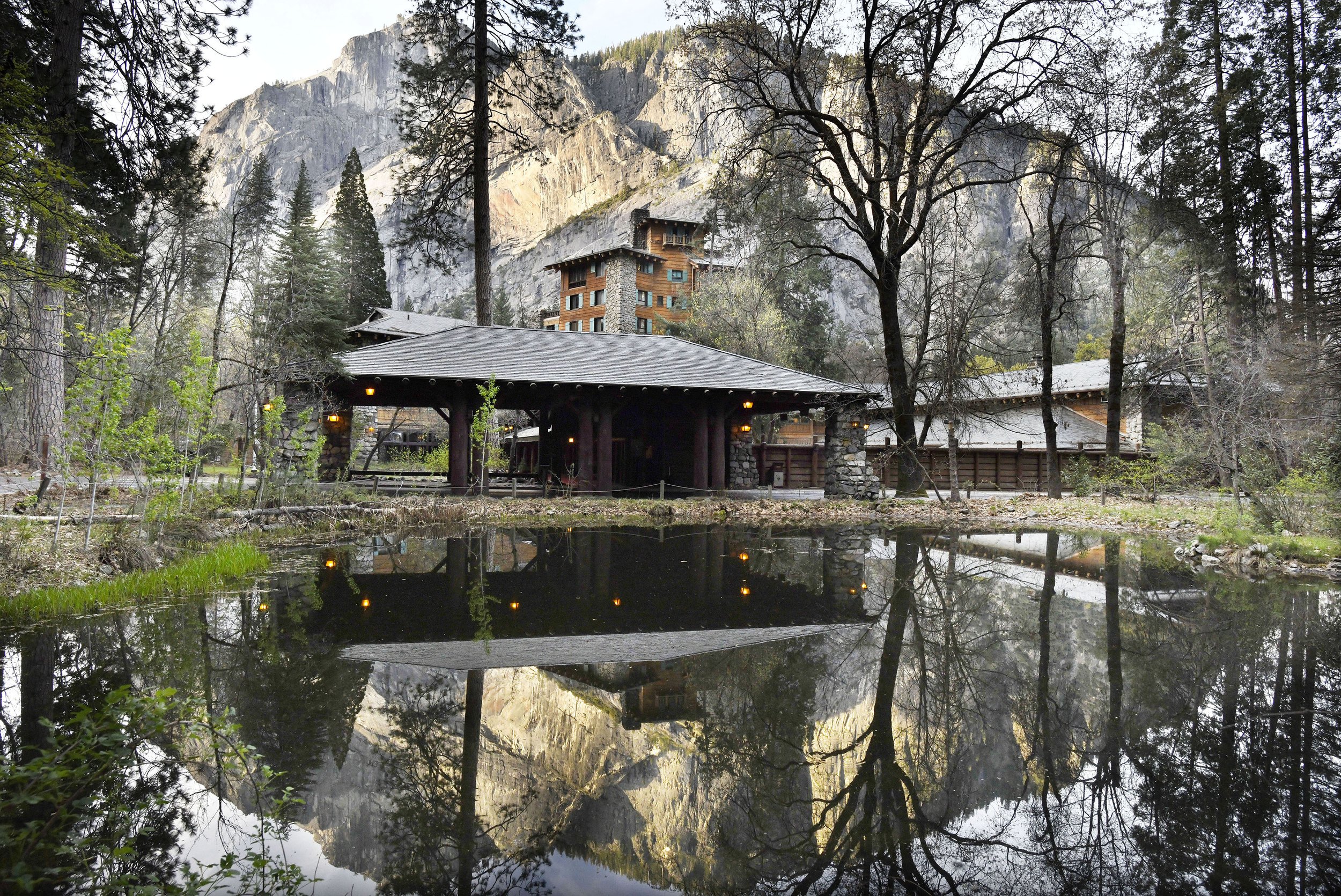
The walls of Yosemite Valley and the entrance to the iconic Ahwahnee Hotel are reflected on a calm spring morning.
With its towering ceiling and tree trunk pillars, the Ahwahnee Dining Room conjures an elegance of bygone days. As do the hotel's two elevators, which were out of service awaiting parts during our stay. A hotel staffer explained the elevators pre-date the building and the parts are either hard or impossible to come by. The service elevator was in use, compete with an attendant who could be summoned to any floor by walkie talkie.
The last portion of our trip was spent at the summer home of friends Howard and Monika in Oak Run, Ca. Situated in a wooded valley near Mount Shasta, their property has a fast running stream running through. We were happy to help restore the patch of sand beach located streamside at their favorite picnic spot. While Howard used a front loader to move the sand back from where he stashed it to keep winter's floods from washing it away, we used rakes to cull stones and smooth the surface. They call the patch of sand their "Maui" beach and say it is the perfect place to relax in the cool waters when temperatures crest 100 degrees.
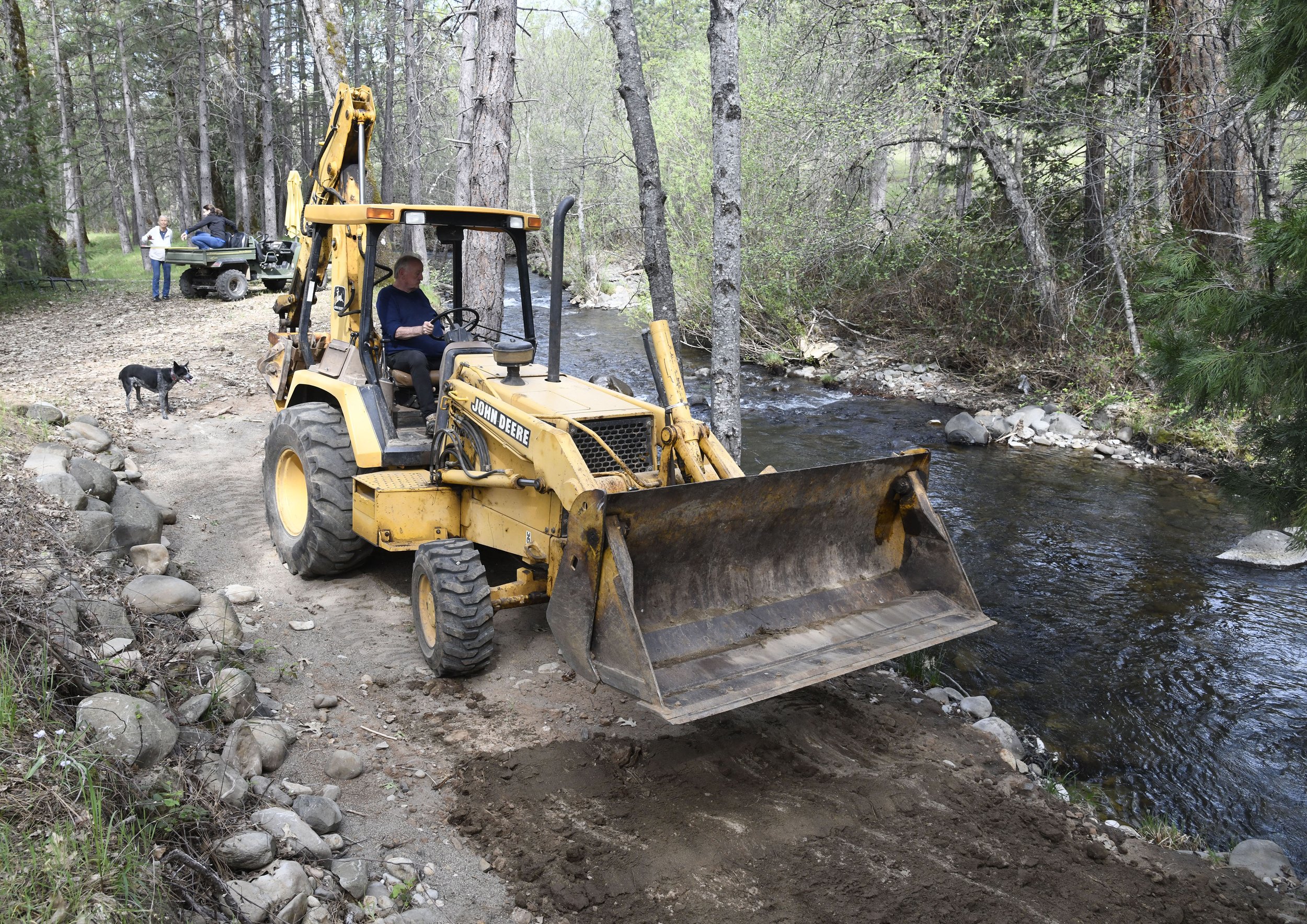
Howard and Monika Stoltz prepare their streamside "Maui" beach for summer near Mount Shasta.
In nearby Redding, we visited the town's Sundial Bridge, a cantilever spar cable bridge spanning the Sacramento River. Built in 2004, the bridge designed for pedestrians and bikers was first opposed by many local residents. The working sundial with glass decking has reportedly become one of the town's pride and joys. Fishermen are common sights below the bridge, plying the Sacramento's waters for trout.
Few trips turn out exactly the way we expect. Nearly always, there are twists and turns. Sometimes your wildflower hunt comes up lupines, and sometimes it wilts under a heat dome. How we adapt as we travel, how we turn lemons into limoncello, that is what truly matters.
As for traveling in a warming world, one where "100-year storms" seem to happen with far more frequency than their names imply, online information will need to be scrutinized to allow for things like earlier spring blooms and waterfalls, scorching summers and later fall colors. Those who enjoy traveling during "shoulder" months, may well find the off-season periods shrinking due to climate change and the rise of international tourism. How mankind deals with those lemons is anybody's guess.
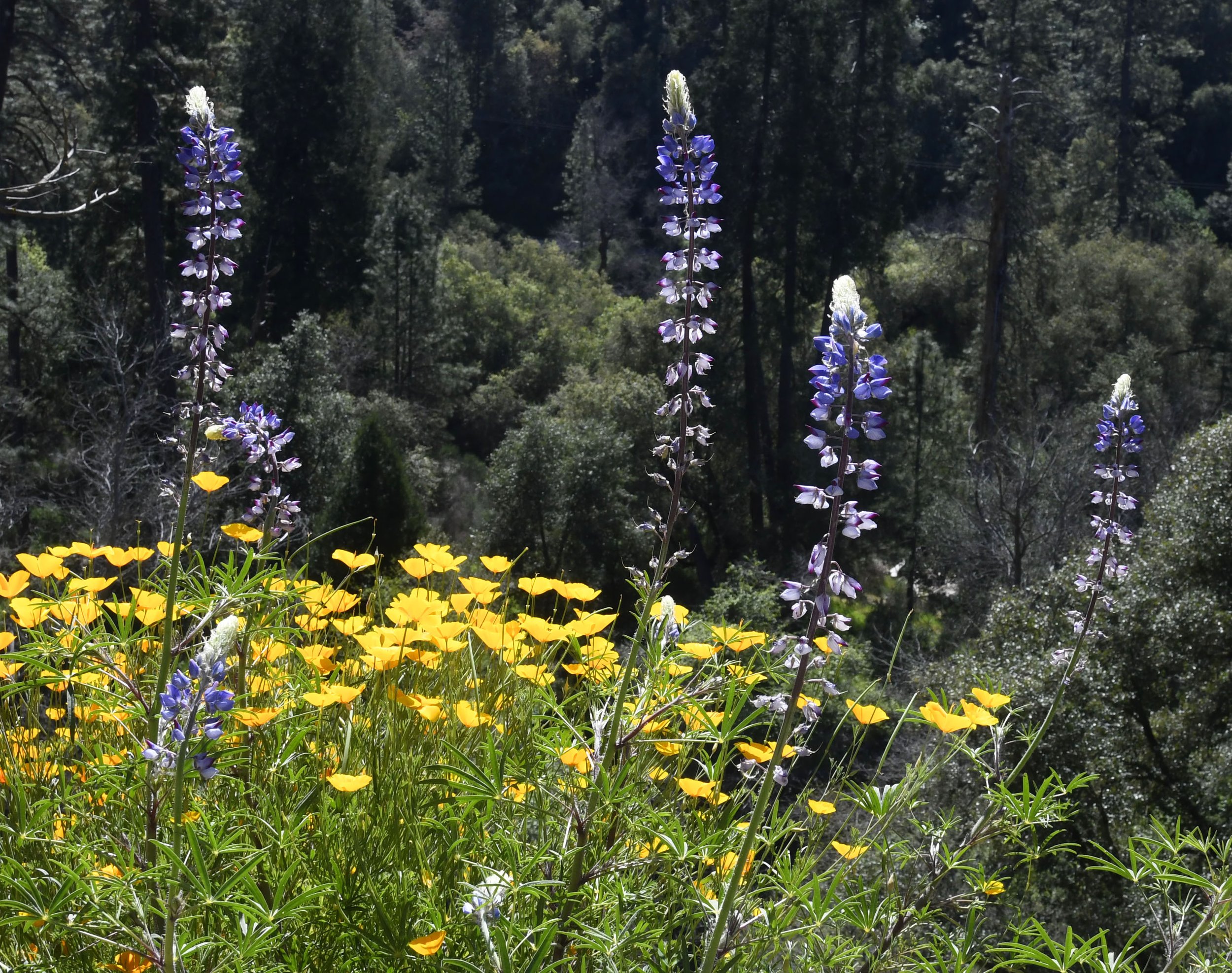
Straggly lupines bloom along with poppies in a California canyon.
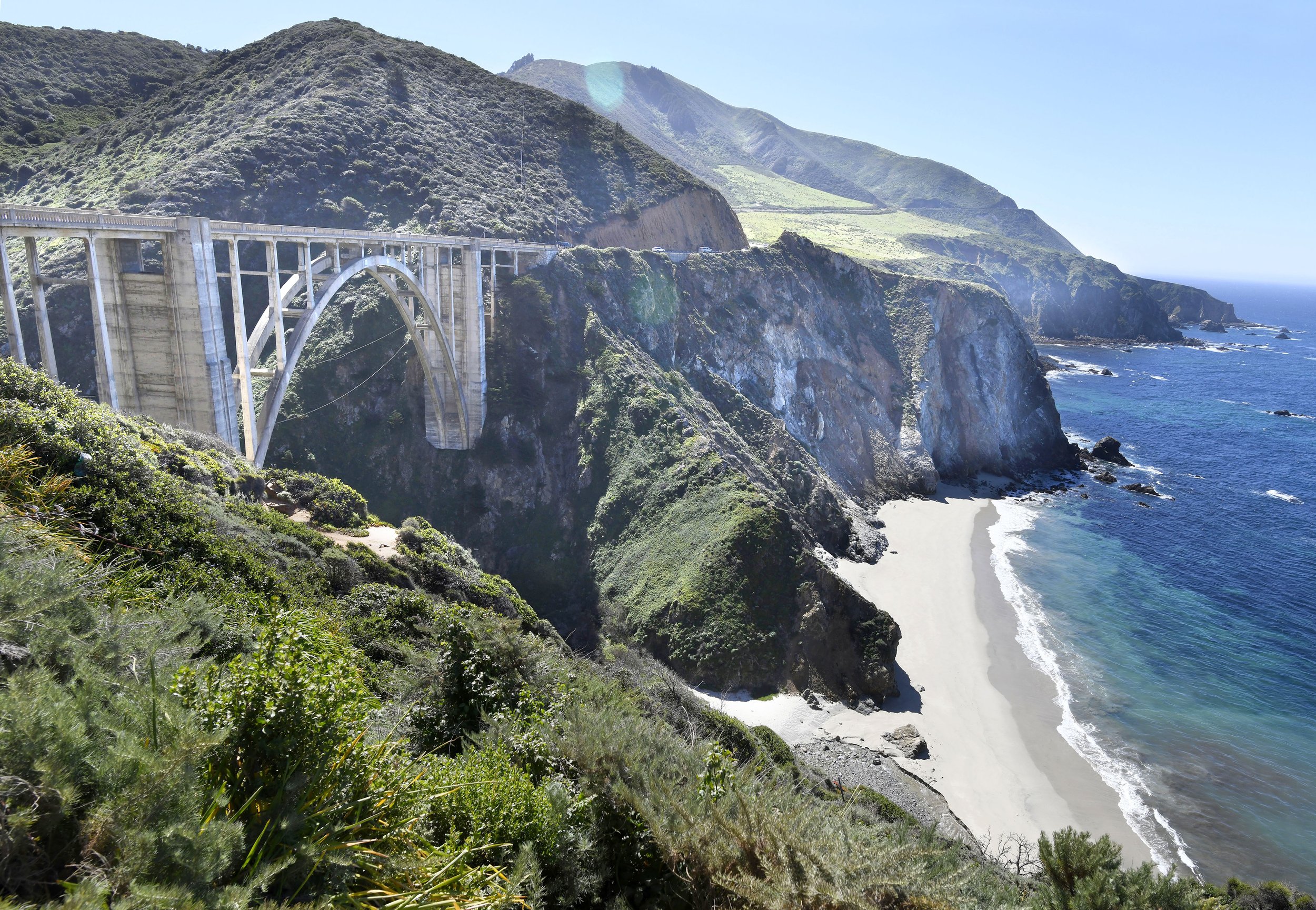
Bixby Bridge in Big Sur is said to be one of the most photographed bridges in California. The reinforced concrete open-spandrel arch bridge opened in 1932 and is about 120 miles south of San Francisco.
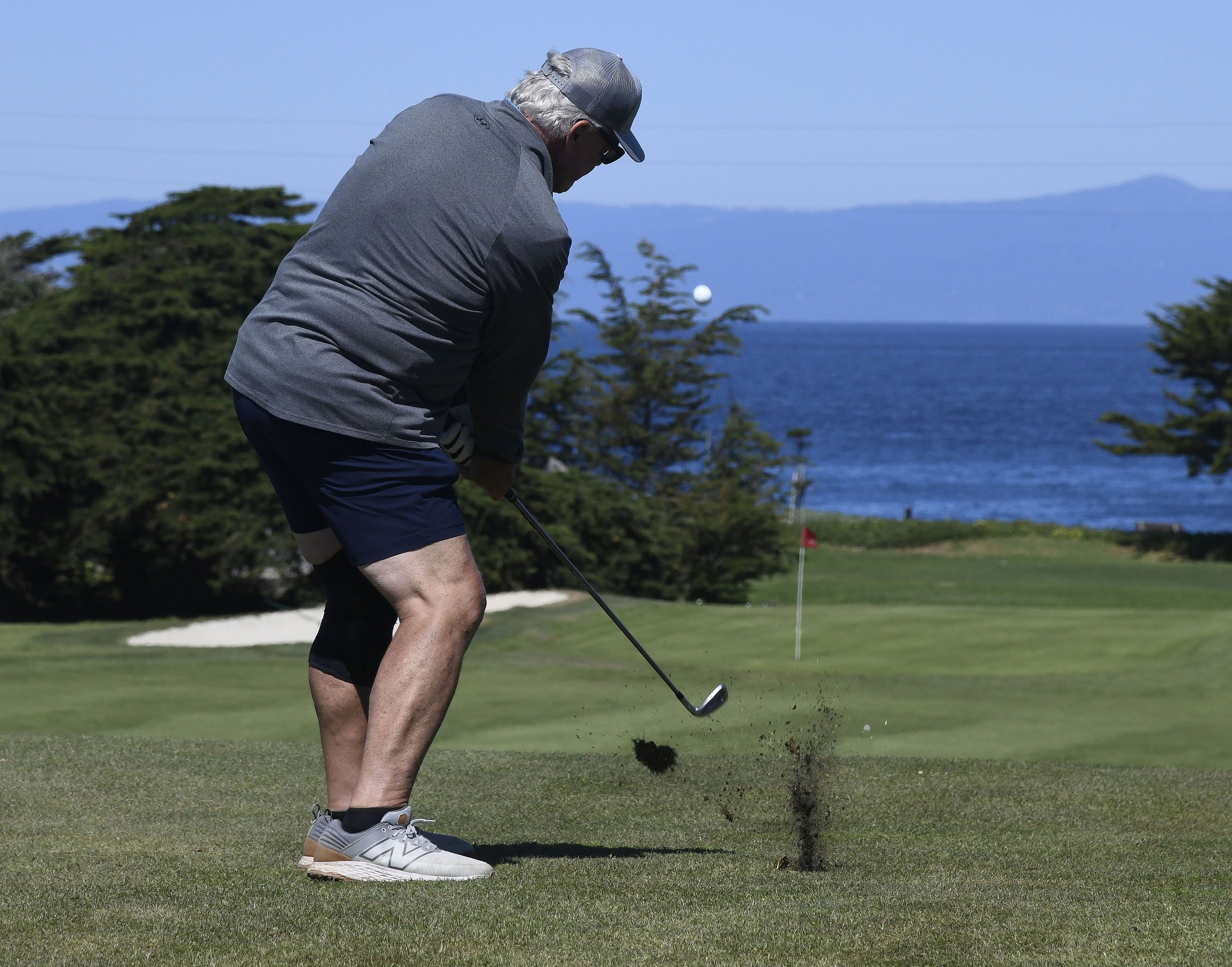
South Maui Bicycles shop owner Frank Hackett hits his approach to the 16th green at Pacific Grove Golf Links. The municipal course is nicknamed, the "Poor Man's Pebble Beach," drawing comparison to the much-higher-priced championship course down the road on Monterey Peninsula.
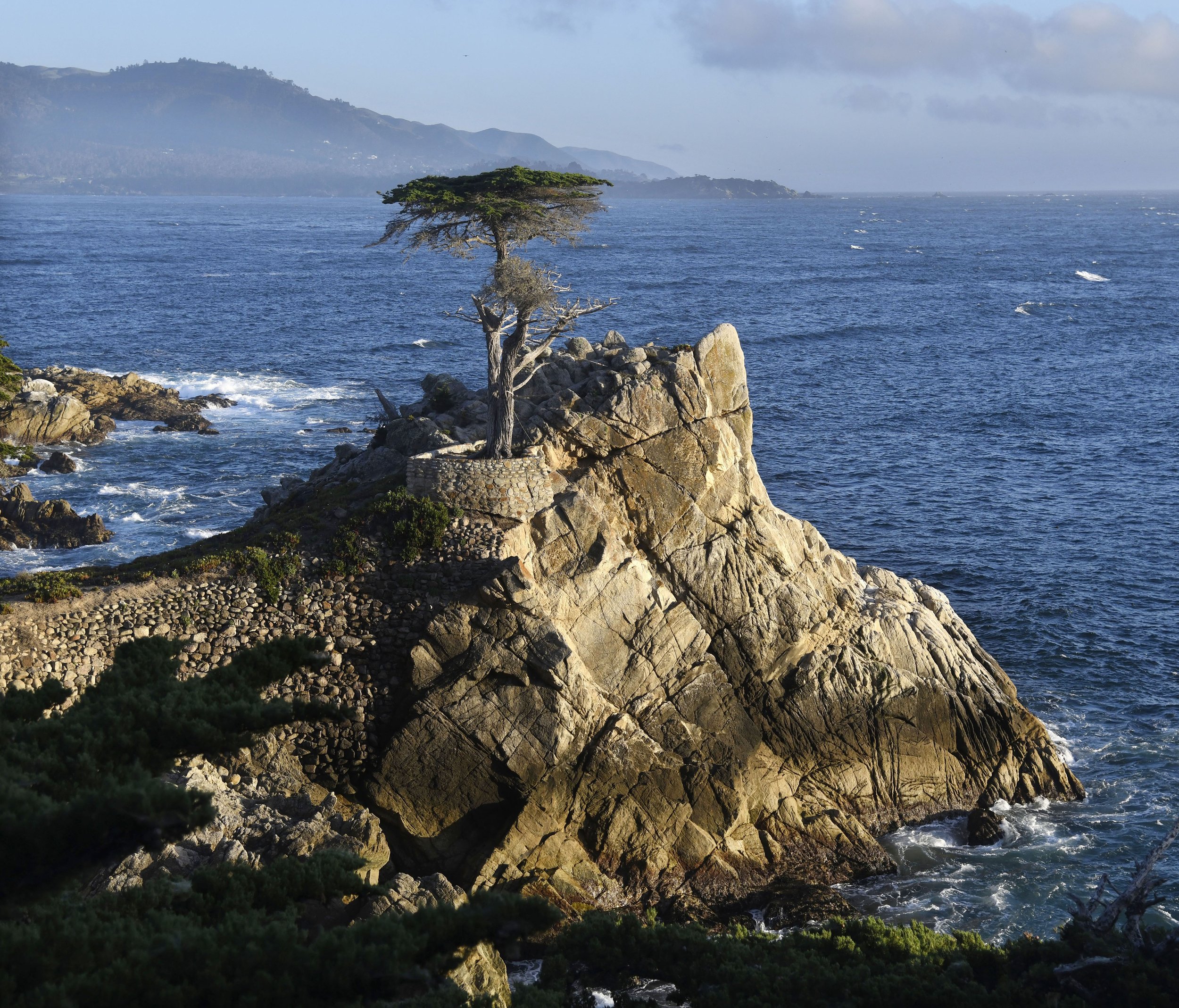
The Lone Cypress of Pebble Beach is believed to be about 275 years old. The trademarked and oft-photographed Monterey Cypress tree has faced its challenges. In 1941, a stone retaining wall was built around its base to protect its roots from erosion. In 1948, cables were installed to help support it. A fence was built in 1969 to protect it from the public, but that didn’t keep an unknown arsonist from trying to burn it down in 1984. A Pineapple Express storm in 2019 sheared off one of its limbs. It is located on the famed 17-Mile Drive. The Monterey Cypress reportedly only grows naturally in Pebble Beach and nearby Point Lobos.
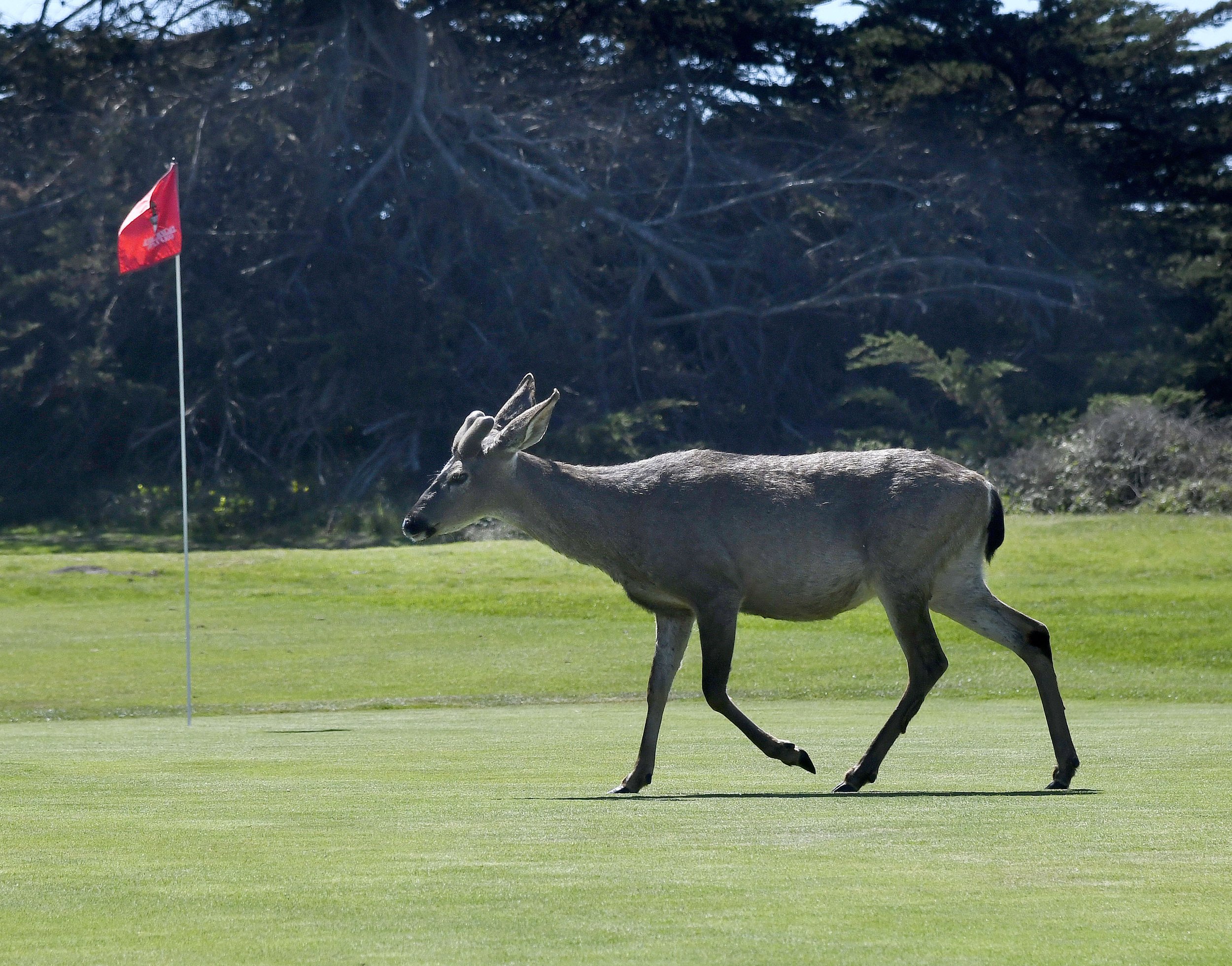
A mule deer ambles across a green at Pacific Grove Golf Links.
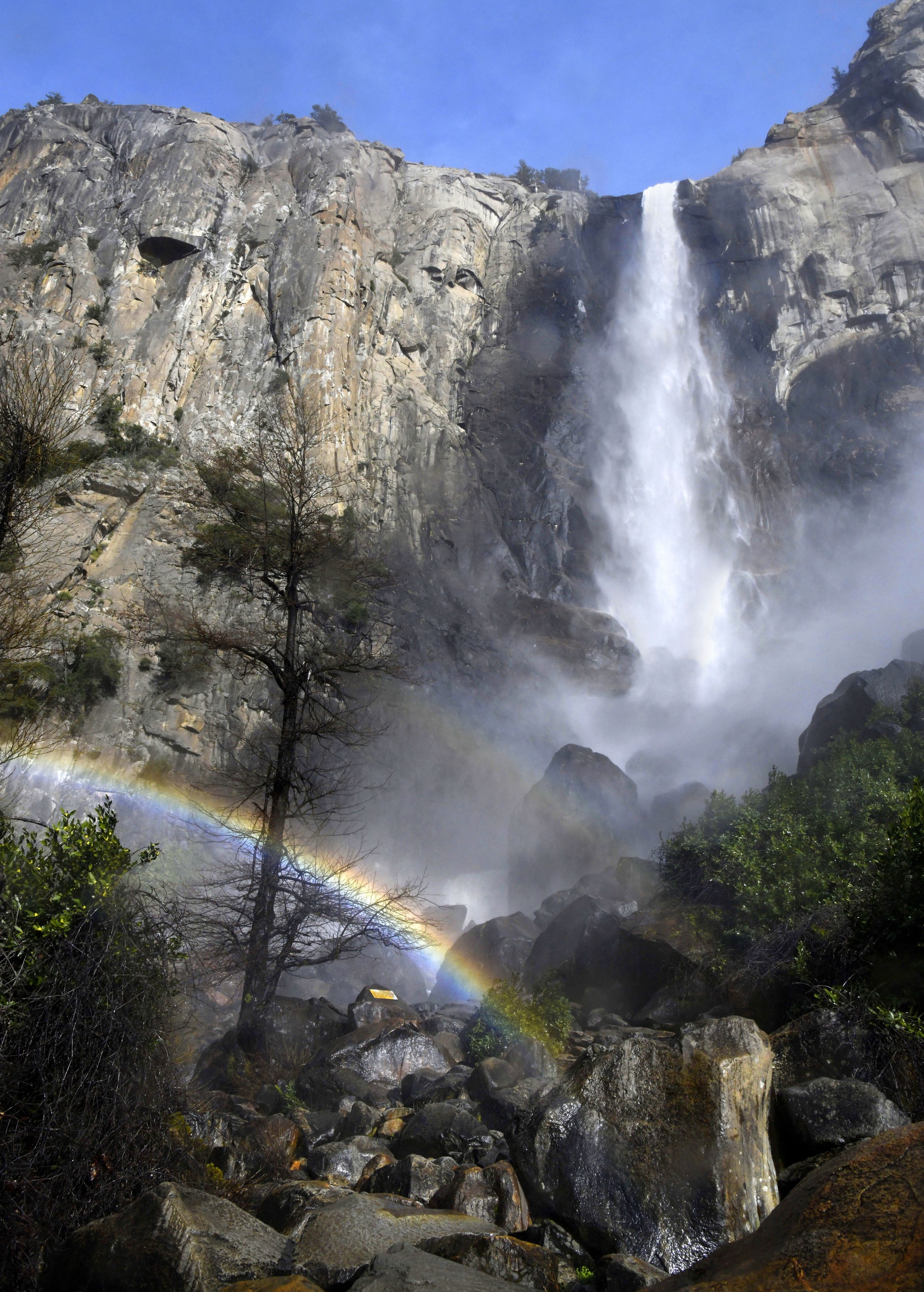
The spray from Yosemite National Park's Bridalveil Fall forms a pair of rainbows. The base of the 620-foot waterfall can be reached by a short, half-mile roundtrip hike.
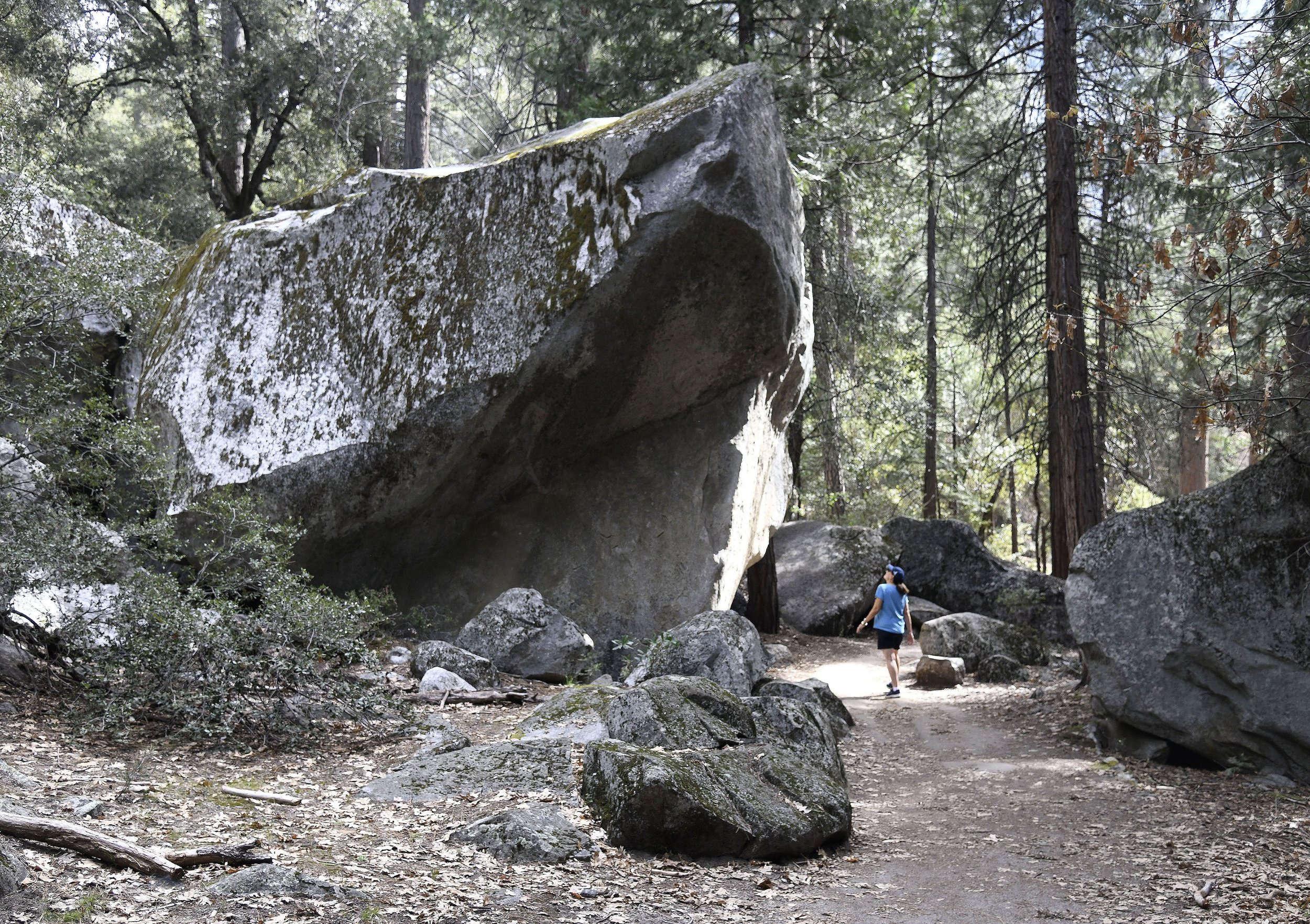
Kihei's Kelly Thayer examines a massive boulder while hiking to Yosemite's Mirror Lake.
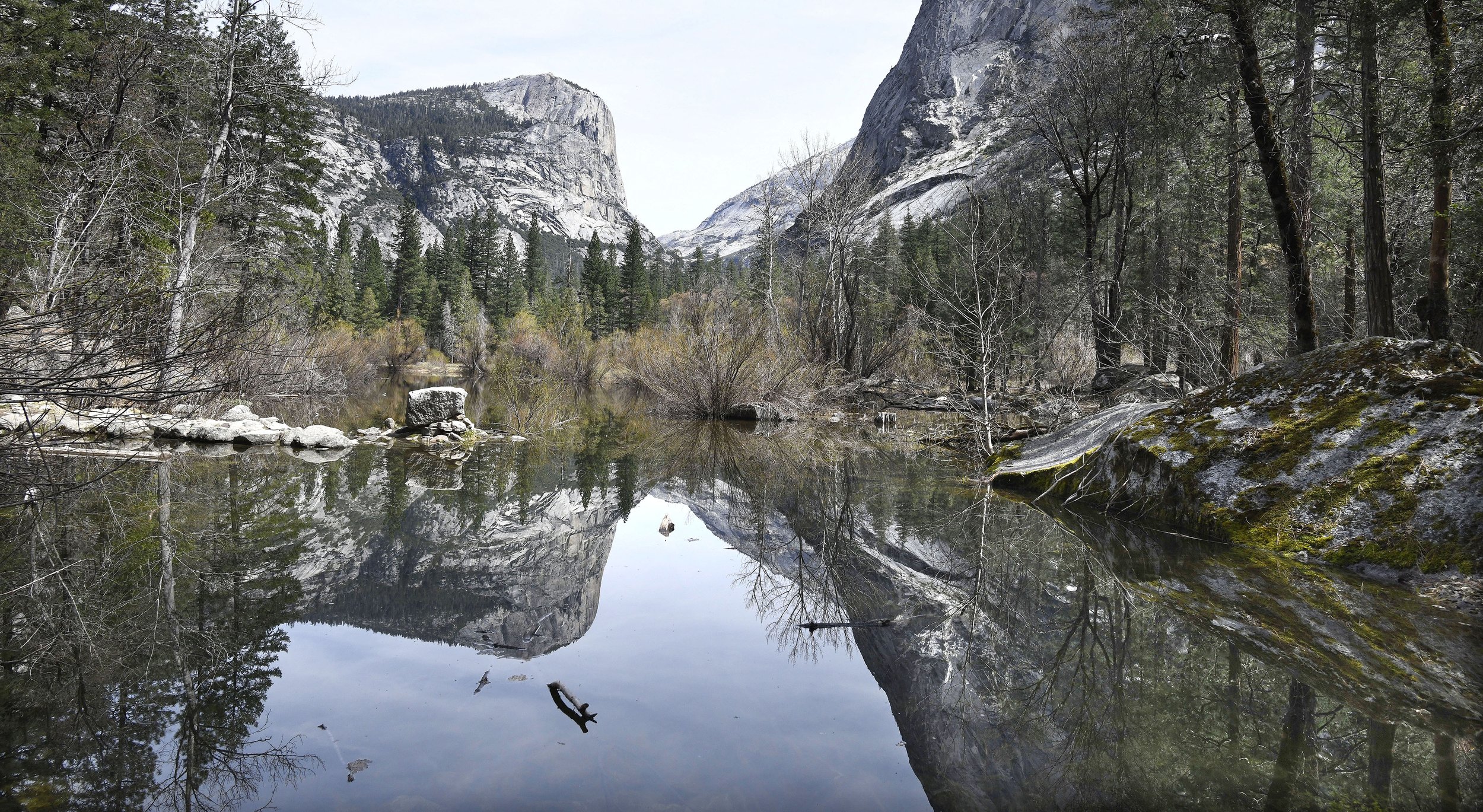
Yosemite's Mirror Lake lives up to its name on a calm spring morning.
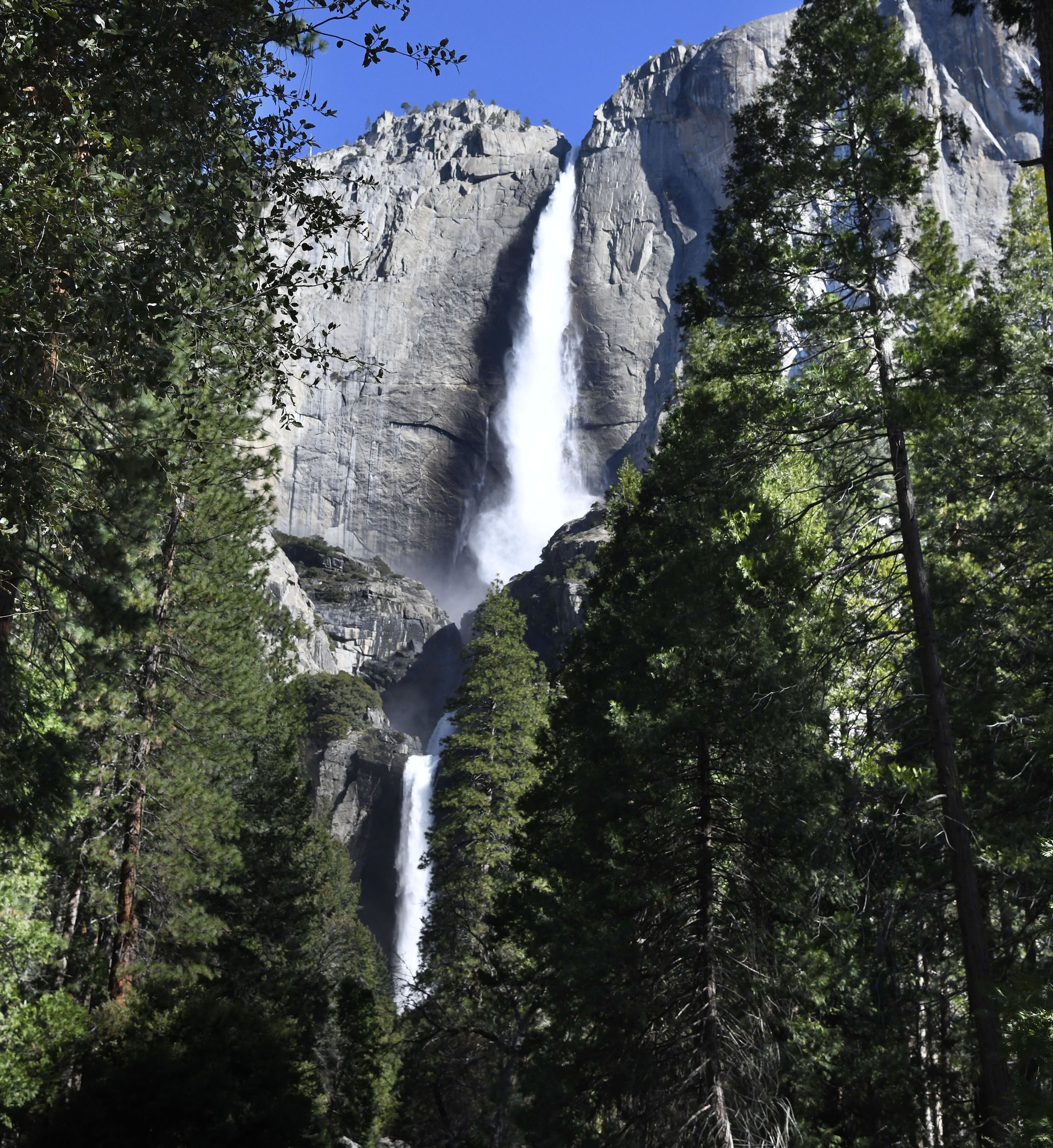
Yosemite Falls cascades to the valley floor.